


A sweeping new analysis of the Democratic Republic of the Congo’s flagship anti-deforestation program has found that the world’s largest experiment in paying tropical nations to keep their forests standing is falling short on the very promises of fairness that were meant to make it work. The study, published in the Journal of Environmental Studies and Sciences, examines more than a decade of REDD+ policy development in the DRC and concludes that the three core principles of environmental justice—recognition, procedure, and distribution—were considered only unevenly, and often only under pressure from international donors rather than out of genuine domestic commitment.
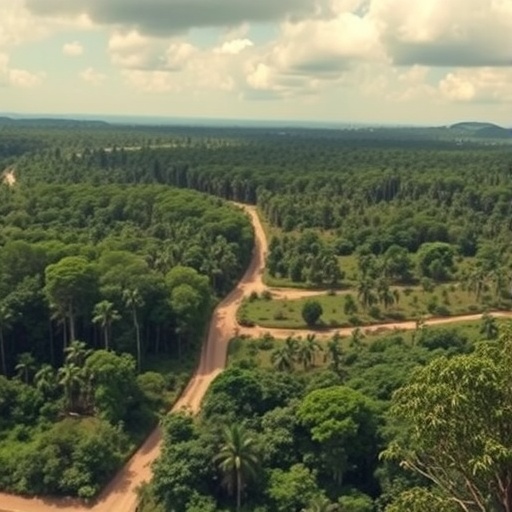
REDD+, which stands for Reducing Emissions from Deforestation and forest Degradation, emerged in the early 2000s as the United Nations’ answer to a persistent gap in global climate governance: the absence of any comprehensive international framework for tropical forests. The mechanism, designed through the World Bank’s Forest Carbon Partnership Facility and the UN-REDD Programme, promises financial compensation to developing countries that adopt policies to slow deforestation while enhancing carbon storage and promoting sustainable forest management. Because tropical forests act as massive carbon dioxide sinks, their protection has become a centerpiece of climate mitigation strategies, and the Congo Basin—home to roughly 155 million hectares of forest covering over 66 percent of the DRC’s national territory—sits at the heart of that ambition.
In 2009, the DRC became the first forest-rich country in Central Africa to fold REDD+ into its domestic forest and environmental policies, producing a cascade of new laws, regulations, and pilot projects. But from the beginning, the initiative stirred conflicting interests. For the central government, REDD+ was primarily a vehicle for mobilizing carbon-market revenue and advancing governance reforms. National NGOs saw it as a strategic platform to strengthen their role in the forestry sector, while international organizations viewed it as a means of positioning the DRC as a central player in global forest governance debates. It is precisely in this contested environment, the researchers argue, that questions of justice become most consequential.
The research team, led by Eliezer Majambu of Le Mans University and the Université Officielle de Mbujimayi, together with Moïse Tsayem Demaze and Symphorien Ongolo, applied the influential environmental justice framework developed by political theorist David Schlosberg, which decomposes justice into three interlocking principles. Recognitional justice concerns whether communities, their identities, their knowledge systems, and their rights are respected. Procedural justice asks who actually participates in decision-making and on what terms. Distributive justice concerns how benefits and burdens are shared. The framework traces its origins to the environmental justice movements of 1980s America, when predominantly poor, rural African-American communities mobilized against what activists famously termed “environmental racism” during the 1982 Warren County protests in North Carolina.
Methodologically, the study is built on a careful inventory of the DRC’s legal and regulatory architecture: the REDD+ preparatory plan, the national strategic framework, the Ministerial Decree on Free, Prior and Informed Consent, and the integrated REDD+ program documents for the provinces of Tshopo, Kwilu, Equateur, Mongala, and Mai-Ndombe. These five provinces, selected from the nine initiatives backed by roughly USD 200 million in first-round funding from the Central African Forest Initiative, together encompass nearly 30 percent of the DRC’s rainforest. The document analysis was triangulated with twelve semi-structured interviews with experts who had participated in drafting the framework documents, including leaders of environmental civil society organizations and national consultants working with the National REDD Coordination.
On recognitional justice, the findings are sobering. Historically, the DRC’s forest governance has stripped local communities and Indigenous peoples of recognition. The 1949 Forest Act granted forest-dependent populations neither access rights nor a voice in policymaking, and the Bakajika Law of 1966 converted lands held under customary tenure into state property—rooted, the authors note, in a Belgian colonial system that deliberately restricted local access to forests and land. Although local communities and Indigenous peoples, including Indigenous Pygmy Peoples, represent nearly 90 percent of the national population and regard the forest as central to their identity, livelihoods, and medicine, their traditional rights were recorded in no legal document. The study finds that recognition entered REDD+ discussions only belatedly and narrowly, reduced largely to clarifying land and forest tenure. One expert involved in drafting the national strategic framework admitted that the concept was included “simply to comply with the partners’ requirements, notably those of UN-REDD and the World Bank.” Recognition was partially institutionalized only later, through the Free, Prior and Informed Consent framework, the National Social and Environmental Standards derived from the 2010 Cancun safeguards, and the 2022 law protecting the rights of Indigenous Pygmy Peoples.
Procedural justice fared somewhat better on paper, largely because international bodies made it a formal condition of participation. The R-PP mentions participation 17 times and the national strategic framework 30 times—repetitions the authors interpret as diplomatic signaling to donors rather than evidence of inclusive practice. In reality, the consultations were hurried and selective. Rural women’s organizations were barely represented; the Ministry of Gender, Family, and Children was excluded from drafting the strategic framework despite the government’s public gender-equality rhetoric; and provincial civil society organizations were marginalized in favor of Kinshasa-based groups. Most strikingly, experts interviewed for the study reported that traditional leaders and local communities participated in consultations without understanding the substance of REDD+ at all. One coordinator reported that to this day, local communities and Indigenous peoples “still do not know the content of either the R-PP or the REDD+ national strategic framework.” The pressure to meet donor-imposed timetables, the authors argue, systematically crowded out the deliberation that genuine procedural justice would require.
Distributive justice emerges as the most glaring failure. A 2018 ministerial decree allocated the state’s share of REDD+ project revenue as follows: 30 percent to public funds, 30 percent to the registry management entity, 20 percent to the central forestry administration, and only 20 percent to local administration—the level of government with the fewest resources to actually combat deforestation. Joint ministerial decrees signed in September 2023 reshuffled the distribution, sending 50 percent to the Treasury, 25 percent to provinces and decentralized territorial entities combined, and 25 percent to environmental investment funds. Far from correcting the imbalance, the new formula channels half of the state’s proceeds to the national treasury while local stewards of the forest receive a fraction. Civil society groups boycotted the consultations, and no consensus was ever reached. The Mai-Ndombe Emission Reduction Program’s benefit-sharing plan tells a similar story: the initial version allocated just 2 percent of revenues to Indigenous peoples and a mere 1 percent to local communities—the very populations whose subsistence activities the national strategy identifies as the principal drivers of deforestation. After nearly three years of negotiation, the local community share was raised only to 2 percent.
The study situates these findings within a broader pattern documented across the tropics. In Indonesia, REDD+ has been dominated by the state and foreign entities such as the International Tropical Timber Organization, marginalizing organizations defending local rights. In Laos, donor-driven safeguards have masked deep procedural and recognitional injustices in an authoritarian policy environment. In Kenya, a World Bank-funded initiative contributed to the eviction of the Sengwer people from ancestral lands. In Brazil, Nepal, and Tanzania, researchers have documented gender exclusion, land-tenure inequities, and the “misframing” of conservation burdens onto local communities. The DRC case, the authors argue, adds a distinctive contribution: rather than examining implemented projects, they analyzed how justice principles were embedded—or omitted—at the level of policy documents themselves, exposing the power dynamics through which global actors like the World Bank shaped domestic reforms via financial incentives and control of information.
The implications extend well beyond the Congo Basin. Payments for environmental services, a cornerstone of REDD+ design, embody a utilitarian conception of justice that privileges distribution over recognition and participation—a design choice that risks compensating people for lost practices without empowering them. As the authors note, if consultation processes do not result in the consideration of expressed needs, they cannot meaningfully be called participatory. And when benefit-sharing formulas deprive decentralized administrations of adequate resources, the central government undermines the very local capacity on which forest conservation depends, threatening both social equity and ecosystem sustainability.
Ultimately, the study delivers a caution to policymakers worldwide as carbon markets and forest-finance mechanisms expand under international climate agreements. The three principles of environmental justice, the authors stress, are inherently political—contested, power-laden, and generally treated as matters of state decision-making. Adopting them strategically to satisfy donors like the World Bank and UN-REDD, the research concludes, will not reduce deforestation in the long term. For justice-based climate policy to succeed, it must enhance the essential capabilities of forest-dependent peoples and guarantee their genuine inclusion in policymaking—not merely their presence in the room. In a post-conflict nation where the forest is, in the words of local communities, “like a nurturing mother,” the stakes of getting this right could scarcely be higher.
Cite Scienmag News
Sloane Callahan. (September 8, 2026). Do DRC deforestation policies deliver environmental justice for local communities? Scienmag. https://scienmag.com/do-drc-deforestation-policies-deliver-environmental-justice-for-local-communities/
Sloane Callahan. "Do DRC deforestation policies deliver environmental justice for local communities?" Scienmag, 8 September 2026, https://scienmag.com/do-drc-deforestation-policies-deliver-environmental-justice-for-local-communities/. Accessed 8 September 2026.
Sloane Callahan. "Do DRC deforestation policies deliver environmental justice for local communities?" Scienmag. September 8, 2026. https://scienmag.com/do-drc-deforestation-policies-deliver-environmental-justice-for-local-communities/


