


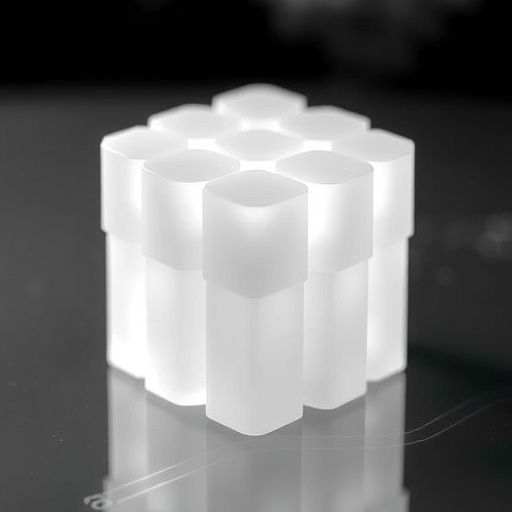
Turning crop leftovers into high-performance, non-toxic superabsorbent gels is one of the more quietly exciting frontiers in green chemistry, and a new study has pushed it a significant step further by adding artificial intelligence to the recipe. Researchers in India have transformed a blend of sugarcane bagasse and wheat straw pulp into cellulose-based hydrogels crosslinked entirely with food-grade organic acids, and then used a machine learning algorithm known as gradient boosting to predict and optimize exactly how the gels should be made. The result is a fully bio-based hydrogel that can soak up water equivalent to more than eleven times its own weight, synthesized through a route the authors describe as the first of its kind for mixed agricultural residue pulp.
The work, published in Case Studies in Chemical and Environmental Engineering, addresses a persistent problem in hydrogel science. Most commercial superabsorbent polymers are built on acrylamide chemistry, which delivers impressive water uptake but raises red flags over non-biodegradability and potential toxicity, particularly in agricultural applications or anything involving human contact. Natural polysaccharides such as starch, chitosan, alginate and cellulose have long been proposed as safer alternatives, but many laboratory routes still rely on synthetic crosslinking agents to lock the polymer chains into a stable three-dimensional network. The team, led by Unnati Chaudhary of the Forest Research Institute in Dehradun, took a different path: cellulose extracted from farm waste as the polymer backbone, and naturally occurring polycarboxylic acids — citric acid, succinic acid and malic acid — as the crosslinkers binding that backbone together.
The raw material itself is a study in waste valorization. The mixed bagasse and wheat straw pulp, supplied by a paper mill in Uttar Pradesh, was first subjected to a battery of TAPPI standard analytical protocols to establish its chemical credentials. The numbers were striking: a holocellulose content of 98.5 percent, an alpha-cellulose fraction of 79.6 percent, and a negligible 0.35 percent acid-insoluble lignin. In practical terms, the pulp was almost pure cellulose awaiting extraction, with minimal extraneous material to interfere with downstream chemistry. Alpha cellulose was then isolated in bulk by treating the pulp with 17.5 percent sodium hydroxide according to standard method T 203 cm-99, yielding the high-molecular-weight, undegraded cellulose that would serve as the scaffold for everything that followed.
From there, the synthesis proceeded in two stages. The extracted cellulose was first alkalized with sodium hydroxide in isopropanol at 40 degrees Celsius and then etherified with sodium monochloroacetate at 60 degrees Celsius, producing a functionalized cellulose intermediate carrying carboxylate groups — a modification confirmed by the appearance of new infrared absorption bands at roughly 1618 and 1420 wavenumbers. This functionalization step matters because the newly introduced carboxylate groups improve the cellulose’s reactivity toward the crosslinking acids. In the second stage, the functionalized cellulose was dissolved in water and reacted with citric, succinic or malic acid across a systematically varied matrix of conditions: crosslinker concentrations from 1 to 25 percent and reaction temperatures from 30 to 90 degrees Celsius, generating 90 distinct hydrogel formulations whose swelling behavior was measured in triplicate.
The chemistry underlying the crosslinking is elegant in its simplicity. When heated, each of the three polycarboxylic acids dehydrates to form a reactive cyclic anhydride intermediate. This anhydride attacks hydroxyl groups on the cellulose backbone to form an ester bond, and a second esterification with a hydroxyl group on a neighboring cellulose chain bridges the two polymers together. The differences between the three acids translated directly into different gel architectures. Citric acid, with three carboxyl groups and one hydroxyl group, offered the most reactive sites and produced the densest, most hydrophilic network. Malic acid, asymmetric and carrying two carboxyls plus a hydroxyl, formed a moderately crosslinked structure, while succinic acid — two terminal carboxyls and no hydroxyl — yielded the most compact, least swellable gels. The peak swelling degree of 1102 percent, recorded for the citric acid system at just 1 percent crosslinker concentration and 75 degrees Celsius, comfortably outperformed succinic acid’s maximum of 820 percent and malic acid’s 956 percent.
Counterintuitively, more crosslinker meant less swelling across all three systems. As concentration rose from 1 to 25 percent, water uptake fell steadily and then plateaued above roughly 15 percent, a consequence of molecular collision frequency driving over-crosslinking into a rigid network whose tight mesh physically blocks water penetration and chain relaxation. Temperature told a more nuanced story. Swelling generally climbed with reaction temperature because thermal energy helps reactant molecules overcome the activation barrier for anhydride formation and esterification, but citric and malic acid gels showed a decline at 90 degrees Celsius at low concentrations — evidence of an over-constricted network past its optimal point. Rheological testing added further texture to the picture: all three optimized hydrogels displayed shear-thinning, pseudoplastic behavior, with the citric acid gel showing the highest viscosity, consistent with its denser interconnected structure.
Then came the machine learning. Rather than relying on conventional one-variable-at-a-time experimentation or the polynomial regressions of response surface methodology, the team trained gradient boosting models on their 30-point experimental datasets for each crosslinker, using reaction temperature and crosslinker concentration as inputs and swelling degree as the output. Because ensemble models scored on their own training data give misleadingly optimistic accuracy estimates, the researchers validated performance with 5-fold and leave-one-out cross-validation. The cross-validated coefficients of determination reached 0.85, 0.93 and 0.75 for the citric acid, succinic acid and malic acid systems respectively — respectable predictive accuracy for such small datasets. When benchmarked against a full quadratic response surface model under identical validation, gradient boosting proved broadly comparable but held a distinct advantage for the citric acid system, whose swelling response features a sharp, non-monotonic peak that a single low-order polynomial struggles to capture. Crucially, gradient boosting requires no pre-specified mathematical form and extends naturally to additional process variables.
The trained models reproduced the experimental landscapes with impressive fidelity. Predicted three-dimensional surfaces closely mirrored the sharp peak in the citric acid data and the bowl-shaped curvature of the succinic acid system, with only minor smoothing artifacts in the steeply graded malic acid surface. Optimization plots derived from the models distilled the entire experimental campaign into a set of prescriptive conditions: 1 percent crosslinker at 70 degrees Celsius for citric acid gels, and 1 percent at 85 degrees for both succinic and malic acid systems, predicting swelling degrees within a fraction of a percent of the measured optima. The contour analysis also revealed that crosslinker concentration exerts a far stronger influence on swelling than temperature, a practical insight for anyone scaling the process.
Analytical characterization confirmed the chemistry at every step. Fourier transform infrared spectroscopy revealed new carbonyl bands at 1720 and 1271 wavenumbers in the hydrogels — the fingerprint of ester linkages between cellulose and the acid anhydrides. X-ray diffraction showed the crystallinity index collapsing from 58.31 percent in native alpha cellulose to under 17 percent after functionalization and crosslinking, a transition toward an amorphous structure that exposes more hydrophilic sites and improves water absorption. Thermogravimetric analysis showed the gels decomposing at slightly lower peak temperatures than native cellulose but leaving dramatically higher residue — 55.6 to 58.4 percent at 603 degrees Celsius versus 16.4 percent for the starting material — reflecting the char-promoting effect of the ester crosslinks. Electron microscopy and nitrogen sorption analysis revealed porous, branched networks whose pore sizes tracked the swelling behavior: citric acid gels averaged 5.68 nanometer pores with a surface area of 2.695 square meters per gram, while succinic acid gels, with the smallest pores at 1.68 nanometers, absorbed the least water.
Beyond the laboratory bench, the implications stretch from rural economics to climate mitigation. Agricultural residues are burned or discarded in enormous volumes worldwide, releasing pollution and squandering a renewable resource. Converting that waste stream into biodegradable hydrogels for agriculture, cosmetics, food or pharmaceutical use would reduce dependence on petroleum-derived acrylamide polymers while cutting greenhouse gas emissions and creating value-added products from low-cost feedstocks. The authors acknowledge that the swelling capacities of their gels remain moderate compared with commercial synthetic superabsorbents, but they argue that the fully bio-based composition, green crosslinking strategy and straightforward synthesis offset that gap, and they call for a full life cycle assessment to quantify the environmental footprint from field to final degradation. As a demonstration that machine learning can compress months of trial-and-error hydrogel optimization into a predictive, generalizable framework, the study offers a template for how green chemistry and artificial intelligence can develop together — turning what farmers leave behind into materials that hold water, hold structure, and ultimately return harmlessly to the soil.
Cite Scienmag News
Bethany Barker. (September 8, 2026). Cellulose hydrogel development optimized using gradient boosting approach. Scienmag. https://scienmag.com/cellulose-hydrogel-development-optimized-using-gradient-boosting-approach/
Bethany Barker. "Cellulose hydrogel development optimized using gradient boosting approach." Scienmag, 8 September 2026, https://scienmag.com/cellulose-hydrogel-development-optimized-using-gradient-boosting-approach/. Accessed 8 September 2026.
Bethany Barker. "Cellulose hydrogel development optimized using gradient boosting approach." Scienmag. September 8, 2026. https://scienmag.com/cellulose-hydrogel-development-optimized-using-gradient-boosting-approach/


