


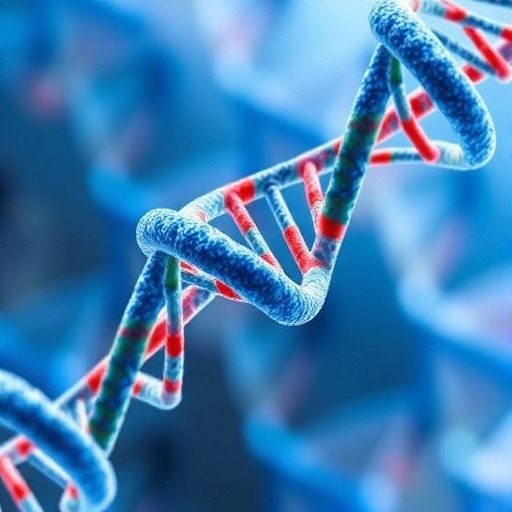
A groundbreaking advancement in gene-editing has emerged from Cornell University, where researchers have refined the CRISPR-based genetic tool known as MAGIC to create a safer and more precise method for studying gene function within living tissues. This innovation holds transformative potential for developmental biology and disease research, offering a gentler alternative to conventional DNA editing approaches that often rely on harsh double-strand breaks.
The breakthrough centers around replacing the traditional double-strand DNA cuts with strategically introduced single-strand “nicks,” thus drastically reducing unintended cellular damage. Published on May 27 in the prestigious Proceedings of the National Academy of Sciences, this research spearheaded by Associate Professor Chun Han and his team, including doctoral student Yifan Shen and alumnus Ann Yeung, represents a significant leap toward more controlled and reliable genetic experiments.
CRISPR technology, especially the popular Cas9 nuclease enzyme, has revolutionized genome editing by enabling precise cuts in the DNA double helix, a process essential for manipulating gene function and studying biological processes. However, double-strand breaks, the hallmark of Cas9’s activity, often carry detrimental effects, such as chromosome rearrangements or cell death, introducing confounding variables into experiments aiming to understand gene roles in development or pathology.
The MAGIC technique previously utilized these double-strand breaks to generate clones of genetically altered cells — homozygous cells containing identical gene copies crucial for in-depth study — by inducing recombination between homologous chromosomes inherited from each parent. Despite its utility, the toxicity associated with these breaks limited the scope and fidelity of biological insights obtained from this method.
To circumvent these limitations, Han’s team turned to “nickase” variants derived from Cas9. These nickases possess mutations that restrict their cutting activity to one strand of the DNA duplex, significantly reducing genotoxic stress. The team found that single-strand nicks, contrary to prior assumptions, are sufficient to initiate mitotic recombination cascades required for generating precise genetic mosaics.
Beyond mere safety improvements, the researchers observed that the spatial patterning of these DNA nicks profoundly affects recombination frequency, providing a novel parameter to fine-tune gene-editing experiments. This control allows scientists unprecedented versatility in designing experiments that can dissect gene function with higher resolution and minimal cellular disruption.
This paradigm shift not only mitigates the risk of experimental artifacts caused by DNA damage but also enhances the interpretability of results by ensuring that observed phenotypes are a consequence of the targeted genetic modifications rather than collateral genomic instability. Such improvements bear significant implications for disease modeling, developmental studies, and potentially extending to therapeutic genome editing.
The refined approach could pique broad interest in the scientific community, especially those working with Drosophila melanogaster, the fruit fly, a longstanding model organism foundational in genetics. Known as the birthplace of seminal genetic technologies, Drosophila often serves as a springboard for methods that eventually permeate larger biological systems, including mammalian models and clinical applications.
Han envisions that combining the nickase-based system with the recently established genome-wide MAGIC toolkit will facilitate widespread adoption across fruit fly research laboratories and beyond, fostering innovation across genetics and cellular biology. The approach offers a scalable, modular platform for mosaic analysis, amplifying experimental precision while safeguarding cellular integrity.
The researchers acknowledge support from the National Institutes of Health, the Developmental Studies Hybridoma Bank, and the Bloomington Drosophila Stock Center, underscoring a collaborative framework essential for advancing genetic research tools.
This development exemplifies how iterative refinement of gene-editing technologies can reconcile the need for experimental precision with cellular viability, paving the way for safer genetic interventions and more robust biological discoveries. As gene-editing continues to intersect with therapeutic innovation, such advancements underscore the importance of reducing off-target and collateral damage in living systems.
In sum, the integration of nickase-based CRISPR cutting into the MAGIC framework marks a seminal step toward precision mosaic analysis with heightened safety and control, setting a new standard for investigating gene function in vivo. The method’s ingenuity and adaptability may well catalyze future breakthroughs in understanding genetic contributions to health and disease from the cellular level upwards.
- https://www.pnas.org/doi/10.1073/pnas.2531265123
- https://han.wicmb.cornell.edu/
- https://cals.cornell.edu/molecular-biology-genetics
- https://wicmb.cornell.edu/
- https://journals.plos.org/plosbiology/article?id=10.1371/journal.pbio.3001061
- https://elifesciences.org/articles/108453
References: 10.1073/pnas.253126512
Keywords: CRISPR, gene-editing, MAGIC technique, Cas9 nickase, mitotic recombination, genetic mosaics, Drosophila melanogaster, DNA nicks, homologous recombination, genome editing precision, cellular gene function
Cite Scienmag News
Juliet Wilcox. (May 27, 2026). “DNA ‘Nicks’ Enable Safer, More Precise Genetic Analysis”. Scienmag. https://scienmag.com/dna-nicks-enable-safer-more-precise-genetic-analysis/
Juliet Wilcox. "“DNA ‘Nicks’ Enable Safer, More Precise Genetic Analysis”." Scienmag, 27 May 2026, https://scienmag.com/dna-nicks-enable-safer-more-precise-genetic-analysis/. Accessed 6 September 2026.
Juliet Wilcox. "“DNA ‘Nicks’ Enable Safer, More Precise Genetic Analysis”." Scienmag. May 27, 2026. https://scienmag.com/dna-nicks-enable-safer-more-precise-genetic-analysis/


