


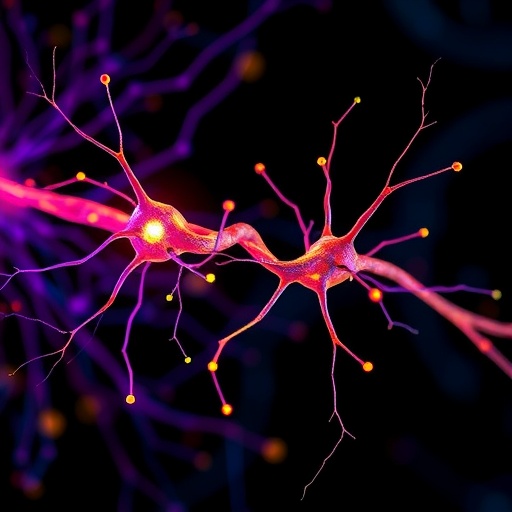
In the intricate world of biological systems, the conversion of physical stimuli into biochemical signals forms the cornerstone of many fundamental processes. From the embryonic stages of development to the complex functions of the mammalian brain’s cortex, and even to the delicate sensation felt at our fingertips, mechanotransduction remains a critical yet incompletely understood phenomenon. Recent advances in the field of mechanobiology are now unraveling the subtle yet profound mechanisms by which these physical forces influence cellular behavior, offering tantalizing new insights into the way cells communicate mechanically across their membranes.
At the heart of these discoveries lies the cell membrane’s rheological properties — its dynamic ability to deform and flow under mechanical stress. Scientists have long suspected that these properties are vital in transmitting mechanical tension, but the precise molecular details have remained elusive. Pioneering research led by Dr. Frederic Català-Castro and Dr. Neus Sanfeliu-Cerdán, under the guidance of Professor Michael Krieg at ICFO, has produced the most comprehensive characterization to date of how neurons propagate mechanical strain and stress across their membranes. This groundbreaking work, conducted in collaboration with Prof. Padmini Rangamani’s group at the University of California San Diego, focuses on two distinct types of mechanoreceptors found in the model organism Caenorhabditis elegans: touch receptors, optimized for rapid contact responses, and proprioceptors, which detect swift body deformations during movement.
The genesis of this study was a curiosity-driven side project inspired by conflicting prior findings in the literature regarding the transmission of mechanical signals. While previous investigations concentrated primarily on the cytoskeleton’s role in mechanotransduction, the ICFO team posited that the plasma membrane itself might serve as a critical conduit for mechanical information. Employing an optical tweezer apparatus—a sophisticated tool using precisely focused laser beams to manipulate microscale objects and measure forces with picoNewton sensitivity and millisecond temporal resolution—they performed finely controlled experiments. By attaching microscopic plastic beads to isolated neuron axons and neurites, they applied tension and monitored how this force propagated along the membrane, unveiling unprecedented detail about the kinetics of mechanical signaling.
Results revealed a striking difference between mechanoreceptor types: tension propagation in touch receptors occurred significantly faster than in proprioceptors. This observation suggested that the speed and range of mechanical signal transmission are finely tuned according to each receptor’s physiological role. More revealing, however, was the finding that not only the presence of obstacles such as membrane-embedded proteins influenced tension propagation, but the spatial organization of these obstacles was also critical. When proteins arranged themselves into a regular, ordered pattern, tension was spatially restricted, transmitting signals over relatively short distances. Conversely, a more randomized distribution of obstacles facilitated longer-range propagation of mechanical tension.
To synthesize these experimental observations, the researchers utilized advanced three-dimensional mathematical modeling developed in Rangamani’s laboratory. This modeling framework was pivotal in integrating diverse data sets and overcoming challenges posed by cellular variability and the inherent stochasticity of molecular processes within membranes. Such models allowed the team to simulate complex obstacle configurations and their impact on tension flow, providing a coherent mechanistic explanation for the experimentally observed phenomena. This interplay between empirical data and computational modeling transformed initial hypotheses into robust insights, demonstrating that the membrane’s structural topology can modulate mechanical signal fidelity and distribution.
Beyond the immediate biophysical implications, these findings open intriguing biological possibilities. A constrained spread of membrane tension might enable neurons to localize mechanical inputs precisely, thereby enhancing the sensory system’s ability to discriminate the location and nature of stimuli. This spatial precision could also permit targeted activation of downstream biochemical cascades, generating localized cellular responses without globally affecting membrane tension or entire-cell signaling. On the other hand, more widespread tension propagation observed in random obstacle arrangements may support long-distance mechanical communication within cells, potentially coordinating complex motor functions or signaling across expansive cellular domains.
As mechanobiology advances, the next frontier lies in elucidating how the molecular identity and regulation of these membrane obstacles shape mechanotransduction. The researchers speculate that plasma membrane tension might participate in feedback loops governing obstacle distribution and dynamics, hinting at a sophisticated regulatory network balancing mechanical forces and protein organization. Exploring such feedback mechanisms could reveal novel targets for interventions designed to modulate cellular mechanosensitivity, with far-reaching implications for neurobiology, developmental biology, and regenerative medicine.
Expert external commentary underscores the study’s significance. Dr. Eva Kreysing, a developmental neuroscience specialist at the University of Cambridge, emphasized the timeliness and importance of this work in shedding light on membrane tension’s spatial regulation, a parameter critical to cell function regulation. Her insights echo the growing consensus that understanding the precise mechanics of membrane tension propagation is essential for decoding cellular responses to mechanical stimuli and bridging the knowledge gap between physical forces at the membrane and resultant biological outcomes.
In sum, the collaborative research by the ICFO team and their partners delineates new mechanistic pathways by which neurons transduce mechanical information via their plasma membranes. By integrating meticulous experimental techniques with innovative computational models, they have elucidated how the structural arrangement of membrane proteins governs the velocity and extent of tension propagation. These findings not only enhance our grasp of fundamental mechanobiological principles but also chart a course for future inquiries into the molecular underpinnings and physiological consequences of mechanical signal transduction in living cells.
The continued pursuit of these questions promises to revolutionize our understanding of cellular mechanosensitivity and its role in health and disease. As scientists uncover the layers of complexity in how mechanical forces sculpt cellular function, the prospect of manipulating these forces for therapeutic benefit becomes increasingly tangible. Ultimately, this research paves the way to connect the dots from physical stimulus to molecular response, redefining how we comprehend the language through which cells communicate with their physical environment.
News Publication Date: Not specified
Web References: Not specified
References: Published in Nature Physics
Keywords
Physics, Physical Sciences, Neuroscience
Cite Scienmag News
Bethany Barker. (October 29, 2025). Discovering New Insights into How Physical Forces Travel Through Neurons. Scienmag. https://scienmag.com/discovering-new-insights-into-how-physical-forces-travel-through-neurons/
Bethany Barker. "Discovering New Insights into How Physical Forces Travel Through Neurons." Scienmag, 29 October 2025, https://scienmag.com/discovering-new-insights-into-how-physical-forces-travel-through-neurons/. Accessed 4 September 2026.
Bethany Barker. "Discovering New Insights into How Physical Forces Travel Through Neurons." Scienmag. October 29, 2025. https://scienmag.com/discovering-new-insights-into-how-physical-forces-travel-through-neurons/


