


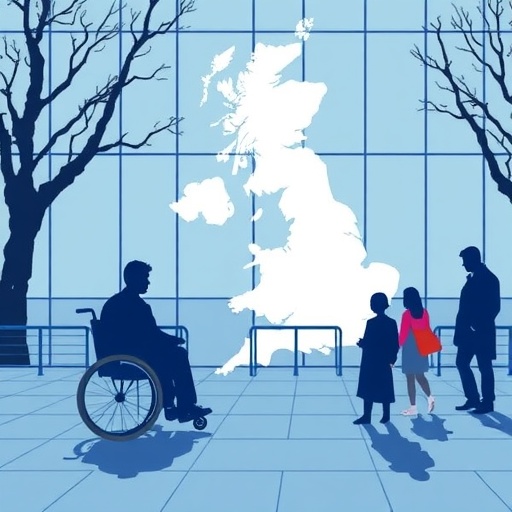
A new study of disabled staff members and postgraduate researchers across UK universities is challenging one of higher education’s most popular ideas: that belonging can be created simply by opening doors, providing formal support and measuring whether people feel included. Interviews with 19 disabled academics, professional-services employees and PhD researchers suggest that belonging is not a stable institutional outcome, but a shifting experience shaped by access, relationships, workload, recognition and power. The research, published in Higher Education, argues that universities often treat disability as an individual problem to be managed through “reasonable adjustments,” while leaving the deeper structures of academic life unchanged. As a result, people may be technically included yet still feel unwelcome, exhausted or compelled to hide parts of themselves.
The study was conducted by Ben Whitburn of the University of Southampton and Jonathan Vincent of Lancaster University. Participants came from 11 UK higher-education institutions and included 16 disabled staff members—eight academics and eight professional-services employees—as well as three full-time PhD students who also held paid university roles. Three of the staff participants were undertaking doctorates, placing them in the ambiguous space between student and employee. Fourteen participants identified as female, two as male, two as queer or non-binary, and one preferred not to say. Their disabilities and neurotypes included physical impairments, deafness, dyslexia, autism and multiple conditions. Rather than reducing their accounts to a conventional list of obstacles, the researchers examined how feelings of connection and disconnection moved through policies, buildings, digital systems, interpersonal encounters and institutional expectations.
The researchers used an approach combining critical disability studies with postqualitative inquiry. Critical disability studies examines how societies produce disability through barriers, norms and assumptions about what bodies and minds should be able to do. Postqualitative research, meanwhile, questions the idea that interviews contain a single, fixed truth waiting to be extracted and coded. Instead, it treats knowledge as something formed through relationships among participants, researchers, language, policies, technologies and environments. In this study, the researchers followed what they called four “flows” of un/belonging: belonging as an embodied and affective force; belonging as different from formal inclusion; belonging as relational; and un/belonging as a possible form of resistance. The term “un/belonging” captures the researchers’ view that connection and disconnection can coexist, fluctuate and sometimes become deliberate political positions.
For many participants, belonging was felt physically and emotionally rather than defined by a policy or organisational chart. They described it through comfort, safety, respect, care, validation and the freedom to ask for support without having to justify their presence. An autistic professor described belonging as being able to forget the physical space he was occupying, suggesting that an accessible environment can recede from conscious attention rather than constantly demanding adaptation. Another participant said belonging meant not having to “mask” continuously to make colleagues comfortable. A queer, non-binary autistic PhD student described it as being able to live daily academic life without performing the image of a “totally physiotypical and neurotypical person” capable of working 80 hours a week without breaks. These accounts show that belonging is not merely an attitude inside an individual; it is produced when environments and relationships reduce the need for vigilance, concealment and self-discipline.
That process, however, depended on practical infrastructure and on other people’s willingness to make support visible and usable. One disabled PhD researcher noted that universities may have systems in place, but autistic people may not automatically know where those systems are or how to access them. Someone inside the organisation may need to provide “scaffolding”—help navigating procedures, identifying available support and communicating that the institution is genuinely willing to respond. This is an important technical distinction between access and belonging. A captioning system, flexible timetable or adapted workstation can remove a specific barrier, but the surrounding process may still communicate suspicion, inconvenience or conditional acceptance. Belonging emerges not from the adjustment alone, but from the entire network of interactions that determines whether support is offered promptly, respectfully and without imposing excessive administrative labour on the person who needs it.
Participants repeatedly separated inclusion from belonging. Inclusion was often experienced as a managerial process of satisfying requirements, while belonging involved being recognised as a legitimate contributor to the university’s shared life. One participant said that institutions can provide inclusive measures, but cannot simply make somebody feel that they belong. Another compared inclusion with being “allowed to play,” while belonging meant being part of the game. Captions could make a lecture technically accessible, yet fail to create a sense of participation or value. The legal framework of reasonable adjustments, established in the UK by the Equality Act 2010, is intended to prevent disabled people from being placed at a substantial disadvantage. But the study indicates that adjustments can become individualised negotiations that expose a person’s impairment, consume time and reinforce the assumption that the ordinary university is already complete. The disabled person is then expected to approach the institution, document a need, wait for assessment and repeatedly defend a request for basic working or studying conditions.
The consequences were sometimes strikingly disproportionate to the apparent size of the request. One participant said that a manager responded to a request for a rollerball mouse, costing about £70, by saying it was “really expensive.” Such encounters accumulated into a sense of constantly fighting for the equipment needed to do the job. A deaf academic reported spending at least 25 per cent of additional working time managing access arrangements, while responsibility for that work was passed between human resources, administrators and other departments. The researchers interpret this unpaid administrative burden as part of institutional ableism: a system that rewards speed, stamina, uninterrupted availability and self-sufficiency, then treats the effort required to overcome its design as an individual matter. For autistic participants, the assumption that help will be available if someone asks was particularly problematic, because asking may itself be difficult when communication systems are unclear, stressful or inaccessible.
Relationships offered an alternative source of belonging. Participants described supportive managers, trusted colleagues, online communication and disabled-staff networks as spaces where they could be understood without extensive explanation. Physical proximity was not essential: one professional-services employee who worked from home described feeling close to colleagues through digital communication. Neurodivergent staff groups could transform an experience of isolation by revealing that a person was not the only autistic or neurodivergent employee in the institution. Seeing colleagues from different departments share similar experiences created recognition, solidarity and a greater sense of comfort at work. These networks also challenged the apparent completeness of the university by showing that disability was not an unusual exception but part of the institution’s existing social fabric. Yet the networks were not automatically liberating. One PhD researcher warned that disability groups could be used as a shield, allowing an institution to claim consultation with a single representative instead of engaging with the diversity of disabled people’s views. Belonging, the study concludes, is therefore political as well as emotional: it depends on who is heard, who speaks for whom and whether collective organisations can act independently.
The most provocative finding concerns “unbelonging.” When access barriers became relentless, some participants withdrew not because they lacked commitment, but to protect themselves and reject the idea that the problem was personal failure. A deaf academic described choosing to “unbelong” when access became too frustrating, using withdrawal to remember that inaccessible systems—not personal uselessness—were responsible. A dyslexic PhD researcher said she did not want to belong to university structures if belonging required complicity in barriers faced by students. The researchers frame these responses through the concept of “subscendence,” adapted from philosopher Timothy Morton: the idea that a whole may be less than the sum of its parts, rather than greater than them. Applied to universities, subscendence rejects the image of a coherent institution into which individuals must fit. It instead presents the university as a porous, unfinished assemblage created by people, technologies, rules, buildings and relationships. Disabled staff and students are not outsiders waiting for admission; they are already helping constitute the institution, even when its dominant systems fail to recognise them.
The findings do not amount to a statistical estimate of how many disabled people experience exclusion, and the authors caution that their four flows are not definitive themes or universally generalisable categories. Their significance lies in reframing the question. Instead of asking whether disabled people feel that they belong to an existing university, institutions could ask how their knowledge, labour and lived experience are already shaping what the university is. That would require moving beyond surveys and retention metrics toward policies designed with disability experience rather than merely applied to disabled individuals. It would also mean treating accessibility as an institutional responsibility, reducing the need for repeated disclosure and negotiation, and recognising that flexible work, communication and time are not special privileges but features of a university capable of supporting human variation. The study’s central message is both simple and disruptive: inclusion may permit presence, but meaningful belonging requires transformation. A university that demands masking, overwork or endless self-advocacy may count disabled people among its members while still refusing to be changed by them.
Cite Scienmag News
Courtney Benton. (August 27, 2026). Disabled Staff and Doctoral Researchers Navigate University Belonging Across the UK. Scienmag. https://scienmag.com/disabled-staff-and-doctoral-researchers-navigate-university-belonging-across-the-uk/
Courtney Benton. "Disabled Staff and Doctoral Researchers Navigate University Belonging Across the UK." Scienmag, 27 August 2026, https://scienmag.com/disabled-staff-and-doctoral-researchers-navigate-university-belonging-across-the-uk/. Accessed 3 September 2026.
Courtney Benton. "Disabled Staff and Doctoral Researchers Navigate University Belonging Across the UK." Scienmag. August 27, 2026. https://scienmag.com/disabled-staff-and-doctoral-researchers-navigate-university-belonging-across-the-uk/


