


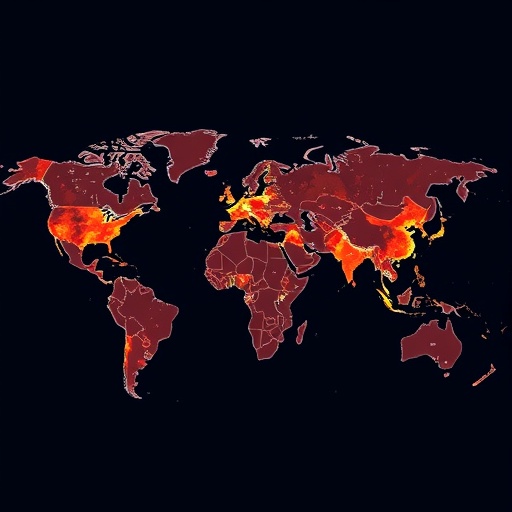
The re-emergence of cholera in fragile settings marks a stark reminder of the vulnerabilities that persist in global health infrastructures, particularly in regions destabilized by conflict, climate change, and economic upheaval. Despite advancements in sanitation and infectious disease control over the past century, cholera’s return signals the complex interplay between social, environmental, and technological factors that can precipitate outbreaks of diseases once considered under control.
In Lebanon, where cholera had been largely eradicated for nearly three decades, the unprecedented resurgence in 2022 underscores how rapidly infectious diseases can traverse borders and populations when surveillance systems falter. The outbreak unfolded rapidly, exacerbated by crumbling water and sanitation infrastructures, and significant displacement of populations across borders. These conditions created an ideal environment for an outbreak to proliferate unchecked, illustrating key gaps in traditional disease monitoring systems within fragile state contexts.
Traditional cholera surveillance methods rely heavily on laboratory confirmation and paper-based reporting protocols. However, these systems are often undermined in crisis scenarios by resource limitations, accessibility challenges, and delays in information flow. The time lag between symptom onset, case verification, and reporting not only hampers swift response efforts but also diminishes the ability to predict and prevent further spread. In this context, the integration of digital health technologies becomes imperative, transitioning from a supplementary tool to critical public health infrastructure.
Digital surveillance tools enable real-time data collection and transmission, drastically reducing reporting delays and enhancing situational awareness for health authorities. Frontline health workers equipped with mobile devices can report suspected cholera cases promptly, facilitating immediate epidemiological response. This real-time data capture is crucial in unstable environments, where conventional communication and laboratory workflows may be disrupted or overwhelmed.
Geographic Information Systems (GIS) and predictive mapping technologies offer a transformative approach to infectious disease management. By leveraging spatial data layers—such as rainfall patterns, flood maps, and population movement—the risk landscape of cholera can be dynamically modeled. This allows public health professionals to identify and prioritize high-risk areas for targeted intervention, optimize resource allocation, and pre-position medical supplies ahead of outbreak peaks. These predictive capabilities are especially vital in fragile and climate-impacted regions where environmental factors can rapidly alter transmission dynamics.
Furthermore, genomic surveillance integrated with digital platforms has emerged as a vital tool for understanding pathogen evolution and transmission pathways. Whole-genome sequencing enables the differentiation between locally persisting strains and newly introduced variants, thereby informing tailored public health strategies. Real-time genomic data sharing across borders supports coordinated international responses, vital for diseases like cholera that can spread transnationally via displaced populations.
The nature of cholera outbreaks is evolving. Rather than following predictable seasonal trends, outbreaks now correlate strongly with contexts of social instability, environmental degradation, and forced migration. This paradigm shift demands a transition from solely reactive outbreak response to proactive predictive preparedness. Policymakers and global health agencies are challenged to build interoperable digital ecosystems that unify epidemiologic data with environmental and climatic indicators to anticipate and mitigate emergent threats.
However, technological solutions are not sufficient in isolation. Effective cholera control requires sustained investment in resilient health systems, improved water and sanitation infrastructure, and cross-sector collaboration bridging public health, climate science, and humanitarian agencies. Digital innovations must be accompanied by capacity building, infrastructure strengthening, and community engagement to ensure scalability and sustainability in complex emergencies.
The importance of predictive digital surveillance extends beyond cholera and applies broadly across infectious diseases influenced by global change. Climate variability, population displacement, and geopolitical instability increasingly intersect to create fertile grounds for disease emergence and re-emergence. Advancing digital health frameworks that integrate multisectoral data can enhance early warning systems and inform timely interventions globally.
The deployment of digital tools in fragile settings also reveals critical ethical and operational considerations. Ensuring data accuracy, privacy, and equitable access demands robust governance mechanisms. Digital health interventions must be adaptable to local contexts, cognizant of infrastructural limitations, and designed with community trust and participation as foundational elements.
This resurgence of cholera highlights a pressing imperative for global health security: the integration of cutting-edge digital surveillance technologies within a holistic framework encompassing social determinants, environmental monitoring, and sustained political commitment. Investing in such integrated infrastructures not only counters the revival of old diseases like cholera but builds resilient systems capable of confronting future infectious disease challenges.
In summary, the intersection of climate change, economic crises, and conflicts in fragile regions demands a paradigm shift in infectious disease surveillance and control. Digital health technologies—real-time mobile reporting, GIS-based predictive mapping, and genomic surveillance—represent indispensable tools to bridge historic gaps in outbreak detection and response. Moving beyond reactionary approaches toward predictive preparedness grounded in technological innovation and cross-sector collaboration is essential to avert the human and economic toll of cholera and similar diseases in an increasingly volatile world.
News Publication Date: 17-Mar-2026
References:
Basbouss-Serhal I. When Old Diseases Return: Cholera, Crisis, and Digital Surveillance in Fragile Settings. J Med Internet Res 2026;28:e94818. DOI: 10.2196/94818
Cite Scienmag News
Russell Cooper. (March 18, 2026). Digital Early Warning Systems Crucial Amid Resurgence of Cholera in Global Crisis Zones. Scienmag. https://scienmag.com/digital-early-warning-systems-crucial-amid-resurgence-of-cholera-in-global-crisis-zones/
Russell Cooper. "Digital Early Warning Systems Crucial Amid Resurgence of Cholera in Global Crisis Zones." Scienmag, 18 March 2026, https://scienmag.com/digital-early-warning-systems-crucial-amid-resurgence-of-cholera-in-global-crisis-zones/. Accessed 4 September 2026.
Russell Cooper. "Digital Early Warning Systems Crucial Amid Resurgence of Cholera in Global Crisis Zones." Scienmag. March 18, 2026. https://scienmag.com/digital-early-warning-systems-crucial-amid-resurgence-of-cholera-in-global-crisis-zones/


