

Monday, July 13, 2026
Science
No Result
View All Result
  • Login
  • HOME
  • SCIENCE NEWS
  • CONTACT US
  • HOME
  • SCIENCE NEWS
  • CONTACT US
No Result
View All Result
Scienmag
No Result
View All Result
Home Science News Cancer

Digital Check-Ins Boost Cancer Patient Outcomes, Study Shows

July 13, 2026
in Cancer
Reading Time: 2 mins read
0
Digital Check-Ins Boost Cancer Patient Outcomes, Study Shows

Digital Check-Ins Boost Cancer Patient Outcomes, Study Shows

65
SHARES
587
VIEWS
Share on FacebookShare on Twitter
ADVERTISEMENT

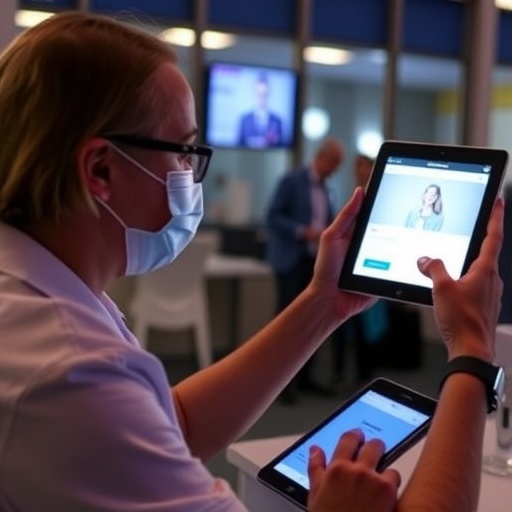
A groundbreaking study from Alliance Foundation Trials (AFT) has demonstrated that weekly electronic symptom monitoring significantly improves quality of life for patients undergoing treatment for advanced cancer. Published in JCO Oncology Practice, the trial showed that this remote symptom tracking is especially beneficial for underserved populations, including Black patients and those with lower educational attainment, marking a critical advancement in addressing healthcare disparities in oncology.

The randomized controlled trial, known as PRO-TECT (Patient-Reported Outcomes To Enhance Cancer Treatment), enrolled 1,191 adults across 52 community oncology clinics. Participants were divided into two groups: one receiving standard care and the other completing weekly brief symptom surveys remotely, either online or via an automated telephone system to ensure accessibility regardless of internet availability. Alerts generated from severe symptom reports were sent immediately to nursing staff, facilitating timely interventions.

This method of real-time patient-reported outcomes bypasses traditional barriers such as communication gaps and clinician biases, enabling care teams to proactively manage side effects and potentially delay emergency department visits—a known source of distress for cancer patients. After three months, those engaged with the electronic monitoring system exhibited notable improvements in both symptom control and physical functioning relative to controls.

Importantly, subgroup analyses revealed that Black patients experienced a pronounced reduction in symptom disparities compared to White patients, effectively closing the baseline gap by the study’s end. These patients also reported feeling more empowered in managing their care and had improved communication with healthcare providers. Meanwhile, patients with a high school education or less showed the most substantial benefits, underscoring the intervention’s potential to enhance equity in supportive cancer care.

Younger patients and women—two groups that typically report higher treatment-related distress—also saw significant gains in overall well-being, indicating broad applicability of this technology across diverse demographics. The study authors suggest that universal adoption of remote symptom check-ins in cancer care could serve as an influential tool for mitigating healthcare inequities by systematically identifying and addressing patient concerns.

This trial was supported by AFT and the Patient-Centered Outcomes Research Institute (PCORI) and utilized technology infrastructure from the UNC Lineberger Comprehensive Cancer Center’s Patient-Reported Outcomes Core. Researchers advocate for further studies to validate these findings in more generalized patient populations and to explore how emerging digital health tools can continue improving cancer treatment experiences.

These compelling results highlight how integrating digital health methodologies in oncology not only enhances symptom management and quality of life but also promotes health equity, thereby shaping the future of personalized cancer care.


Subject of Research: People
Article Title: Benefits of Electronic Symptom Monitoring During Cancer Treatment by Age, Sex, Race, and Education (Alliance AFT-39)
News Publication Date: 12-May-2026
Web References: https://ascopubs.org/doi/10.1200/OP-26-00015
References: Benefits of Electronic Symptom Monitoring During Cancer Treatment by Age, Sex, Race, and Education (Alliance AFT-39), JCO Oncology Practice, DOI: 10.1200/OP-26-00015
Image Credits: Alliance Foundation Trials
Keywords: cancer patients, oncology, health equity, patient monitoring, electronic symptom tracking, digital health, clinical trial, cancer treatment outcomes

Tags: addressing communication barriers in cancer treatmentcancer patient symptom monitoringdigital health interventions for underserved populationselectronic patient-reported outcomeshealthcare disparities in cancer careimpact of digital check-ins on quality of lifeimproving cancer care through technologypatient engagement in cancer treatmentrandomized controlled trials in oncologyreal-time symptom alerts for cancer patientsremote symptom tracking in oncologytelehealth solutions for cancer symptom management
Share26Tweet16
Previous Post

Racial and Economic Gaps Affect Coastal Access and Ocean Benefits

Next Post

First Superconducting Quantum Heat Engine Paves Way for Bigger Quantum Computers

Related Posts

Blocking Siglec-binding Sialoglycans to Halt Prostate Cancer Bone Spread
Cancer

Blocking Siglec-binding Sialoglycans to Halt Prostate Cancer Bone Spread

July 13, 2026
YEARS Algorithm Enhances Pulmonary Embolism Diagnosis in Cancer Patients
Cancer

YEARS Algorithm Enhances Pulmonary Embolism Diagnosis in Cancer Patients

July 12, 2026
Anthropometric Traits and Metabolic Biomarkers Linked to Pancreatic Cancer Risk
Cancer

Anthropometric Traits and Metabolic Biomarkers Linked to Pancreatic Cancer Risk

July 12, 2026
TP53 Mutation Triggers CD8+ T Cell Exhaustion Causing Therapy-Resistant Urothelial Cancer
Cancer

TP53 Mutation Triggers CD8+ T Cell Exhaustion Causing Therapy-Resistant Urothelial Cancer

July 11, 2026
UCSF Study Finds Rapid Rise in Breast Cancer Among Asian American Women
Cancer

UCSF Study Finds Rapid Rise in Breast Cancer Among Asian American Women

July 10, 2026
Radiation Therapy Clinic Closures May Widen US Cancer Care Disparities
Cancer

Radiation Therapy Clinic Closures May Widen US Cancer Care Disparities

July 10, 2026
Next Post
First Superconducting Quantum Heat Engine Paves Way for Bigger Quantum Computers

First Superconducting Quantum Heat Engine Paves Way for Bigger Quantum Computers

  • Mothers who receive childcare support from maternal grandparents show more

    Mothers who receive childcare support from maternal grandparents show more parental warmth, finds NTU Singapore study

    27656 shares
    Share 11059 Tweet 6912
  • University of Seville Breaks 120-Year-Old Mystery, Revises a Key Einstein Concept

    1061 shares
    Share 424 Tweet 265
  • Bee body mass, pathogens and local climate influence heat tolerance

    682 shares
    Share 273 Tweet 171
  • Researchers record first-ever images and data of a shark experiencing a boat strike

    546 shares
    Share 218 Tweet 137
  • Groundbreaking Clinical Trial Reveals Lubiprostone Enhances Kidney Function

    531 shares
    Share 212 Tweet 133
Science

Embark on a thrilling journey of discovery with Scienmag.com—your ultimate source for cutting-edge breakthroughs. Immerse yourself in a world where curiosity knows no limits and tomorrow’s possibilities become today’s reality!

RECENT NEWS

  • Early RNA Life May Have Repaired Genomes, Shedding Light on Origins
  • Blocking TMEM141 Reduces MASH and Fibrosis Through ROS-HNF4α Pathway
  • New Quantitative Standards Defined for Thirdhand Tobacco Smoke Indoors
  • Dementia Rates Increasing Among Latino Populations Over Decades

Categories

  • Agriculture
  • Anthropology
  • Archaeology
  • Athmospheric
  • Biology
  • Biotechnology
  • Blog
  • Bussines
  • Cancer
  • Chemistry
  • Climate
  • Earth Science
  • Editorial Policy
  • Marine
  • Mathematics
  • Medicine
  • Pediatry
  • Policy
  • Psychology & Psychiatry
  • Science Education
  • Social Science
  • Space
  • Technology and Engineering

Subscribe to Blog via Email

Enter your email address to subscribe to this blog and receive notifications of new posts by email.

Join 5,146 other subscribers

© 2025 Scienmag - Science Magazine

Welcome Back!

Login to your account below

Forgotten Password?

Retrieve your password

Please enter your username or email address to reset your password.

Log In
No Result
View All Result
  • HOME
  • SCIENCE NEWS
  • CONTACT US

© 2025 Scienmag - Science Magazine

Discover more from Science

Subscribe now to keep reading and get access to the full archive.

Continue reading
