

Sunday, August 23, 2026
Science
No Result
View All Result
  • Login
  • HOME
  • SCIENCE NEWS
  • CONTACT US
  • HOME
  • SCIENCE NEWS
  • CONTACT US
No Result
View All Result
Scienmag
No Result
View All Result
Home Science News Technology and Engineering

First Superconducting Quantum Heat Engine Paves Way for Bigger Quantum Computers

July 13, 2026
in Technology and Engineering
Reading Time: 2 mins read
0
First Superconducting Quantum Heat Engine Paves Way for Bigger Quantum Computers

First Superconducting Quantum Heat Engine Paves Way for Bigger Quantum Computers

65
SHARES
587
VIEWS
Share on FacebookShare on Twitter
ADVERTISEMENT

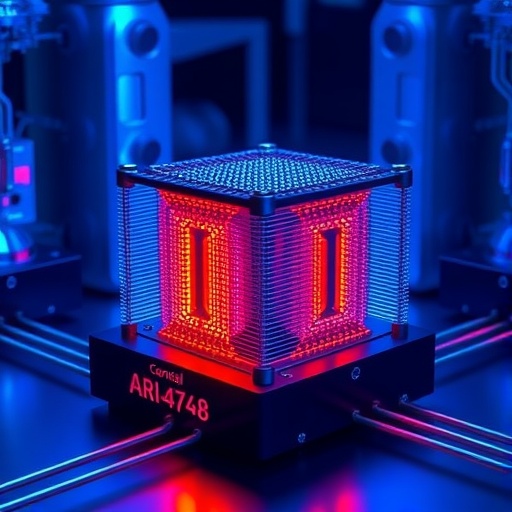
In a groundbreaking advancement merging quantum mechanics with thermodynamics, researchers at Aalto University have constructed the world’s first superconducting quantum heat engine. This tiny yet sophisticated device operates inside a superconducting circuit, bringing the age-old concept of heat engines into the quantum realm. By harnessing the unique properties of superconducting qubits and quantum refrigerators, the team has demonstrated an innovative Otto cycle, a thermodynamic process fundamental to many classical engines.

At the heart of this quantum engine lies a transmon qubit, a central component in many quantum computing architectures. Unlike conventional heat engines that require distinct hot and cold sources, this quantum heat engine employs a single, quantum-circuit refrigerator capable of acting as both heat source and sink. Tunable on demand, this element controls heat flow at an unprecedented quantum scale, allowing the engine to cyclically produce measurable positive work from minuscule ultracold energy fluctuations.

This experimental setup is a significant leap forward, proving that quantum thermodynamics can be engineered with precision in superconducting systems. The researchers designed their engine to operate near absolute zero inside a cryostat, carefully orchestrating microwave pulses that manage the cyclic Otto process. By monitoring the quantum state of the transmon, they showed direct evidence of work extraction—a feat that had long eluded quantum engineers.

The implications of this breakthrough extend beyond the laboratory. Autonomous quantum heat engines could help overcome significant challenges faced by the burgeoning quantum computing industry. Presently, high-qubit quantum computers rely on millions of costly microwave cables for qubit control and readout, cables that also introduce noise and complexity. Integrating heat engines capable of operating independently on-chip promises to drastically simplify these systems, reducing costs and improving stability.

Finland’s ambitious Quantum Technology Strategy foresees quantum computers with thousands of logical qubits on the horizon, demanding vast physical qubit arrays. Innovations like this superconducting quantum engine pave the way to meet such demands by minimizing external control infrastructure. The technology could enable quantum processors to perform essential functions such as qubit readout autonomously at cryogenic temperatures, bypassing the noisy transition to room temperature electronics.

This pioneering research was led by Academy Professor Mikko Möttönen and first author Tuomas Uusnäkki. Their paper detailing the construction and operation of the cyclic quantum heat engine was published in Nature Communications on July 13, 2026. Utilizing the state-of-the-art facilities at OtaNano, Finland’s national infrastructure for nano and quantum tech, the team demonstrated a clear proof of concept for a new class of quantum devices melding thermodynamics with quantum information science.

As quantum technologies continue to evolve, this fusion of quantum physics and thermodynamics may unlock novel functionalities and efficiencies. This development stands as a milestone indicating not only the feasibility of quantum heat engines but also their potential to reduce technological barriers in scaling future quantum computing systems.

Subject of Research: Superconducting quantum heat engine and quantum thermodynamics
Article Title: World’s first superconducting quantum heat engine offers path to larger quantum computers
News Publication Date: 13-Jul-2026
Web References: http://dx.doi.org/10.1038/s41467-026-72651-x
Image Credits: Heikka Valja / Aalto University

Keywords

Quantum heat engine, superconducting circuits, transmon qubit, quantum thermodynamics, Otto cycle, quantum refrigerator, quantum computing, cryogenic technology, autonomous quantum devices

Tags: advancements in quantum thermodynamic enginescryogenic quantum devicesOtto cycle in quantum systemsquantum computing architecturequantum heat flow controlquantum refrigeratorquantum thermodynamicsquantum work measurementsuperconducting circuitSuperconducting quantum heat enginetransmon qubitultracold energy fluctuations
Share26Tweet16
Previous Post

Digital Check-Ins Boost Cancer Patient Outcomes, Study Shows

Next Post

RB5 Dye Breakdown May Increase Toxicity Despite Color Removal

Related Posts

KAIST Surface Defects Boost Droplet Formation, Removal, and Heat Transfer by 5.5-Fold
Technology and Engineering

KAIST Surface Defects Boost Droplet Formation, Removal, and Heat Transfer by 5.5-Fold

August 23, 2026
Ge/SiGe Quantum-Well Photodetectors Integrated with SiN Waveguides on 200-mm Silicon Wafers
Technology and Engineering

Ge/SiGe Quantum-Well Photodetectors Integrated with SiN Waveguides on 200-mm Silicon Wafers

August 22, 2026
Early-Onset Inflammatory Bowel Disease Advances, Yet Health Inequities Persist
Technology and Engineering

Early-Onset Inflammatory Bowel Disease Advances, Yet Health Inequities Persist

August 22, 2026
In-Situ Friction Stir Forging Produces Near-Net-Shape Soft Magnetic Composite Parts
Technology and Engineering

In-Situ Friction Stir Forging Produces Near-Net-Shape Soft Magnetic Composite Parts

August 22, 2026
New analysis maps China’s ozone pollution pathways and mitigation strategies
Technology and Engineering

New analysis maps China’s ozone pollution pathways and mitigation strategies

August 22, 2026
National labs collaborate to accelerate qualification of critical nuclear components
Technology and Engineering

National labs collaborate to accelerate qualification of critical nuclear components

August 22, 2026
Next Post
RB5 Dye Breakdown May Increase Toxicity Despite Color Removal

RB5 Dye Breakdown May Increase Toxicity Despite Color Removal

  • Mothers who receive childcare support from maternal grandparents show more

    Mothers who receive childcare support from maternal grandparents show more parental warmth, finds NTU Singapore study

    27656 shares
    Share 11059 Tweet 6912
  • University of Seville Breaks 120-Year-Old Mystery, Revises a Key Einstein Concept

    1061 shares
    Share 424 Tweet 265
  • Bee body mass, pathogens and local climate influence heat tolerance

    682 shares
    Share 273 Tweet 171
  • Researchers record first-ever images and data of a shark experiencing a boat strike

    546 shares
    Share 218 Tweet 137
  • Groundbreaking Clinical Trial Reveals Lubiprostone Enhances Kidney Function

    531 shares
    Share 212 Tweet 133
Science

Embark on a thrilling journey of discovery with Scienmag.com—your ultimate source for cutting-edge breakthroughs. Immerse yourself in a world where curiosity knows no limits and tomorrow’s possibilities become today’s reality!

RECENT NEWS

  • Hamel’s Variational Integrators Reveal Orbital Evolution of Two Binary Asteroid Systems
  • IncResUnet Automatically Detects Ionospheric Plasma Bubbles
  • Blocking glucosylceramide production kills cancer cells via lysosomal dysfunction, not ceramide buildup
  • ZCCHC4 boosts replication-dependent histone mRNA translation by interacting with eIF3

Categories

  • Agriculture
  • Anthropology
  • Archaeology
  • Athmospheric
  • Biology
  • Biotechnology
  • Blog
  • Bussines
  • Cancer
  • Chemistry
  • Climate
  • Earth Science
  • Editorial Policy
  • Marine
  • Mathematics
  • Medicine
  • Pediatry
  • Policy
  • Psychology & Psychiatry
  • Science Education
  • Social Science
  • Space
  • Technology and Engineering

Subscribe to Blog via Email

Success! An email was just sent to confirm your subscription. Please find the email now and click 'Confirm Follow' to start subscribing.

Join 5,150 other subscribers

© 2025 Scienmag - Science Magazine

Welcome Back!

Login to your account below

Forgotten Password?

Retrieve your password

Please enter your username or email address to reset your password.

Log In
No Result
View All Result
  • HOME
  • SCIENCE NEWS
  • CONTACT US

© 2025 Scienmag - Science Magazine
