

Monday, October 26, 2026
Science
No Result
View All Result
  • Login
  • HOME
  • SCIENCE NEWS
  • CONTACT US
  • HOME
  • SCIENCE NEWS
  • CONTACT US
No Result
View All Result
Scienmag
No Result
View All Result
Home Science News Medicine

Dietary Phytochemicals Show Promise Against Neuroinflammation, but Bioavailability Barriers Remain

October 26, 2026
in Medicine, Science News
Daisy Hatcher
By Daisy Hatcher Scienmag Editorial Profile - Food Safety and Toxicology
Reading Time: 2 mins read
0
Dietary Phytochemicals Show Promise Against Neuroinflammation, but Bioavailability Barriers Remain

Dietary Phytochemicals Show Promise Against Neuroinflammation, but Bioavailability Barriers Remain

65
SHARES
587
VIEWS
Share on FacebookShare on Twitter
ADVERTISEMENT

Neuroinflammation and oxidative stress rank among the most common and fundamental biochemical mechanisms underlying many neurological disorders, and both are promising therapeutic targets. According to a new review, the two processes are bidirectional: each can trigger and amplify the other. Activated immune cells during neuroinflammation produce high levels of reactive oxygen species, creating a vicious biochemical cycle in which inflammation fuels oxidative damage and oxidative damage sustains inflammation. Because of this coupling, the authors argue that targeting neuroinflammation represents an ideal opportunity to curtail both processes at once.

The initiation and progression of neuroinflammation cause structural and functional damage to both neurons and glial cells in the central nervous system. Early intervention to inhibit neuroinflammation could therefore prevent irreversible damage to nervous tissue before it accumulates. Current pharmacological options, however, carry burdens. The review notes that the glucocorticosteroids and nonsteroidal anti-inflammatory drugs now applied in neurological disorders pose a risk of injury to the cardiovascular, gastrointestinal, respiratory, hepatic, and renal systems, limiting their long-term suitability for chronic conditions.

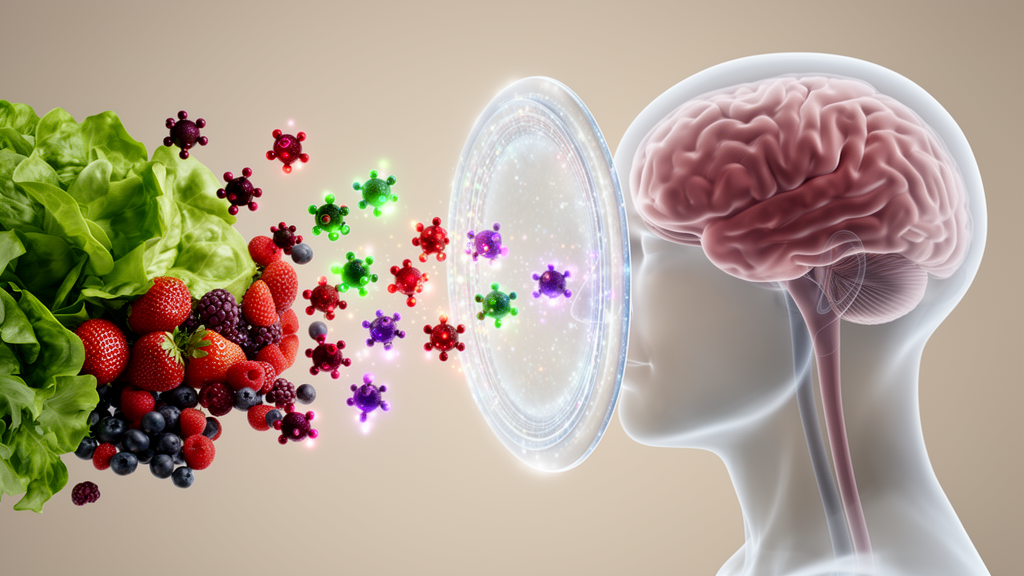
As substitutes, the authors point to bioactive phytochemicals derived from dietary herbal medicines that have demonstrated anti-inflammatory activity. These compounds could serve as effective alternatives to conventional anti-inflammatory drugs. Yet the evidence base remains uneven: very few of these phytochemicals have undergone clinical trials demonstrating efficacy and safety, and several limitations—including lower bioavailability, solubility, and stability—hinder their clinical use.

The review’s purpose is to identify preclinical data on multiple dietary bioactive phytochemicals with robust anti-neuroinflammatory effects that could be considered for clinical trials. Drawing on what the authors describe as sufficient, efficacious, and predominantly preclinical data, it highlights the need for future modifications to enhance bioavailability while maintaining or improving therapeutic efficacy and reducing systemic side effects. Notably, the authors argue that this formulation-focused agenda should take priority over evaluating the compounds’ potency in newer disease models or exploring additional mechanisms of action—a deliberate redirection of research effort toward translational barriers rather than further mechanistic discovery.

The review also sets out a prioritization strategy. It calls for identifying top-tier phytochemicals, or combinations of them, that exhibit high bioavailability, optimal dosing, and proven long-term safety, while minimizing drug interactions and systemic toxicity. To make such comparisons meaningful across laboratories, the authors propose screening candidates through a standardized set of preclinical studies before advancing the most promising agents toward human testing. In their framing, managing chronic neuroinflammation with phytochemicals depends less on finding new compounds and more on systematically optimizing the delivery, dosing, and safety profiles of candidates already supported by robust preclinical evidence—an approach the authors present as the essential next step for moving these dietary molecules from bench toward clinical evaluation.

Subject of Research: Dietary phytochemicals as anti-neuroinflammatory therapeutic candidates and their translational barriers

Article Title: Dietary phytochemicals targeting neuroinflammation: mechanisms, bioavailability and translational challenges

Article References: Bhat, K. M. R., Upadhya, R., Nayak, A., Konuri, A., S. E., P. K., Adiga, M., Rao, V. K., & Upadhya, D. (2026). Dietary phytochemicals targeting neuroinflammation: mechanisms, bioavailability and translational challenges. Frontiers in Pharmacology, 17, Article 1943126. https://doi.org/10.3389/fphar.2026.1943126

Image Credits: AI Generated

DOI: 10.3389/fphar.2026.1943126

Keywords: neuroinflammation, oxidative stress, phytochemicals, bioavailability, preclinical studies, herbal medicines, reactive oxygen species, glial cells, clinical translation, drug safety, neurological disorders, drug development

Cite Scienmag News

Daisy Hatcher. (October 26, 2026). Dietary Phytochemicals Show Promise Against Neuroinflammation, but Bioavailability Barriers Remain. Scienmag. https://scienmag.com/dietary-phytochemicals-show-promise-against-neuroinflammation-but-bioavailability-barriers-remain/


Daisy Hatcher. "Dietary Phytochemicals Show Promise Against Neuroinflammation, but Bioavailability Barriers Remain." Scienmag, 26 October 2026, https://scienmag.com/dietary-phytochemicals-show-promise-against-neuroinflammation-but-bioavailability-barriers-remain/. Accessed 26 October 2026.

Daisy Hatcher. "Dietary Phytochemicals Show Promise Against Neuroinflammation, but Bioavailability Barriers Remain." Scienmag. October 26, 2026. https://scienmag.com/dietary-phytochemicals-show-promise-against-neuroinflammation-but-bioavailability-barriers-remain/

Tags: bidirectional relationship between inflammation and oxidative damagebioavailabilitybioavailability barriers of phytochemicalsclinical translationdietary phytochemicals for neuroinflammationdrug developmentdrug safetyearly intervention in neuroinflammatory processesglial cellsherbal medicinesherbal medicines with anti-inflammatory propertieslimitations of conventional anti-inflammatory drugsneuroinflammationneuroinflammation therapeutic targetsneurological disordersneuroprotection through natural compoundsOxidative stressoxidative stress in neurological disordersphytochemicalspotential of plant-derived compounds in neurological therapypreclinical studiesreactive oxygen speciesreactive oxygen species in neurodegenerationsafety concerns of corticosteroids and NSAIDs
Share26Tweet16
Previous Post

Telemedicine Lifestyle Program Linked to Weight Loss and Better Blood Sugar Control in Metabolic Syndrome

Related Posts

Telemedicine Lifestyle Program Linked to Weight Loss and Better Blood Sugar Control in Metabolic Syndrome
Medicine

Telemedicine Lifestyle Program Linked to Weight Loss and Better Blood Sugar Control in Metabolic Syndrome

October 26, 2026
Standard Survival Model Fails for Ethiopian Colorectal Cancer Data
Science News

Standard Survival Model Fails for Ethiopian Colorectal Cancer Data

October 26, 2026
Hepatitis E Accounts for Small Share of Suspected Acute Hepatitis in Brazil
Medicine

Hepatitis E Accounts for Small Share of Suspected Acute Hepatitis in Brazil

October 26, 2026
Step Counts Outperform Smartwatch Intensity Algorithms in Health Phenotyping Study
Medicine

Step Counts Outperform Smartwatch Intensity Algorithms in Health Phenotyping Study

October 26, 2026
Fabricated References Spread Beyond Medicine, Audit of 500,000 Papers Finds
Technology and Engineering

Fabricated References Spread Beyond Medicine, Audit of 500,000 Papers Finds

October 26, 2026
GOCI-II, Sentinel-2 and Sentinel-3 Compared on East China Sea Algal Blooms
Earth Science

GOCI-II, Sentinel-2 and Sentinel-3 Compared on East China Sea Algal Blooms

October 26, 2026
Next Post
AI framework turns social media chatter into brand collaboration shortlists

AI framework turns social media chatter into brand collaboration shortlists

  • Mothers who receive childcare support from maternal grandparents show more optimized

    Mothers who receive childcare support from maternal grandparents show more parental warmth, finds NTU Singapore study

    27656 shares
    Share 11059 Tweet 6912
  • University of Seville Breaks 120-Year-Old Mystery, Revises a Key Einstein Concept

    1061 shares
    Share 424 Tweet 265
  • Bee body mass, pathogens and local climate influence heat tolerance

    682 shares
    Share 273 Tweet 171
  • Researchers record first-ever images and data of a shark experiencing a boat strike

    546 shares
    Share 218 Tweet 137
  • Groundbreaking Clinical Trial Reveals Lubiprostone Enhances Kidney Function

    531 shares
    Share 212 Tweet 133
Science

Embark on a thrilling journey of discovery with Scienmag.com—your ultimate source for cutting-edge breakthroughs. Immerse yourself in a world where curiosity knows no limits and tomorrow’s possibilities become today’s reality!

RECENT NEWS

  • AI framework turns social media chatter into brand collaboration shortlists
  • Dietary Phytochemicals Show Promise Against Neuroinflammation, but Bioavailability Barriers Remain
  • Telemedicine Lifestyle Program Linked to Weight Loss and Better Blood Sugar Control in Metabolic Syndrome
  • Standard Survival Model Fails for Ethiopian Colorectal Cancer Data

Categories

  • Agriculture
  • Anthropology
  • Archaeology
  • Athmospheric
  • Biology
  • Biotechnology
  • Blog
  • Bussines
  • Cancer
  • Chemistry
  • Climate
  • Earth Science
  • Editorial Policy
  • Marine
  • Mathematics
  • Medicine
  • Pediatry
  • Policy
  • Psychology & Psychiatry
  • Science Education
  • Science News
  • Social Science
  • Space
  • Technology and Engineering

Subscribe to Blog via Email

Enter your email address to subscribe to this blog and receive notifications of new posts by email.

Join 5,151 other subscribers

© 2025 Scienmag - Science Magazine

Welcome Back!

Login to your account below

Forgotten Password?

Retrieve your password

Please enter your username or email address to reset your password.

Log In
No Result
View All Result
  • HOME
  • SCIENCE NEWS
  • CONTACT US

© 2025 Scienmag - Science Magazine

Discover more from Science

Subscribe now to keep reading and get access to the full archive.

Continue reading