


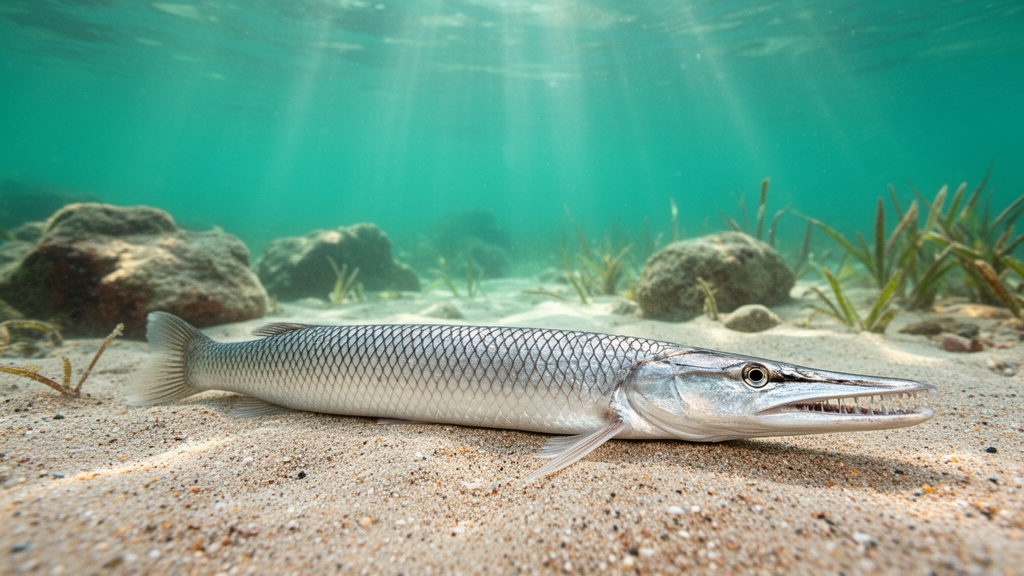
Scientists have confirmed the presence of the diamond lizardfish Synodus synodus in the coastal waters of Malta, marking the first verified record of this subtropical predator in the central Mediterranean Sea. The two fish were landed on 13 April 2025 off Wied iz-Zurrieq, on the southwestern coast of the island of Malta, at a depth of 20 metres. A trammel net set over sandy bottom near sparsely distributed rocks captured the animals, and the catch came to light through the Spot the Alien Fish citizen science campaign, which has been running within the Department of Geosciences of the University of Malta since 2016.
Specimen A measured 300.2 millimetres in total length and weighed 244.7 grams, while specimen B measured 166.3 millimetres and weighed 38.6 grams. Both are now preserved in ethanol in the university collection under catalogue number OMRG_06_2025. Morphological examination followed the standard protocols of Hubbs and Lagler, with measurements taken to an accuracy of 0.1 millimetres.
The fish displayed the classic lizardfish silhouette: an elongate, cylindrical body, a short-based first dorsal fin, a small adipose second dorsal fin, a forked caudal fin and a lateral line running to the tail base. Diagnostic details clinched the identification, including four scale rows above the lateral line, lanceolate teeth on the jaws alternating long and short, well-developed lingual teeth on the tongue, and a long flap on the anterior nostril. Dorsal fin rays numbered 13, anal fin rays 8, pelvic fin rays 8, pectoral fin rays 12 and caudal fin rays 19, with 59 pored lateral line scales counted in specimen A and at least 56 in the damaged specimen B.
Colouration provided further confirmation. In the thawed specimens the back was reddish and the belly pale, crossed by at least seven irregular darker bands with narrow ventral extensions, dark brown patches along the upper flanks, yellowish fins with transverse dark bands, barred lips, a red-marked eye and a distinctive dark blotch at the tip of the snout. An underwater photograph taken on 3 May 2025 by a diver at Cirkewwa, off the northwestern coast of Malta at 20 metres on hard bottom covered with macroalgae, revealed the animal in life: four large red-brown bands across the back between the dorsal fin origin and the caudal fin base, alternating with orange bands, sparse sky-blue shades and a black spot on the upper surface of the snout.
This livery matches historical descriptions of Synodus synodus published as far back as Fowler in 1936. Polymerase chain reactions were run in 25 microlitre volumes with GoTaq G2 Flexi DNA polymerase under a cycling profile of 35 cycles, and amplification success was verified by 2 percent agarose gel electrophoresis before sequencing in both directions. The resulting consensus sequences were compared against public repositories using BLASTn in NCBI GenBank and the Identification Engine of the Barcode of Life Data System, and have been deposited under GenBank accession numbers PV904155 and PV904156.
The Maltese sequences showed a maximum identity of only 95.40 percent with reference sequences of Synodus synodus from the western Atlantic. In a neighbour-joining tree reconstructed in MEGA 11 from 35 public COI sequences of the species, plus 11 sequences of five congeneric species as comparative outgroups, the Maltese fish did not cluster with the western Atlantic specimens. Instead they formed a separate, well-supported cluster with 99 percent bootstrap support.
The authors attribute this pattern to the limited representation of Mediterranean and eastern Atlantic populations in public databases, noting that no eastern Atlantic COI sequences of the species are currently available in BOLD to corroborate the assignment further. That genetic gap fits with what is already known about the species. The diamond lizardfish is native to both sides of the Atlantic, ranging from Uruguay to Canada in the west and from Senegal to northern Angola in the east, including island groups such as Madeira, the Canaries and Cape Verde.
Earlier work by Frable and colleagues and by Russell has shown that eastern and western Atlantic populations are genetically distinct, and Norman suggested as early as 1935 that an eastern subspecies might exist. Eastern Atlantic individuals also tend to grow larger, reaching about 30 centimetres standard length against roughly 15 centimetres in the west. The Maltese confirmation also casts doubt on recent reports of a different lizardfish from the eastern Mediterranean.
Synodus randalli, a benthopelagic tropical species of the western Indian Ocean known from the Red Sea to South Africa, was reported for the first time in the Mediterranean in 2023 at Iskenderun Bay in Turkey, with subsequent records from Crete and Mersin Bay. Yet the authors flag multiple inconsistencies. The Mediterranean specimens were caught far shallower than the 140 to 250 metre depth range reported for the species, their sizes greatly exceed the 11 to 13 centimetre maximum standard length of Synodus randalli, their pectoral fins fail to reach the diagnostic line from pelvic fin base to dorsal fin origin, and they show eight anal-fin rays where the species should have nine.
Most tellingly, the specimen photographed at Iskenderun displays the dark snout blotch characteristic of Synodus synodus. The authors conclude that the identity of these eastern Mediterranean records warrants direct comparison with the species they have now confirmed in Malta. Why has the diamond lizardfish gone so long undetected in the central Mediterranean?
The authors suggest it may simply be uncommon, or that it has been under-recorded because of its cryptic behaviour and its resemblance to other lizardfishes, including the native Atlantic lizardfish Synodus saurus and the invasive Lessepsian migrant Saurida lessepsianus, which entered the basin from the Red Sea through the Suez Canal. Warming Mediterranean waters, documented in recent assessments, together with empty ecological niches created by overfishing, could favour the reproduction and spread of an existing population or enable a fresh wave of expansion from the eastern Atlantic. Notably, the same fisher who provided the two study specimens reports having caught at least five to ten similar individuals at the same location since January 2025, all sold before they could be formally documented.
The study updates the known fish fauna of the Maltese Archipelago and illustrates the growing power of citizen science in tracking shifting marine distributions. Campaigns such as Spot the Alien Fish succeed best when key stakeholders, particularly fishers, are engaged, since fishers hold valuable local ecological knowledge about where unfamiliar species appear. The authors stress that combining classical morphological examination with molecular approaches remains essential for accurate identification in taxonomically challenging groups, and that the scarcity of records so far makes further research on the distribution of the diamond lizardfish across the Mediterranean basin a clear priority.
Subject of Research: First confirmed record of the diamond lizardfish Synodus synodus in Maltese waters, central Mediterranean Sea
Article Title: Synodus synodus ( Actinopterygii , Aulopiformes , Synodontidae ) in the coastal waters of Malta, central Mediterranean Sea
Article References: Deidun, A., Corsini-Foka, M., Zava, B., Marrone, A., Catalano, G., Crobe, V., & Tinti, F. (2025). Synodus synodus (Actinopterygii, Aulopiformes, Synodontidae) in the coastal waters of Malta, central Mediterranean Sea. Acta Ichthyologica et Piscatoria, 55, 403-411. https://doi.org/10.3897/aiep.55.173159
Image Credits: AI Generated
Keywords: Synodus synodus, diamond lizardfish, Malta, Mediterranean Sea, DNA barcoding, COI gene, invasive species, marine biodiversity, citizen science, Synodontidae, neonative species, ichthyology
Cite Scienmag News
Patricia Pace. (October 20, 2026). Diamond lizardfish confirmed in Maltese waters for the first time. Scienmag. https://scienmag.com/diamond-lizardfish-confirmed-in-maltese-waters-for-the-first-time/
Patricia Pace. "Diamond lizardfish confirmed in Maltese waters for the first time." Scienmag, 20 October 2026, https://scienmag.com/diamond-lizardfish-confirmed-in-maltese-waters-for-the-first-time/. Accessed 20 October 2026.
Patricia Pace. "Diamond lizardfish confirmed in Maltese waters for the first time." Scienmag. October 20, 2026. https://scienmag.com/diamond-lizardfish-confirmed-in-maltese-waters-for-the-first-time/


