


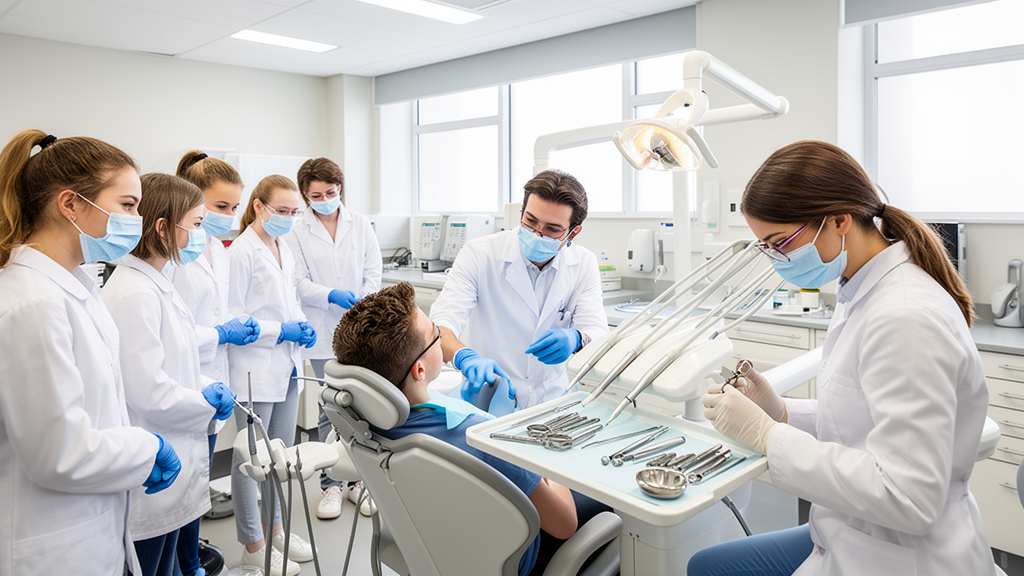
A retrospective analysis of 122 occupational incident reports from one dental school found that percutaneous sharps injuries accounted for 84.4% of reported events between January 2023 and September 2025. Needlestick injuries were the most common mechanism, making up 31.1% of incidents, and 78.7% of the reported events were classified as contaminated. The results also indicated that the distribution of incidents differed by training stage, with preclinical students reporting a greater proportion of mucocutaneous or ocular exposures and no needlestick injuries in the available records, while clinical students and professionals predominantly experienced percutaneous injuries.
Researchers extracted data from notification forms entered into the institution’s i-DEAL occupational safety reporting system. The records came from preclinical laboratories, clinical units and the central sterilization unit. They assessed incident type, the instrument or mechanism involved, contamination status, the anatomical site affected and post-exposure management procedures.
The study was descriptive and retrospective rather than an intervention trial, meaning it characterized reported events without testing whether any safety program reduced injuries. Statistical comparisons used the Pearson chi-square test or the Fisher–Freeman–Halton exact test, as appropriate. The analysis identified statistically significant differences among training levels in incident type, mechanism and department, with p-values no greater than 0.006.
Most incidents were classified as percutaneous sharps injuries rather than mucocutaneous or ocular exposures, and needlesticks represented nearly one-third of the total. The contaminated category applied to 78.7% of incidents, although the supplied study abstract does not characterize the contaminant involved. Together, these measurements show that the institutional reports were dominated by penetrating injuries associated with sharps, particularly in clinical training and professional roles.
Preclinical students had a different reported profile. Their records contained a higher relative share of mucocutaneous and ocular exposures, including ocular events, but no needlestick injuries. This pattern is an association within the available incident reports, not evidence that one training stage inherently causes a particular type of exposure.
The authors proposed that prevention efforts should reflect the hazards associated with each stage and clinical context. Their suggestions included early and repeated safety education, safer needle-handling workflows, consistent eye protection from the preclinical phase, and streamlined reporting and post-exposure follow-up. Because the study did not evaluate these measures, their benefits and effects on injury rates were not established.
Incident-report data can identify patterns in reported occupational hazards, but they do not provide a complete measure of how often injuries occur. Events that were not recognized, reported or recorded would therefore be missing. The finding of no needlestick injuries among preclinical students describes the available reports and does not establish that such events were impossible.
Within these limits, the study documents a dental education environment in which percutaneous sharps injuries predominated overall, alongside a comparatively greater concentration of mucocutaneous and ocular exposures in preclinical records.
Subject of Research: Occupational injuries and exposures among dental students and professionals in one dental school
Article Title: Occupational injuries and exposures in dental education: a retrospective analysis of institutional incident reports
Article References: Akbiyik Az, Z. A., Muhtar, M. O., & Ayhan, M. (2026). Occupational injuries and exposures in dental education: a retrospective analysis of institutional incident reports. BMC Medical Education. https://doi.org/10.1186/s12909-026-10666-0
Image Credits: AI Generated
DOI: 10.1186/s12909-026-10666-0
Keywords: dental education, occupational safety, sharps injuries, needlestick injuries, ocular exposure, clinical training, preclinical laboratories, incident reporting, post-exposure management, Occupational, injuries, exposures
Cite Scienmag News
Courtney Benton. (October 26, 2026). Dental School Reports Show Distinct Occupational Exposure Patterns by Training Stage. Scienmag. https://scienmag.com/dental-school-reports-show-distinct-occupational-exposure-patterns-by-training-stage/
Courtney Benton. "Dental School Reports Show Distinct Occupational Exposure Patterns by Training Stage." Scienmag, 26 October 2026, https://scienmag.com/dental-school-reports-show-distinct-occupational-exposure-patterns-by-training-stage/. Accessed 26 October 2026.
Courtney Benton. "Dental School Reports Show Distinct Occupational Exposure Patterns by Training Stage." Scienmag. October 26, 2026. https://scienmag.com/dental-school-reports-show-distinct-occupational-exposure-patterns-by-training-stage/


