

Monday, October 26, 2026
Science
No Result
View All Result
  • Login
  • HOME
  • SCIENCE NEWS
  • CONTACT US
  • HOME
  • SCIENCE NEWS
  • CONTACT US
No Result
View All Result
Scienmag
No Result
View All Result
Home Science News Technology and Engineering

Injection model caused faster, more severe joint degeneration in rats

October 26, 2026
in Technology and Engineering
Denise Maddox
By Denise Maddox Scienmag Editorial Profile - Mechanical Engineering
Reading Time: 2 mins read
0
Injection model caused faster, more severe joint degeneration in rats

Injection model caused faster, more severe joint degeneration in rats

65
SHARES
587
VIEWS
Share on FacebookShare on Twitter
ADVERTISEMENT

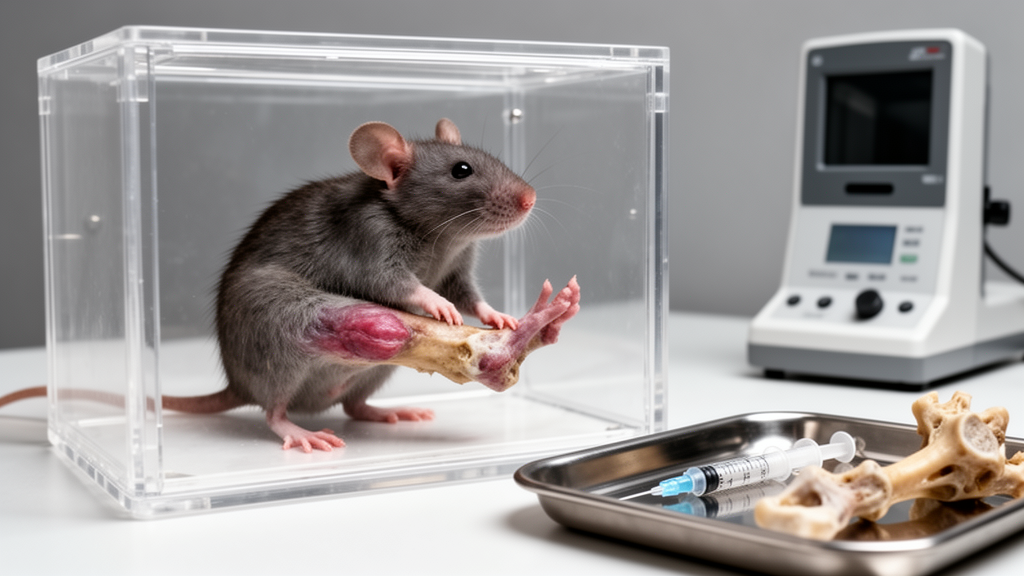
A rat study comparing two experimental approaches to temporomandibular joint osteoarthritis found that intra-articular injection of monosodium iodoacetate, or MIA, produced faster and more severe degeneration of the joint’s condylar cartilage than a model based on unilateral anterior crossbite. Under the tested conditions, the crossbite model generated milder changes that developed progressively, suggesting that the two approaches may be useful for studying different stages and aspects of the disease.

The researchers used 24 healthy adult male specific-pathogen-free Sprague–Dawley rats aged 6–8 weeks and weighing 180–200 grams. After seven days of acclimatization, the animals were randomly and equally divided into three groups: a normal control group, a unilateral anterior crossbite group and an MIA injection group. The study then combined quantitative measurements of condylar height at the anterior, central and posterior regions with histopathological examinations of the temporomandibular joint.

Both experimental models showed signs consistent with osteoarthritis. Safranin O-Fast Green staining, hematoxylin and eosin staining and immunohistochemistry revealed cartilage degeneration, changes in the subchondral bone, fewer chondrocytes and shrinkage of the remaining cartilage cells. Compared with controls, animals in both disease-model groups had significantly higher Mankin and OARSI scores and more positive inflammatory markers. These measurements indicated tissue damage and inflammation, although the investigators did not report the numerical effect sizes or statistical uncertainty for individual outcomes in the supplied abstract.

The principal difference was the intensity and timing of degeneration. The MIA group showed more pronounced increases in Mankin scores, OARSI scores and inflammatory-marker counts than the crossbite group. The authors therefore characterized the injection model as producing more rapid and severe condylar degeneration during the observation period, while the unilateral anterior crossbite model produced a milder, progressively developing form of joint change. The findings provide a direct experimental comparison of the two approaches rather than evidence that either reproduces osteoarthritis in people.

Both models were described as having model-, dose- and time-dependent characteristics, and neither fully captured the complex pathogenesis of human temporomandibular joint osteoarthritis. The results also apply specifically to the male rat population, experimental procedures and observation period used in the study. The authors concluded that model selection should depend on the research question and the disease stage under investigation, rather than on a general ranking of superiority. The study was published as open-access, peer-reviewed research in Scientific Reports, with the supplied version identified as an early publication subject to further editorial changes before the final version of record.

Subject of Research: Experimental comparison of two rat models of temporomandibular joint osteoarthritis

Article Title: Comparative evaluation of unilateral anterior crossbite and monoiodoacetate injection models for temporomandibular joint osteoarthritis in rats

Article References: He, Z., Xiao, Y., Xie, Q., & Jiang, X. (2026). Comparative evaluation of unilateral anterior crossbite and monoiodoacetate injection models for temporomandibular joint osteoarthritis in rats. Scientific Reports. https://doi.org/10.1038/s41598-026-72924-x

Image Credits: AI Generated

DOI: 10.1038/s41598-026-72924-x

Keywords: temporomandibular joint osteoarthritis, rat models, monosodium iodoacetate, anterior crossbite, cartilage degeneration, condylar damage, joint inflammation, histopathology, Sprague–Dawley rats, Comparative, evaluation, unilateral

Cite Scienmag News

Denise Maddox. (October 26, 2026). Injection model caused faster, more severe joint degeneration in rats. Scienmag. https://scienmag.com/injection-model-caused-faster-more-severe-joint-degeneration-in-rats/

Denise Maddox. "Injection model caused faster, more severe joint degeneration in rats." Scienmag, 26 October 2026, https://scienmag.com/injection-model-caused-faster-more-severe-joint-degeneration-in-rats/. Accessed 26 October 2026.

Denise Maddox. "Injection model caused faster, more severe joint degeneration in rats." Scienmag. October 26, 2026. https://scienmag.com/injection-model-caused-faster-more-severe-joint-degeneration-in-rats/


Tags: animal models for temporomandibular joint researchanterior crossbitecartilage degenerationcartilage degeneration in TMJcomparativecondylar damageearly vs. advanced joint degenerationeffects of MIA injection versus mechanical modelsevaluationhistopathological analysis of joint tissuehistopathologyinflammatory markers in joint degenerationintra-articular MIA injectionjoint inflammationMankin and OARSI scoring in osteoarthritismonosodium iodoacetateprogression of TMJ osteoarthritisrat model comparison for TMJ diseaserat modelsSprague-Dawley ratstemporomandibular joint osteoarthritistemporomandibular joint osteoarthritis rat modelsUnilateralunilateral anterior crossbite osteoarthritis model
Share26Tweet16
Previous Post

Review maps waste concrete powder’s emissions savings against weaker mortar performance

Next Post

Quarterly time-series study links trade terms with Uganda’s economic growth

Related Posts

Semantic Labels Guide Terrain-Specific Humanoid Behavior in Simulation
Technology and Engineering

Semantic Labels Guide Terrain-Specific Humanoid Behavior in Simulation

October 26, 2026
Finite-element study maps stresses around 4-mm ultra-short dental implants
Technology and Engineering

Finite-element study maps stresses around 4-mm ultra-short dental implants

October 26, 2026
Kinematic Model Tests Ductile-Hinge Layouts for Curved Bridge Launching
Technology and Engineering

Kinematic Model Tests Ductile-Hinge Layouts for Curved Bridge Launching

October 26, 2026
Higher Platelet-to-White Blood Cell Ratio Linked to Survival in HFpEF
Technology and Engineering

Higher Platelet-to-White Blood Cell Ratio Linked to Survival in HFpEF

October 26, 2026
Ultrasound Synovial Thickness Correlates With TMJ Functional Limitation in Pilot Study
Technology and Engineering

Ultrasound Synovial Thickness Correlates With TMJ Functional Limitation in Pilot Study

October 26, 2026
Specialized deep learning improves UAV-based solar fault detection
Technology and Engineering

Specialized deep learning improves UAV-based solar fault detection

October 26, 2026
Next Post
Quarterly time-series study links trade terms with Uganda’s economic growth

Quarterly time-series study links trade terms with Uganda’s economic growth

  • Mothers who receive childcare support from maternal grandparents show more optimized

    Mothers who receive childcare support from maternal grandparents show more parental warmth, finds NTU Singapore study

    27656 shares
    Share 11059 Tweet 6912
  • University of Seville Breaks 120-Year-Old Mystery, Revises a Key Einstein Concept

    1061 shares
    Share 424 Tweet 265
  • Bee body mass, pathogens and local climate influence heat tolerance

    682 shares
    Share 273 Tweet 171
  • Researchers record first-ever images and data of a shark experiencing a boat strike

    546 shares
    Share 218 Tweet 137
  • Groundbreaking Clinical Trial Reveals Lubiprostone Enhances Kidney Function

    531 shares
    Share 212 Tweet 133
Science

Embark on a thrilling journey of discovery with Scienmag.com—your ultimate source for cutting-edge breakthroughs. Immerse yourself in a world where curiosity knows no limits and tomorrow’s possibilities become today’s reality!

RECENT NEWS

  • Semantic Labels Guide Terrain-Specific Humanoid Behavior in Simulation
  • Finite-element study maps stresses around 4-mm ultra-short dental implants
  • Kinematic Model Tests Ductile-Hinge Layouts for Curved Bridge Launching
  • Higher Platelet-to-White Blood Cell Ratio Linked to Survival in HFpEF

Categories

  • Agriculture
  • Anthropology
  • Archaeology
  • Athmospheric
  • Biology
  • Biotechnology
  • Blog
  • Bussines
  • Cancer
  • Chemistry
  • Climate
  • Earth Science
  • Editorial Policy
  • Marine
  • Mathematics
  • Medicine
  • Pediatry
  • Policy
  • Psychology & Psychiatry
  • Science Education
  • Science News
  • Social Science
  • Space
  • Technology and Engineering

Subscribe to Blog via Email

Enter your email address to subscribe to this blog and receive notifications of new posts by email.

Join 5,151 other subscribers

© 2025 Scienmag - Science Magazine

Welcome Back!

Login to your account below

Forgotten Password?

Retrieve your password

Please enter your username or email address to reset your password.

Log In
No Result
View All Result
  • HOME
  • SCIENCE NEWS
  • CONTACT US

© 2025 Scienmag - Science Magazine

Discover more from Science

Subscribe now to keep reading and get access to the full archive.

Continue reading