Wednesday, October 28, 2026
Science
No Result
View All Result
  • Login
  • HOME
  • SCIENCE NEWS
  • CONTACT US
  • HOME
  • SCIENCE NEWS
  • CONTACT US
No Result
View All Result
Scienmag
No Result
View All Result
Home Science News Biology

Deep learning model predicts multiple chromatin interaction types from DNA sequence

October 28, 2026
in Biology
Blake Davidson
By Blake Davidson Scienmag Editorial Profile - Data Science
Reading Time: 2 mins read
0
Deep learning model predicts multiple chromatin interaction types from DNA sequence

Deep learning model predicts multiple chromatin interaction types from DNA sequence

65
SHARES
587
VIEWS
Share on FacebookShare on Twitter
ADVERTISEMENT

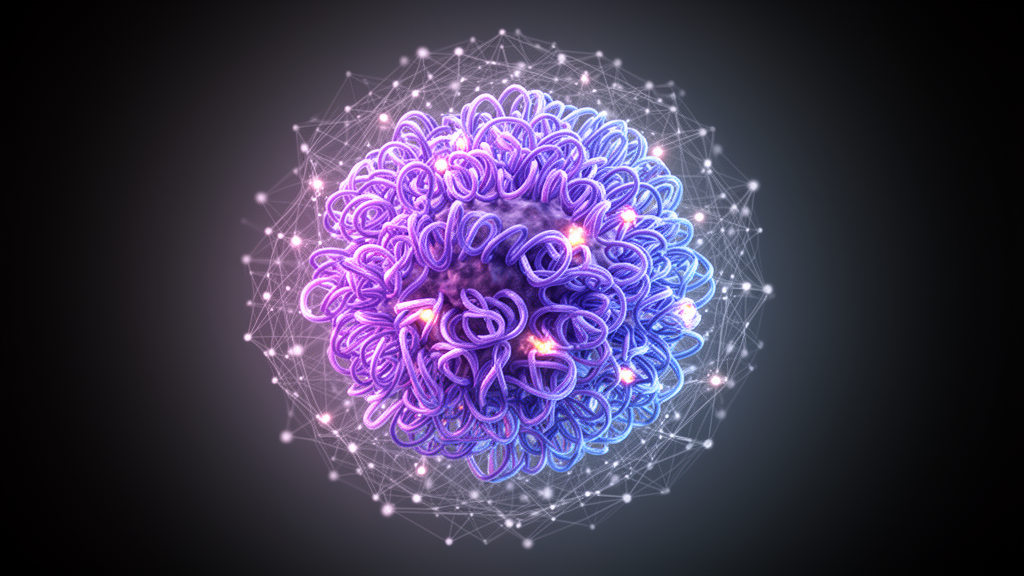
Researchers have introduced UniLoopNet, a multi-task deep learning framework that predicts several types of three-dimensional chromatin interactions directly from DNA sequence, including enhancer–promoter interactions, enhancer–enhancer interactions, CTCF-mediated loops, and stripe-associated interactions. The work, published in PLOS Computational Biology, addresses a long-standing limitation in computational genomics, where prediction of diverse interaction types has largely depended on specialized, single-task models.

The framework uses a shared encoder–decoder architecture with hierarchical adaptation strategies, integrating multi-task, transfer, and continual learning based on task semantic similarity. In comprehensive benchmarking across multiple cell lines, the authors report that UniLoopNet outperforms existing specialized and multi-task approaches, with AUROCs exceeding 0.90 in most tasks.

The evaluation also included stringent test settings designed to probe robustness: chromosome-matched, distance-matched, realistic imbalanced, and locus-disjoint tests. Under these conditions, AUROCs ranged from 0.8934 to 0.9366. In the realistic 1:5 class-imbalance setting, the AUPRCs for enhancer–promoter and enhancer–enhancer interaction prediction were 0.7956 and 0.6935, respectively.

Cross-cell-line transfer experiments showed that applying the model to a new cell line requires adaptation by supervised fine-tuning on target-cell-line data, after which performance was comparable to within-cell-line training. The framework also exhibited data efficiency in experiments with substantially reduced training data, suggesting it may be useful where labeled interaction data are scarce.

Interpretability analyses indicated that the sequence features learned by the model are associated with known transcription factor binding sites, and the analyses uncovered differential regulatory effects of disease-associated variants. According to the authors, UniLoopNet provides a versatile and data-efficient framework for sequence-based prediction and interpretation of diverse 3D genome interactions, complementing existing sequence-to-map approaches while improving understanding of sequence-encoded regulatory potential.

Subject of Research: Deep learning prediction of multiple types of chromatin interactions from DNA sequence

Article Title: An extensible deep learning framework for multi-type chromatin interaction prediction through hierarchical adaptation strategies

Article References: Wang, S., Chen, T., Liu, W., Zheng, X., Yang, Z., Liang, Z., & Shen, Y. (2026). An extensible deep learning framework for multi-type chromatin interaction prediction through hierarchical adaptation strategies. PLOS Computational Biology, 22(10), e1014911. https://doi.org/10.1371/journal.pcbi.1014911

Image Credits: AI Generated

DOI: 10.1371/journal.pcbi.1014911

Keywords: chromatin interactions, deep learning, enhancer–promoter interactions, CTCF-mediated loops, multi-task learning, transfer learning, 3D genome, gene regulation, AUROC benchmarking, interpretability, extensible, deep

Cite Scienmag News

Blake Davidson. (October 28, 2026). Deep learning model predicts multiple chromatin interaction types from DNA sequence. Scienmag. https://scienmag.com/deep-learning-model-predicts-multiple-chromatin-interaction-types-from-dna-sequence/


Blake Davidson. "Deep learning model predicts multiple chromatin interaction types from DNA sequence." Scienmag, 28 October 2026, https://scienmag.com/deep-learning-model-predicts-multiple-chromatin-interaction-types-from-dna-sequence/. Accessed 28 October 2026.

Blake Davidson. "Deep learning model predicts multiple chromatin interaction types from DNA sequence." Scienmag. October 28, 2026. https://scienmag.com/deep-learning-model-predicts-multiple-chromatin-interaction-types-from-dna-sequence/

Tags: 3D genomeAUROC benchmarkingchromatin interactionschromosome-matched and locus-disjoint validation for chromatin interaction predictioncomputational approaches to 3D genome organizationCTCF-mediated chromatin loops predictionCTCF-mediated loopsdata efficiency in deep learning for genomicsDeepdeep learningDeep learning for chromatin interaction predictionenhancer-promoter and enhancer-enhancer interaction modelingenhancer-promoter interactionsextensibleGene regulationhierarchical deep learning architectures in genomicsinterpretabilitymulti-task learningmulti-task neural network for DNA sequence analysisrobustness and accuracy of deep models in genomic datastripe-associated chromatin interactionstransfer learningtransfer learning in chromatin interaction models
Share26Tweet16
Previous Post

New Graph Pangenome Pipeline Simplifies Plant Organelle Genome Analysis

Next Post

Rehabilitation Coordinators Seen as Addressing Vocational Rehabilitation Gaps in Psychiatric Care: Views of Healthcare Professionals in a Swedish Qualitative Study

Related Posts

Macrophage Enzyme ALOXE3 Emerges as a Modulator of Acetaminophen Liver Injury
Biology

Macrophage Enzyme ALOXE3 Emerges as a Modulator of Acetaminophen Liver Injury

October 28, 2026
Male Painted Turtles Call More Variably Than Females, Study Finds
Biology

Male Painted Turtles Call More Variably Than Females, Study Finds

October 28, 2026
Indian symposium charts a path from hospital nutrition care to community health
Medicine

Indian symposium charts a path from hospital nutrition care to community health

October 28, 2026
Study maps phosphorylation network linking MLLT1 to transcriptional control in cancers
Chemistry

Study maps phosphorylation network linking MLLT1 to transcriptional control in cancers

October 28, 2026
Myricetin Targets HSP90AA1 to Curb Bladder Cancer Growth in Preclinical Models
Biotechnology

Myricetin Targets HSP90AA1 to Curb Bladder Cancer Growth in Preclinical Models

October 28, 2026
Indigenous Burning Sustained California Coastal Prairies for Over 1,300 Years, Review Finds
Biology

Indigenous Burning Sustained California Coastal Prairies for Over 1,300 Years, Review Finds

October 28, 2026
Next Post
Rehabilitation Coordinators Transform Psychiatric Care by Addressing Vocational Gaps

Rehabilitation Coordinators Seen as Addressing Vocational Rehabilitation Gaps in Psychiatric Care: Views of Healthcare Professionals in a Swedish Qualitative Study

  • Mothers who receive childcare support from maternal grandparents show more optimized

    Mothers who receive childcare support from maternal grandparents show more parental warmth, finds NTU Singapore study

    27656 shares
    Share 11059 Tweet 6912
  • University of Seville Breaks 120-Year-Old Mystery, Revises a Key Einstein Concept

    1061 shares
    Share 424 Tweet 265
  • Bee body mass, pathogens and local climate influence heat tolerance

    682 shares
    Share 273 Tweet 171
  • Researchers record first-ever images and data of a shark experiencing a boat strike

    546 shares
    Share 218 Tweet 137
  • Groundbreaking Clinical Trial Reveals Lubiprostone Enhances Kidney Function

    531 shares
    Share 212 Tweet 133
Science

Embark on a thrilling journey of discovery with Scienmag.com—your ultimate source for cutting-edge breakthroughs. Immerse yourself in a world where curiosity knows no limits and tomorrow’s possibilities become today’s reality!

RECENT NEWS

  • Macrophage Enzyme ALOXE3 Emerges as a Modulator of Acetaminophen Liver Injury
  • Gold Found Growing Inside Salt: A Cold-Water Surprise in China’s Tarim Basin
  • Chin-to-chest surgical positioning linked to rare but serious spinal cord injuries
  • Machine learning moves to the heart of 6G networks in new systematic review

Categories

  • Agriculture
  • Anthropology
  • Archaeology
  • Athmospheric
  • Biology
  • Biotechnology
  • Blog
  • Bussines
  • Cancer
  • Chemistry
  • Climate
  • Earth Science
  • Editorial Policy
  • Marine
  • Mathematics
  • Medicine
  • Pediatry
  • Policy
  • Psychology & Psychiatry
  • Science Education
  • Science News
  • Social Science
  • Space
  • Technology and Engineering

Subscribe to Blog via Email

Enter your email address to subscribe to this blog and receive notifications of new posts by email.

Join 5,151 other subscribers

© 2025 Scienmag - Science Magazine

Welcome Back!

Login to your account below

Forgotten Password?

Retrieve your password

Please enter your username or email address to reset your password.

Log In
No Result
View All Result
  • HOME
  • SCIENCE NEWS
  • CONTACT US

© 2025 Scienmag - Science Magazine

Discover more from Science

Subscribe now to keep reading and get access to the full archive.

Continue reading