


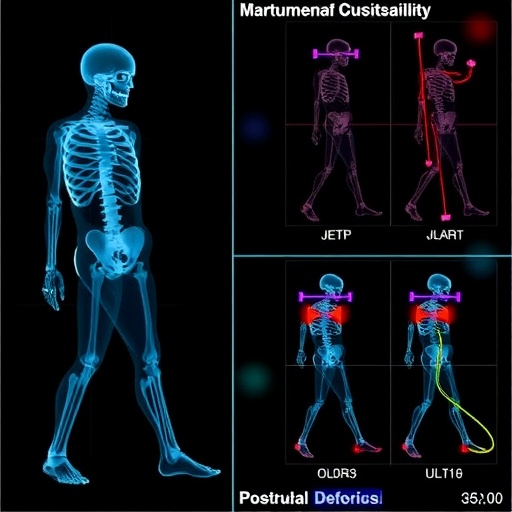
In the evolving landscape of neurodegenerative disease research, Parkinson’s disease (PD) continues to pose immense challenges for early diagnosis and intervention. A recent breakthrough study, led by Engel, D., Burgos, P., Carlson-Kuhta, P., and collaborators, introduces a pioneering approach that harnesses frequency-based deep learning algorithms to detect subtle postural instabilities in the earliest untreated stages of Parkinson’s disease. Published in npj Parkinsons Dis., this innovative work has far-reaching implications for transforming how clinicians identify and possibly predict the progression of PD, a disorder that affects millions worldwide.
Parkinson’s disease is traditionally characterized by a triad of motor symptoms — tremor, rigidity, and bradykinesia — which emerge gradually and often follow extensive neuronal loss. Postural instability, often observed in later stages, is particularly debilitating as it leads to falls and diminished quality of life. Detecting subtle deviations in balance and posture before overt symptoms appear has been a longstanding challenge in neurology. This research takes a significant leap by deploying deep learning models trained on frequency-domain analyses of postural sway, shining a light on the imperceptible anomalies that precede classical PD symptoms.
The core methodology revolves around analyzing postural sway dynamics with an emphasis on frequency components rather than traditional time-domain metrics. Using wearable sensors and advanced signal processing, the team collected high-resolution postural data from cohorts of early-stage, untreated Parkinson’s patients alongside matched control groups. By transforming these data streams into frequency spectrums, the researchers could tap into minute fluctuations indicative of neural motor control disruptions that are nearly invisible to human observation or conventional clinical testing.
Deploying deep learning architectures capable of interpreting complex frequency patterns represents a novel conceptual framework in clinical diagnostics. Unlike classic machine learning approaches that rely on manually engineered features, the team embraced convolutional neural networks optimized for pattern recognition in frequency space. This methodology allows the identification of subtle biomarkers associated with postural control deficits, pushing the boundaries of computational neurology and biomarker discovery.
Remarkably, the frequency-based models demonstrated robust sensitivity and specificity in distinguishing preclinical or early symptomatic PD from healthy controls, outperforming standard clinical rating scales and baseline gait assessments. This implies that the neural substrates governing balance are impaired in PD much earlier than previously established, and that these impairments manifest more clearly within the frequency signatures of sway patterns rather than gross motor observations.
Beyond mere detection, this approach offers a nuanced understanding of PD pathophysiology. Postural control is orchestrated by a distributed network involving the basal ganglia, cerebellum, brainstem, and proprioceptive feedback loops. Alterations in neural oscillatory activity within these circuits likely underpin the frequency shifts captured by the deep learning system. Hence, this study bridges computational techniques with neurophysiological insights, presenting frequency-domain sway analysis as not just a diagnostic tool but a window into disease mechanisms.
The practical implications for clinicians are substantial. The development of portable, sensor-based diagnostic platforms leveraging these algorithms could facilitate routine screening in at-risk populations, such as individuals with genetic predispositions or prodromal symptomatically mild cases. Early identification may enable timely pharmacological or rehabilitative interventions when neuronal circuits retain greater plasticity, potentially slowing disease progression.
In line with current trends, the research team emphasizes the importance of incorporating frequency-based deep learning models into multimodal diagnostic frameworks. When combined with molecular biomarkers and neuroimaging, frequency-domain analyses of motor function could offer unprecedented precision in early diagnosis. This multimodal synergy represents the future of personalized neurology, where complex datasets are integrated through artificial intelligence to generate actionable clinical insights.
Technical challenges remain in standardizing sensor placement, data acquisition protocols, and ensuring algorithmic transparency and interpretability. The team has addressed these by extensive cross-validation with varied datasets and rigorous feature attribution studies, confirming the biological relevance of extracted frequency features. Continued refinement will be guided by interdisciplinary collaboration between neurologists, engineers, and data scientists.
The study also opens intriguing avenues for rehabilitation and real-time feedback systems. By continuously monitoring frequency-based postural metrics, wearable devices could alert patients or caregivers about deteriorations in stability, enabling preventive maneuvers before falls occur. Furthermore, targeted neurofeedback therapies tailored to restore or compensate for abnormal frequency oscillations represent an exciting frontier.
From a societal perspective, early and accurate PD diagnosis through such innovative technologies can reduce healthcare costs related to late-stage care and disability, enhance patient autonomy, and improve overall outcomes. The deployment of deep learning-driven diagnostic tools underscores the transformative potential of artificial intelligence in combating neurological diseases with subtle early presentations.
While the current study focuses on early, untreated Parkinson’s disease, the underlying framework has broad applicability. Similar frequency-domain analyses combined with deep learning could revolutionize detection strategies in other neurodegenerative disorders characterized by motor and balance dysfunctions, such as multiple system atrophy or progressive supranuclear palsy. This suggests a universal platform for subtle motor impairment diagnostics.
Predictively, integration of frequency-based postural instability markers might also assist in stratifying patient populations for clinical trials, enriching cohorts with individuals who stand to benefit most from disease-modifying therapies. This could accelerate the development of targeted therapeutics, addressing a major bottleneck in PD research.
In conclusion, the work spearheaded by Engel and colleagues represents a milestone in neurodegenerative diagnostics, merging cutting-edge artificial intelligence with sophisticated biomechanical analysis to unveil the hidden signatures of Parkinson’s disease in its incipient stages. As technologies continue to evolve, such integrative, frequency-focused methodologies are poised to redefine clinical paradigms, offering hope for earlier intervention and improved patient lives.
The implications are profound — by shifting diagnostic focus to the frequency domain and deep learning, the research paves the way toward more agile, precise, and accessible tools for detecting Parkinson’s disease well before debilitating symptoms emerge. The resonance of this study will likely ripple through neurology, rehabilitation, and computational medicine, signaling a new era in the fight against devastating movement disorders.
Engel, D., Burgos, P., Carlson-Kuhta, P. et al. Frequency-based deep learning to identify subtle postural instability in early, untreated Parkinson’s disease.
npj Parkinsons Dis. (2026). https://doi.org/10.1038/s41531-026-01365-0
Cite Scienmag News
Blake Davidson. (April 27, 2026). Deep Learning Detects Early Parkinson’s Postural Instability. Scienmag. https://scienmag.com/deep-learning-detects-early-parkinsons-postural-instability/
Blake Davidson. "Deep Learning Detects Early Parkinson’s Postural Instability." Scienmag, 27 April 2026, https://scienmag.com/deep-learning-detects-early-parkinsons-postural-instability/. Accessed 4 September 2026.
Blake Davidson. "Deep Learning Detects Early Parkinson’s Postural Instability." Scienmag. April 27, 2026. https://scienmag.com/deep-learning-detects-early-parkinsons-postural-instability/


