


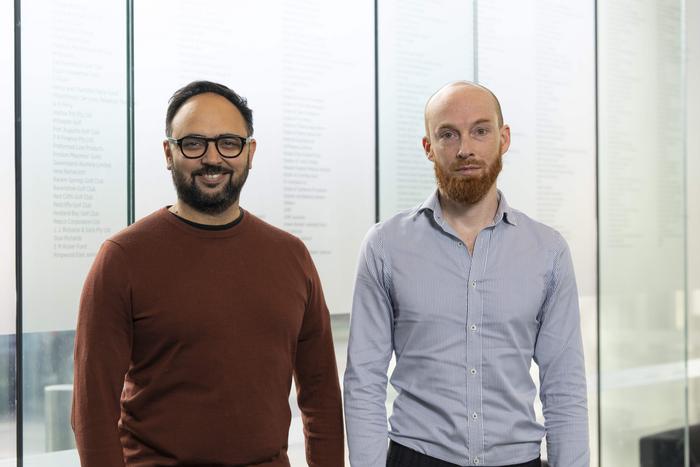
A groundbreaking advancement from the Walter and Eliza Hall Institute (WEHI) is poised to transform our understanding of cellular development and the intricate processes that govern life from its earliest stages. Spearheaded by Professor Shalin Naik and Dr. Tom Weber, the team has unveiled a revolutionary technology known as LoxCode, a high-resolution genetic barcoding system capable of tracing every cell’s ancestry within a living organism. This elegant innovation allows scientists to observe the fate and lineage of individual cells during embryonic development with unprecedented detail, offering fresh insights into the mysterious mechanics of growth, differentiation, and organ formation.
The essence of LoxCode lies in its ingenious use of DNA barcoding to uniquely mark each cell within a genetically engineered mouse. By inserting a library of hundreds of millions of distinct DNA sequences into the genome, the system effectively "shuffles" these sequences in a manner reminiscent of dealing cards, creating a unique barcode for every single cell. As the embryo develops, each cell inherits this distinctive barcode, which can be read later through sophisticated sequencing techniques. This approach significantly surpasses previous methods, generating a diversity of more than 30 billion unique barcodes from a remarkably compact DNA cassette composed of only 13 small DNA segments.
At the heart of this breakthrough is the ability of LoxCode to provide a lineage map at the cellular level, revealing how diverse tissues and organs arise from early embryonic cells known as the epiblast. The method grants scientists a molecular passport to track cellular progeny as they multiply, migrate, specialize, and form the myriad tissues comprising complex mammals. Until now, the challenge of following every cell’s fate during early development was insurmountable due to the sheer number and complexity of cellular differentiation pathways, but LoxCode’s barcoding offers a new era of clarity and precision.
One remarkable insight uncovered using LoxCode involves the early emergence of cell fate bias in the developing embryo. Naik and colleagues demonstrated that even in an early mass of just a few hundred cells, some cells maintain remarkable pluripotency, capable of generating every tissue type, while others already appear committed to distinct developmental trajectories destined to form certain organs such as brain, gut, limbs, or blood. These findings challenge traditional assumptions about when and how cellular commitment occurs, opening new avenues for understanding developmental timing and cellular plasticity.
The design of LoxCode is equally striking for its interdisciplinary nature, reflecting the blend of physics, synthetic biology, and computational mathematics marshaled by Dr. Tom Weber. This convergence allowed the team to engineer a DNA sequence system that maximizes diversity while minimizing genetic material and cellular disruption. The DNA barcodes can be activated and recorded in vivo in living mice, thereby preserving the natural developmental environment and avoiding the artifacts associated with in vitro studies.
Beyond its fundamental implications for developmental biology, LoxCode offers profound potential for medical research. Mapping cellular ancestry in vivo will illuminate the origins of developmental disorders, congenital defects, and diseases arising from cellular misprogramming. By pinpointing when lineage biases or aberrant differentiation events occur, researchers can better understand the molecular underpinnings of diseases and identify early intervention points.
Moreover, the system’s ability to label cells internally and decode their histories opens possibilities for regenerative medicine and cancer research. For instance, tracking how stem cells contribute to tissue repair after injury, or following the evolutionary paths of cancerous cells within tumors, can provide pivotal knowledge for designing targeted therapies and improving patient outcomes.
Already, labs around the world have begun adopting LoxCode to explore diverse biological questions—from neuronal development and immune system dynamics to organogenesis and tissue regeneration after stroke. This global uptake signals the technology’s versatility and its potential as a standard tool in cutting-edge biomedical research.
A key technical achievement of LoxCode is the sheer scale of barcode diversity achievable in situ, which outstrips prior barcoding technologies by several orders of magnitude. By generating tens of billions of unique identifiers inside living tissues, LoxCode ensures that every cell within the organism can be tracked individually, eliminating the ambiguities common to bulk analysis and population-level studies. This resolution permits the disentangling of cellular heterogeneity that defines complex biological systems.
The study detailing these advances, titled “LoxCode in vivo barcoding reveals epiblast clonal fate bias to fetal organs,” was published in the journal Cell. It includes comprehensive experimental validation using genetically engineered mouse models, illustrating the robustness and reproducibility of the barcoding technique. The DOI for this publication is 10.1016/j.cell.2025.04.026.
The availability of LoxCode mice via resource platforms such as The Jackson Laboratory ensures that the scientific community can rapidly deploy this methodology for a wide spectrum of in vivo studies, accelerating discoveries in embryology, immunology, neuroscience, and beyond.
In conclusion, LoxCode represents a tour de force in biological research tools—melding genetic engineering, molecular biology, and computational analysis into a single, versatile platform. It promises not only to unravel the fundamental mysteries of life’s early blueprint but also to inspire innovative therapies by revealing the cellular origin and evolution of health and disease. As this technology proliferates through laboratories worldwide, it is poised to catalyze a paradigm shift in how we visualize and comprehend cellular development at the most fundamental level.
News Publication Date: 15-May-2025
Web References:
10.1016/j.cell.2025.04.026
LoxCode mouse strain at The Jackson Laboratory
Cite Scienmag News
Drew Townsend. (June 23, 2025). Decoding Barcodes Reveals the Earliest Blueprints of Our Cellular Origins. Scienmag. https://scienmag.com/decoding-barcodes-reveals-the-earliest-blueprints-of-our-cellular-origins/
Drew Townsend. "Decoding Barcodes Reveals the Earliest Blueprints of Our Cellular Origins." Scienmag, 23 June 2025, https://scienmag.com/decoding-barcodes-reveals-the-earliest-blueprints-of-our-cellular-origins/. Accessed 3 September 2026.
Drew Townsend. "Decoding Barcodes Reveals the Earliest Blueprints of Our Cellular Origins." Scienmag. June 23, 2025. https://scienmag.com/decoding-barcodes-reveals-the-earliest-blueprints-of-our-cellular-origins/


