


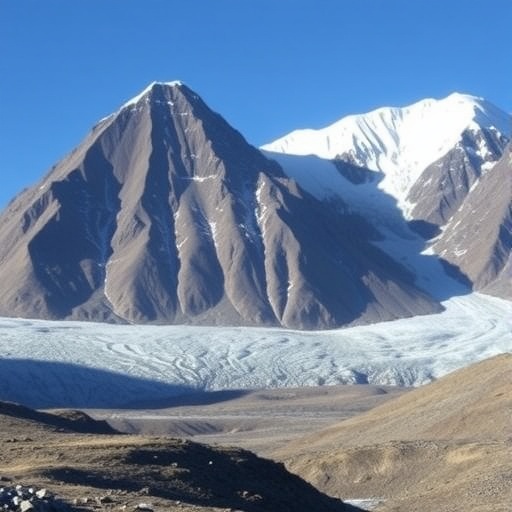
In a recent study that raises significant concerns about the state of glaciers in the Northwestern Pamirs region, experts have cataloged a concerning trend of decreasing snowfall, which is jeopardizing both glacier health and the vital meltwater resources that many communities depend upon. The research highlights the potential consequences of this decline on local ecosystems, water supply, and even climate patterns, adding urgency to the global dialogue surrounding climate change and its dire impacts.
The study, led by Jouberton, Shaw, and Miles, meticulously analyzes snowfall data over recent years to establish a clear correlation between reduced snowfall and deteriorating glacier conditions. The Northwestern Pamirs, known for their stunning glaciers and vital hydrological systems, are witnessing a troubling trend—a measurable decrease in snowfall that could further exacerbate glacier melting. This phenomenon not only threatens the pristine landscapes but also impacts the very foundations of life for populations reliant on glacial meltwater for drinking, agriculture, and industry.
The findings are alarming. The study notes that glaciers in this region have historically served as crucial reservoirs, storing winter snowfall that gradually melts during warmer months. However, as snowfall diminishes, these glaciers are less able to replenish their mass, leading to accelerated glacial retreat. This cycle raises urgent questions about water availability in an area where residents rely heavily on these meltwater sources for their livelihoods.
Extensive data collection and analysis formed the backbone of this study, employing satellite imagery, on-the-ground measurements, and historical climate data. The comprehensive approach allows for a clear picture of how recent atmospheric changes have contributed to reduced snowfall. The researchers emphasize that striking changes in weather patterns—including warmer winter temperatures and altered precipitation regimes—are at the heart of the snowfall decline.
Moreover, the implications of this research stretch beyond local communities. As glacial meltwater contributes to major rivers in the region, decreased snowfall could have cascading effects on water systems that reach far beyond the Northwestern Pamirs. Lower river flows may impact neighboring countries that share these waterways, highlighting how interconnected and fragile our global water systems can be in the face of climate variability.
The repercussions of diminished glacier health cannot be understated. With glaciers acting as a buffer against water scarcity during dry seasons, their retreat poses a double threat: diminishing immediate water supplies and increasing competition over dwindling resources. Farmers, in particular, could face critical challenges, as reliance on meltwater for irrigation becomes strained. This could lead to agricultural shortfalls, food insecurity, and increased tensions among communities that share water resources.
Interestingly, the study also discusses the broader implications of glacier retreat for local biodiversity. As meltwater streams turn into trickles, many aquatic and terrestrial species that depend on these ecosystems may find their habitats altered or destroyed. The unique flora and fauna that depend on a stable water supply could face extinction if these changes continue unchecked.
Furthermore, the study notes the potential impact of reduced snowfall on local economies, particularly those centered around tourism and recreational activities. The pristine beauty of glacial landscapes draws visitors from around the globe, providing economic sustenance for local communities. As glaciers retreat and landscapes evolve, this economic engine may begin to falter, leading to broader socioeconomic consequences.
This research serves as a clarion call not only for the local populations of the Northwestern Pamirs but also for anyone invested in the health of our planet. The findings align with a growing body of evidence pointing to the urgent need for robust climate action at both local and global levels. As climate-driven changes accelerate, the time to act is now—before others face the daunting realities already beginning to unfold in the Pamirs.
In addressing how to mitigate these impacts, the researchers urge policymakers and stakeholders to consider a multifaceted approach. Strategies may include water resource management planning, investment in climate adaptation technologies, and fostering community awareness regarding conservation practices. Collaborative efforts, both local and international, will be essential in addressing the stark realities of climate change as they relate to glacier health and water resources.
The study underscores the urgency for scientific inquiry and community engagement in tackling these pressing issues. With climate crises reverberating around the world, the research findings from the Northwestern Pamirs serve as a critical reminder that the effects of environmental change do not stop at national borders. Global cooperation in climate adaptation and mitigation strategies will be key in ensuring sustainable water resources for generations to come.
In conclusion, as communities in the Northwestern Pamirs brace for potentially severe changes to their environment, the study offers vital insights into the complex interplay between climate patterns, glacier health, and hydrological systems. The implications are profound, stretching from local ecosystems to regional water security. As awareness grows, it is imperative to prioritize action and foster resilience in the face of accelerating climate change.
Cite Scienmag News
Violet Maxwell. (September 2, 2025). Declining Snowfall Threatens Northwestern Pamirs Glaciers. Scienmag. https://scienmag.com/declining-snowfall-threatens-northwestern-pamirs-glaciers/
Violet Maxwell. "Declining Snowfall Threatens Northwestern Pamirs Glaciers." Scienmag, 2 September 2025, https://scienmag.com/declining-snowfall-threatens-northwestern-pamirs-glaciers/. Accessed 4 September 2026.
Violet Maxwell. "Declining Snowfall Threatens Northwestern Pamirs Glaciers." Scienmag. September 2, 2025. https://scienmag.com/declining-snowfall-threatens-northwestern-pamirs-glaciers/


