


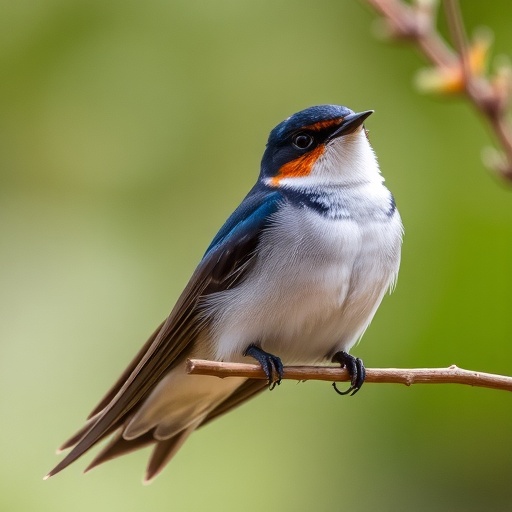
Since the dawn of widespread environmental monitoring several decades ago, scientists have observed alarming transformations within ecosystems globally. Among the most striking recent revelations comes from Long Point Bird Observatory in Canada, where a methodical study, spearheaded by the University of Michigan researchers, illuminates how drastic declines in insect populations—over 60% since the 1970s—have fundamentally altered the morphology and reproductive dynamics of tree swallows, an insectivorous avian species pivotal to the ecological balance.
This longitudinal research utilized extensive datasets that track tree swallow populations and insect abundance within the Long Point region, revealing that the birds are now smaller and produce fewer offspring than their predecessors. The team employed sophisticated modeling techniques integrating biological and climatological data, offering one of the first comprehensive examinations of how intertwined factors—biodiversity loss and climate change—jointly sculpt avian biology. Such integrated frameworks transcend simplistic climate-centric analyses, acknowledging biodiversity degradation as a primary force reshaping natural systems.
At the heart of the investigation lies the concept of phenological mismatch—an ecological discordance arising when the timing of biological events, such as breeding, desynchronizes with resource availability. Tree swallows historically time their breeding cycles to coincide with peaks in insect abundance, optimizing energy intake for egg production and chick rearing. However, warmer winters have accelerated insect emergence at a rate surpassing avian phenological plasticity, leading to an increasing temporal mismatch of approximately three days per decade since 1977. This data suggests that while rising temperatures induce earlier insect activity, tree swallows lag in their breeding timing adjustments.
The consequences of this growing phenological disconnect are complex. Ordinarily, a mismatch could impose severe fitness costs on bird populations by reducing food availability during critical reproductive periods. Paradoxically, the study reports that the adverse impact of the mismatch is somewhat mitigated by declining insect abundance itself. As insect populations collapse, the intensity of peak emergence diminishes, resulting in a more protracted and less pronounced resource pulse. This diluted resource availability reduces the benefit of perfectly timed breeding, simultaneously lowering the nutritional payoff and lessening the selective pressure for synchrony.
Investigating the drivers behind this precipitous insect decline reveals a multifactorial landscape. Notably, the researchers found no direct linkage between the loss of insect biomass and rising temperatures. Instead, the timeline of the decline accelerated conspicuously in the 1990s, a period coinciding with the widespread adoption of neonicotinoid pesticides. These neurotoxic agents are notorious for their lethal effects on non-target aquatic insect larvae—including midges and mosquitoes, key prey for tree swallows. The study highlights that even trace pesticide contamination in wetland habitats can devastate larval populations, indirectly destabilizing higher trophic levels.
The implications of these findings extend beyond academic insight into practical conservation and policy realms. Unlike global climate change, which demands international cooperation and monumental systemic shifts, the insect decline in Long Point appears amenable to local mitigation efforts such as pesticide regulation and habitat restoration. The researchers advocate for recognizing biodiversity loss as a tangible, addressable threat whose remediation could yield rapid benefits for avian species and ecosystem health.
Integral to the success of this investigation was the invaluable foresight and perseverance of the Long Point Bird Observatory team, whose continuous bird and insect monitoring programs date back to the 1960s. These long-term ecological datasets provide a rare empirical foundation enabling nuanced, decade-scale trend analyses. Their collaborative synergy with University of Michigan scholars exemplifies the power of cross-institutional ventures to unravel complex environmental narratives.
The study’s insights underscore the imperative of sustained investment in long-term ecological research amidst a global trend of declining funding. The intricate interdependencies unveiled between climate dynamics, resource availability, and animal physiology can only be disentangled through prolonged, multifaceted data collection efforts. Furthermore, this research reinforces that ecosystem responses to climate change are deeply context-dependent, intricately modulated by concurrent anthropogenic pressures disrupting biodiversity.
These revelations prompt a reevaluation of conservation strategies, encouraging integrative approaches that simultaneously address climate mitigation and biodiversity preservation. By elucidating how resource collapses shape phenological and morphological traits in an emblematic bird species, the researchers invite broader application of such frameworks across taxa and ecosystems. Ultimately, resolving ecological crises will demand synthesizing diverse lines of evidence to craft robust, adaptable management responses.
In summary, the Long Point study represents a landmark contribution demonstrating that biodiversity loss can overshadow climate change itself in determining biological outcomes. It challenges reductionist thinking by showcasing the multifaceted nature of environmental change, advocating for holistic perspectives. As tree swallows diminish in size and fecundity amid a fading insect prey base, this research poignantly narrates a broader story of ecological dissolution and the urgent need for informed action.
News Publication Date:
26-Jun-2026
Web References:
http://dx.doi.org/10.1073/pnas.2607714123
References:
Published in Proceedings of the National Academy of Sciences
Cite Scienmag News
Gavin Prescott. (June 22, 2026). Declining Insect Populations Lead to Smaller Tree Swallows with Reduced Reproductive Success. Scienmag. https://scienmag.com/declining-insect-populations-lead-to-smaller-tree-swallows-with-reduced-reproductive-success/
Gavin Prescott. "Declining Insect Populations Lead to Smaller Tree Swallows with Reduced Reproductive Success." Scienmag, 22 June 2026, https://scienmag.com/declining-insect-populations-lead-to-smaller-tree-swallows-with-reduced-reproductive-success/. Accessed 3 September 2026.
Gavin Prescott. "Declining Insect Populations Lead to Smaller Tree Swallows with Reduced Reproductive Success." Scienmag. June 22, 2026. https://scienmag.com/declining-insect-populations-lead-to-smaller-tree-swallows-with-reduced-reproductive-success/


