


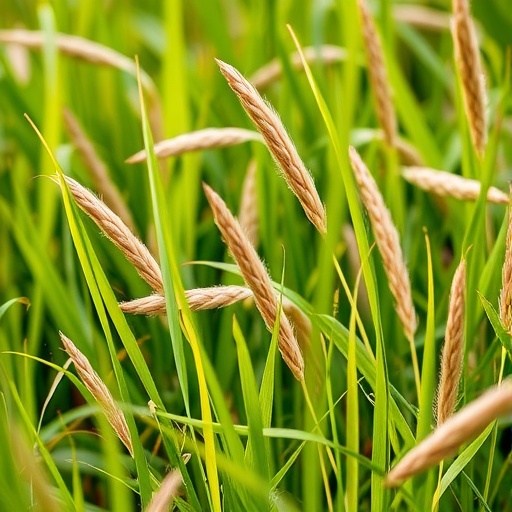
In the expansive grasslands of the Midwest and Great Plains, where goldenrod’s feathery yellow flowers intermingle with towering stands of big bluestem and Indiangrass reaching up to eight feet, a fascinating ecological story is unfolding. These seemingly humble prairie plants may hold critical insights into the resilience mechanisms ecosystems can deploy against the intensifying climate extremes triggered by global change. A groundbreaking study, analyzing nearly 40 years of comprehensive data across three distinct North American grassland locations, now reveals complex dimensions of biodiversity that underpin ecosystem resistance and recovery when confronted with extreme climatic events.
Long considered a cornerstone principle in ecology, biodiversity is widely recognized for its role in stabilizing ecosystems. Traditionally, higher species richness—the sheer number of species present—was thought to enhance an ecosystem’s robustness, particularly during disruptive events such as droughts or floods. However, this new research, published in the April 2026 issue of Ecology Letters, disrupts the simplicity of that narrative. By synthesizing data from Minnesota, Michigan, and Kansas grasslands, including some of the continent’s last unplowed tallgrass prairies, scientists from a consortium of universities have illuminated how multiple, nuanced components of biodiversity interact to buffer against diverse climatic challenges.
The data in this observational study were collected under the auspices of the U.S. Long-Term Ecological Research Network, a program initiated in the 1980s by the National Science Foundation to track ecological changes over extended periods. Over four decades, researchers meticulously cataloged species presence, abundance distribution, and above-ground biomass production while concurrently monitoring meteorological variables such as temperature and precipitation. This rich dataset included 28 discrete episodes of extreme dry or wet conditions that occurred roughly once per decade, providing a robust empirical foundation for scrutinizing the links between biodiversity and ecosystem functionality during climatic anomalies.
Historic drought events like the 1988 episode, which was famously the most severe dry spell in the central United States since the Dust Bowl era, serve as stark backdrops to this inquiry. During these droughts, crucial agricultural outputs plummeted, riverine systems shriveled, and economic consequences cascaded across farming communities. Conversely, anomalously wet years such as 2019 brought sustained heavy precipitation and unprecedented snowfall, leading to flood-induced delays in planting and harvesting, waterlogged soils, and widespread agricultural disruption. The ecological responses to these diametrically opposed stresses unveiled important insights about which aspects of biodiversity actually conferred stability.
One of the pivotal revelations from the study is the context-dependent nature of ecosystem resilience. During dry spells, species richness emerged as a key factor—plots supporting a larger variety of species maintained higher above-ground biomass, signaling greater drought tolerance. Moreover, the evenness of species abundance—the distribution of individuals among species—further contributed to the resilience of these communities, facilitating recovery and sustaining productivity upon relief from drought conditions.
In stark contrast, the dynamics in wet, flood-prone years deviated markedly. Rather than diversity per se, the presence and dominance of specific keystone species dictated ecosystem stability. Grassland plots where dominant species thrived in relative abundance were better equipped to withstand excessive moisture and flooding. This discovery suggests that functional traits and the ecological roles of individual species can become paramount under certain environmental stressors, overshadowing the effects of species richness alone.
Complicating this picture is a concerning positive feedback loop: as climatic extremes escalate, ecosystems weakened by biodiversity loss become progressively less resistant to subsequent disturbances. This erosion of biological diversity compromises natural defenses, further escalating vulnerability to extreme weather events. Such feedback mechanisms could accelerate the degradation of ecosystem services critical for both natural habitats and human agriculture.
Beyond the immediate pressures of changing precipitation patterns and temperature extremes, ecosystems face additional anthropogenic threats. Nutrient enrichment from agricultural runoff introduces excess nitrogen, potentially exacerbating species loss through eutrophication and altering plant community composition. Similarly, atmospheric pollution imposes further stress, diminishing biodiversity and magnifying the challenges ecosystems must overcome.
This multidisciplinary study, co-led by doctoral candidates Ashley Darst from Michigan State University and Joshua Ajowele from the University of North Carolina Greensboro, integrates decades of longitudinal ecological data to expose the multifaceted roles biodiversity plays in ecosystem response to climate perturbations. Their findings underscore the imperative to look beyond simplistic measures of species count and to consider functional diversity, species dominance hierarchies, and temporal dynamics within communities to better predict and manage ecosystem resilience amid accelerating climate change.
As climate models predict intensifying droughts and floods in key agricultural regions, lessons derived from the resilient grassland systems could inform adaptive strategies for broader ecosystem management. Protecting and fostering biodiversity is not merely an ecological ideal but a pragmatic necessity to buffer the increasingly volatile environmental conditions that threaten global food security and ecosystem health.
The study’s comprehensive approach, spanning diverse geographic and climatic contexts, positions it as a seminal reference for ecologists, conservationists, and policymakers aiming to develop nuanced solutions to climate resilience. Its insights advocate for integrative conservation practices that promote species richness and maintain dominant functional species while mitigating anthropogenic stressors, thus safeguarding ecosystems against the compounding pressures of climate extremes.
In summary, the intersection of long-term ecological data with emerging climate trends reveals that sustaining ecosystem resilience requires a multidimensional understanding of biodiversity. Both the variety and relative abundance of species matter, but their importance shifts according to the nature of climatic disturbances. This adaptive complexity is critical as we face an uncertain climate future, and emphasizing these intricate ecological interactions may be our strongest tool in preserving the natural world and the human livelihoods intertwined with it.
News Publication Date: April 7, 2026
Web References:
References:
Ajowele, J.A., Darst, A.L., et al. (2026). Multiple community properties drive ecosystem resistance and resilience to extreme climate events across mesic grasslands. Ecology Letters. DOI: 10.1111/ele.70380
Cite Scienmag News
Sloane Callahan. (April 7, 2026). Decades of Grass Research Reveal New Insights into Climate Resilience. Scienmag. https://scienmag.com/decades-of-grass-research-reveal-new-insights-into-climate-resilience/
Sloane Callahan. "Decades of Grass Research Reveal New Insights into Climate Resilience." Scienmag, 7 April 2026, https://scienmag.com/decades-of-grass-research-reveal-new-insights-into-climate-resilience/. Accessed 3 September 2026.
Sloane Callahan. "Decades of Grass Research Reveal New Insights into Climate Resilience." Scienmag. April 7, 2026. https://scienmag.com/decades-of-grass-research-reveal-new-insights-into-climate-resilience/


