


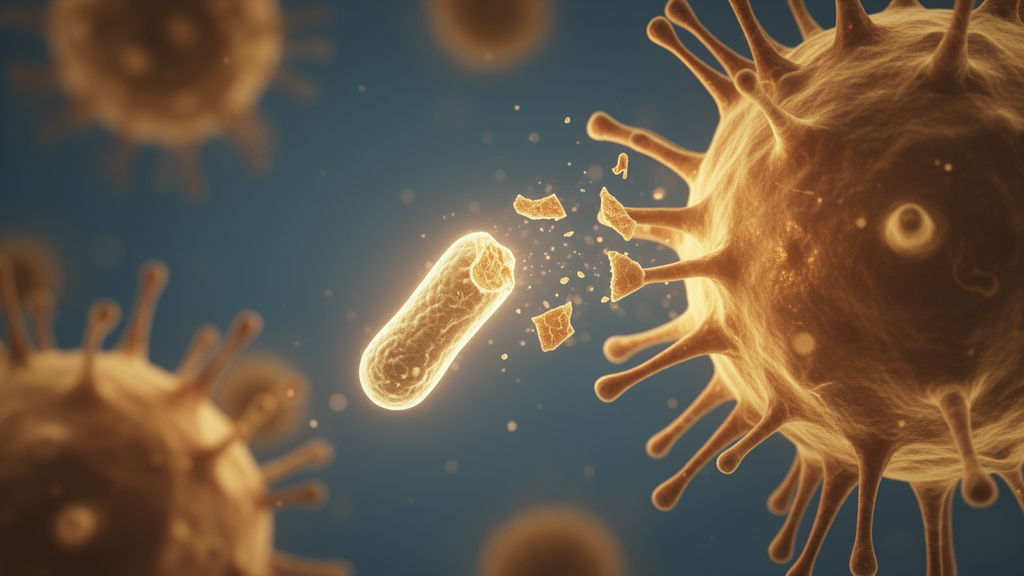
A new narrative review argues that the future of microbiome medicine may not depend on living bacteria at all. Writing in Frontiers in Nutrition, Ülkü Demirci of Istanbul Aydın University synthesizes clinical and preclinical evidence showing that non-viable microbial preparations—known as parabiotics and postbiotics—can modulate the human immune system through well-defined molecular pathways, while sidestepping many of the safety and manufacturing problems that have long plagued traditional live probiotics. The review, which followed PRISMA reporting guidelines and screened four major bibliographic databases up to May 2026, ultimately evaluated eleven studies meeting strict inclusion criteria.
The case for moving beyond live microbes rests on two converging problems. First, classical probiotics dominated by Lactobacillus, Bifidobacterium, and Saccharomyces are technologically fragile: they are vulnerable to gastric acid and bile salts, lose viability during extended shelf life, and require expensive stabilization measures such as microencapsulation and continuous cold-chain infrastructure. Second, and more seriously, delivering viable microorganisms carries inherent clinical risks, including opportunistic bacteremia, sepsis, systemic microbial translocation across compromised epithelial barriers, and the horizontal transfer of antibiotic-resistance genes to endogenous pathogens. These liabilities effectively preclude the use of live probiotics in critically ill, neonatal, or severely immunocompromised patients, leaving a significant clinical gap.
Next-generation probiotics aim to close that gap by exploiting a key insight from multi-omics research: many physiological benefits of probiotics do not require cell viability. Instead, they are mediated by structural cell-wall components and synthesized metabolic sub-products. Following the consensus definitions of the International Scientific Association for Probiotics and Prebiotics, the review distinguishes parabiotics—non-viable, inanimate microbial cells whose cell-wall components confer health benefits after controlled inactivation—from postbiotics, which are preparations of inanimate microorganisms and/or their cell-free matrices, including short-chain fatty acids, exopolysaccharides, and extracellular vesicles.
At the molecular level, the two classes engage distinct arms of host immunity. Parabiotics act as concentrated carriers of microbe-associated molecular patterns, which are recognized by host pattern recognition receptors—principally Toll-like receptor 2 and the intracellular sensors NOD1 and NOD2—expressed on intestinal epithelial cells, dendritic cells, and mucosal macrophages. Lipoteichoic acid from heat-killed Lactobacilli binds the extracellular domain of TLR-2 with high affinity, while peptidoglycan fragments are recognized by both TLR-2 and NOD1/NOD2. Notably, LTA does not reliably activate TLR-4; instead it may form an inactive complex that antagonizes TLR-4 signaling. Receptor ligation triggers a signaling cascade governed by the MyD88 adapter protein, which the review describes as tightly regulating—not explosively activating—NF-κB and MAPK pathways, averting hyper-inflammation while sustaining baseline immune vigilance.
Postbiotics, by contrast, exert their effects largely through metabolites. Short-chain fatty acids, particularly butyrate, serve as signaling ligands for the G-protein-coupled receptors GPR41 and GPR43 and act as potent histone deacetylase inhibitors. This epigenetic mechanism accelerates the expression of genes encoding apical junctional complexes—claudin-1, occludin, and zonula occludens-1—physically reinforcing the intestinal epithelial barrier. By strengthening these tight junctions, postbiotics prevent the passive paracellular translocation of luminal lipopolysaccharides, arresting a key trigger for systemic metabolic endotoxemia and chronic tissue inflammation. Postbiotic fractions also activate PPAR-γ and modulate NF-κB and MAPK signaling, collectively promoting anti-inflammatory gene expression.
The downstream immunological consequences are consistent across the reviewed literature. Parabiotic and postbiotic interventions downregulate hyper-secretion of pro-inflammatory cytokines, including TNF-α, IL-6, and IL-12, from mucosal macrophages and activated dendritic cells, while simultaneously expanding CD4+CD25+Foxp3+ regulatory T cells in the mesenteric lymph nodes through induction of IL-10 and TGF-β. Dendritic cell maturation is modulated so that these cells secrete tolerogenic cytokines, prompting mucosal B cells to differentiate into IgA-producing plasma cells and enhancing secretory IgA responses. The review’s comparison table emphasizes that both non-viable classes completely eliminate sepsis and bacteremia risk and abolish antibiotic-resistance gene transfer, in stark contrast to live probiotics.
Therapeutic applications span several organ systems. In dextran sulfate sodium colitis models, oral administration of heat-killed Lactobacillus plantarum or Akkermansia muciniphila derivatives significantly reduced mucosal ulceration indices by restoring intestinal alkaline phosphatase activity and decreasing myeloperoxidase accumulation, thereby lowering mucosal neutrophil infiltration. In pediatric randomized controlled trials, infants with moderate-to-severe atopic dermatitis who received heat-killed Bifidobacterium breve showed significant reductions in SCORAD indices. Mechanistically, these agents restore Th1/Th2 equilibrium by shifting immune polarization away from Th2-driven IgE hyper-secretion and mast cell degranulation, and preclinical models additionally show inhibition of the pro-inflammatory TLR4/NF-κB pathway at epidermal and mucosal interfaces.
Respiratory immunity also appears to benefit. According to the review, daily consumption of postbiotic supernatants upregulates secretory IgA synthesis in the nasopharyngeal and bronchial mucosa, which prevents viral attachment and entry and reduces the duration and symptom severity of upper respiratory tract infections in pediatric and geriatric populations. Secondary clinical reports suggest that extracellular vesicles from postbiotic fractions can competitively bind viral entry receptors on respiratory epithelial cells, providing an adjunctive mucosal barrier. Advanced multi-omics work further indicates that extracellular vesicle cargo—including microRNAs and bacterial nucleic acids—can modulate macrophage NF-κB target-gene expression and NLRP3 inflammasome activity.
The eleven included studies illustrate this breadth. Teame and colleagues showed that Lactobacillus-derived components regulate immunity via TLR2, TLR4, TLR9, and NOD1/NOD2, with peptidoglycans suppressing IL-12 and enhancing IL-10, and exopolysaccharides reducing IL-6, IL-8, and TNF-α. In clinical settings, Li and colleagues found that synbiotic supplementation in 106 healthy adults reduced plasma C-reactive protein and interferon-γ while increasing IL-10 and fecal secretory IgA. Gouvarchinghaleh and colleagues reported reductions in IL-1β, IL-6, IL-17, and TNF-α among 60 hospitalized COVID-19 patients receiving a functional food intervention. Guo and colleagues observed improved chronic diarrhea symptoms, increased butyrate, and greater abundance of Faecalibacterium prausnitzii in 69 adults taking a postbiotic preparation, while Beteri and colleagues documented reduced HbA1c and lipopolysaccharide-binding protein levels in 53 adults with prediabetes. An animal study by Bhoir and colleagues in Balb/c mice showed improved immune cell counts and short-chain fatty acid production from a millet-, pulse-, and oilseed-based premix.
Industrial advantages compound the immunological appeal. Because they do not require replication, parabiotics and postbiotics resist thermal stress and acidic microenvironments, integrating into functional beverages, baked goods, and ambient-temperature blister packs without losing potency. Parabiotic-fortified breads and flatbreads incorporating postbiotic exopolysaccharides have maintained both immunomodulatory properties and sensory attributes after baking. Yet the review is candid about limitations: substantial heterogeneity in inactivation methods—thermal tyndallization versus high-pressure processing—alters the spatial conformation of surface immunogens and their receptor binding affinity, while variations in fermentation substrates and extraction protocols yield divergent metabolomic fingerprints. This variability currently prevents absolute dose-efficacy equivalency across commercial preparations. Demirci concludes that future research must prioritize large-scale, long-term, multicenter randomized controlled trials with standardized reporting, alongside multi-omics characterization to establish universal industrial standards, before these inanimate biotherapeutics can be fully integrated into precision gastroenterology and immunology.
Subject of Research: Immunomodulatory mechanisms of postbiotics and parabiotics as next-generation probiotics
Article Title: The immunomodulatory role of postbiotics and parabiotics: a narrative review of next-generation probiotics
Article References: Demirci, Ü. (2026). The immunomodulatory role of postbiotics and parabiotics: a narrative review of next-generation probiotics. Frontiers in Nutrition, 13, Article 1966683. https://doi.org/10.3389/fnut.2026.1966683
Image Credits: AI Generated
DOI: 10.3389/fnut.2026.1966683
Keywords: postbiotics, parabiotics, next-generation probiotics, immunomodulation, Toll-like receptors, short-chain fatty acids, intestinal barrier, regulatory T cells, NF-κB, microbiome, atopic dermatitis, inflammatory bowel disease
Cite Scienmag News
Kristina Jarvis. (October 26, 2026). Dead Microbes, Living Benefits: How Postbiotics and Parabiotics Rewire Immunity. Scienmag. https://scienmag.com/dead-microbes-living-benefits-how-postbiotics-and-parabiotics-rewire-immunity/
Kristina Jarvis. "Dead Microbes, Living Benefits: How Postbiotics and Parabiotics Rewire Immunity." Scienmag, 26 October 2026, https://scienmag.com/dead-microbes-living-benefits-how-postbiotics-and-parabiotics-rewire-immunity/. Accessed 26 October 2026.
Kristina Jarvis. "Dead Microbes, Living Benefits: How Postbiotics and Parabiotics Rewire Immunity." Scienmag. October 26, 2026. https://scienmag.com/dead-microbes-living-benefits-how-postbiotics-and-parabiotics-rewire-immunity/


