


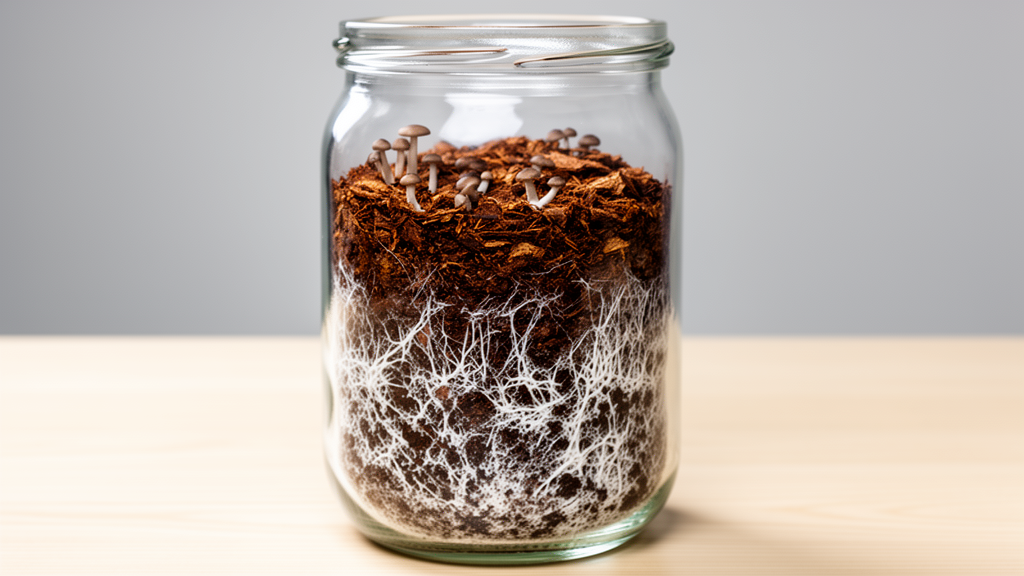
In the United Arab Emirates, extensive date production and processing generate substantial quantities of pomace, the fibrous residue left behind once the fruit has been processed into paste, syrup, and juice, and much of this by-product remains largely underutilized despite its abundance and nutritional composition. Now, researchers at the United Arab Emirates University have shown that this overlooked material can do something remarkable: replace half of the conventional potato dextrose broth used to grow two of the world’s most valuable medicinal mushrooms, Lion’s Mane (Hericium erinaceus) and Turkey Tail (Trametes versicolor), in submerged liquid cultivation. The study, published in Frontiers in Sustainable Food Systems on 23 October 2026, used a statistical optimization technique borrowed from industrial engineering to maximize mycelial biomass in a medium built around date pomace extract, and the resulting biomass turned out to be significantly richer in protein than the mushrooms’ conventional fruiting bodies.
The logic behind the experiment is straightforward but powerful. Fruiting body production of medicinal mushrooms is slow, demands strict environmental control, and carries high production costs, whereas submerged cultivation of mycelium, the vegetative thread-like stage of the fungus, is fast, compact, and scalable. Many of the bioactive compounds that make these mushrooms commercially valuable, including proteins, polysaccharides, and antioxidant metabolites, are synthesized during mycelial growth and can be harvested from liquid cultures within days. The catch is that conventional media such as potato dextrose broth rely on agricultural inputs, and in a desert nation like the UAE, freshwater and agricultural biomass suitable for mushroom cultivation are relatively scarce. Date pomace, by contrast, is abundant, available year-round, and packed with soluble sugars, minerals, and phenolic compounds that fungi can metabolize.
To unlock those nutrients, the team chose hot-water extraction, deliberately rejecting fancier methods such as ultrasound-, microwave-, or enzyme-assisted extraction. Those advanced techniques can boost recovery of specific bioactives, but they require specialized equipment and are designed to maximize extract yield rather than produce a food-grade growth medium. Hot-water extraction, by contrast, is simple, economical, solvent-free, and works at both laboratory and processing scales. Pomace from the Khalas date cultivar, collected from a local Abu Dhabi date-processing company, was dried at 60 degrees Celsius, ground, sieved, and extracted at a 1:10 powder-to-water ratio for one hour at 60 degrees Celsius before centrifugation and filtration.
Chemical analysis of the resulting dark brown extract revealed why it could stand in for a commercial medium. Each 100 grams of dry pomace yielded 32.5 grams of soluble sugars, the carbon backbone fungi need for energy and biosynthesis, along with 193 milligrams of gallic acid equivalents in total phenolics. Inductively coupled plasma mass spectrometry showed potassium as the dominant mineral at 118.4 milligrams per 100 grams of dry weight, followed by calcium at 48.7, phosphorus at 23.0, magnesium at 19.4, and trace amounts of iron, zinc, copper, and manganese. In a preliminary seven-day trial, date pomace extract alone supported dry biomass yields close to those of potato dextrose broth for both species, and, intriguingly, produced far more consistent results, with coefficients of variation of roughly 8 percent compared with 21 to 33 percent in the commercial broth.
Optimizing the mixed-medium cultivation was where the study’s statistical muscle came in. Instead of the traditional one-factor-at-a-time approach, which is slow, experiment-heavy, and blind to interactions between variables, the researchers applied the Taguchi method using an L27 orthogonal array. This design evaluated five factors at three levels each, pH, temperature, the date pomace extract to potato dextrose broth ratio, aeration, and incubation time, in just 27 experimental combinations rather than the 243 runs a full factorial design would demand. Signal-to-noise ratios calculated with a larger-the-better criterion identified the factor levels that maximized biomass while minimizing experimental variation, and analysis of variance quantified exactly how much each parameter contributed to growth.
The results exposed striking species-specific physiology. For Lion’s Mane, temperature was the dominant factor, accounting for 61 percent of the variation in biomass with an F-value of 34.86, followed by the medium ratio at roughly 10 percent and pH at 9 percent. Turkey Tail told a different story: pH was overwhelmingly influential, contributing 54 percent of the variation with an F-value of 106.75, with aeration at 17 percent, temperature at 15 percent, and the medium ratio at 10 percent. Aeration mattered for Turkey Tail because agitation-induced shear stress disrupts hyphal structure, while Lion’s Mane tolerated moderate shaking at 100 revolutions per minute. Higher pH of 6.5, warmer temperatures of 30 degrees Celsius, and strong agitation at 200 revolutions per minute consistently depressed biomass in both fungi.
Regression models fitted to the data achieved R-squared values of 88.38 percent for Lion’s Mane and 95.97 percent for Turkey Tail, and predicted biomass values closely tracked the experimental results across all 27 runs, with most percentage errors below 10 percent. The statistically optimized conditions, identified from average main effects rather than any single best run, were pH 5.0, 24 degrees Celsius, a 50:50 blend of date pomace extract and potato dextrose broth, static cultivation, and 5 days of incubation. Confirmatory experiments validated the model: observed biomass deviated from predictions by only 3.42 percent for Lion’s Mane, at 0.572 grams per 50 milliliters against a predicted 0.5916, and 1.93 percent for Turkey Tail, at 0.605 against 0.6167. Compared with replicated standalone broth controls, the optimized conditions delivered roughly 2.7-fold and 2.1-fold higher biomass, respectively, an outcome the authors attribute to the combined optimization of all five factors rather than the pomace substitution alone.
Fourier-transform infrared spectroscopy then probed the molecular identity of the harvested mycelium. Broad O-H stretching bands near 3,280 to 3,300 per centimeter confirmed polysaccharides and proteins, amide I and amide II peaks at 1,640 to 1,650 and 1,540 to 1,550 per centimeter verified protein content, and strong signals in the 1,030 to 1,070 per centimeter region reflected the C-O-C and C-O vibrations characteristic of fungal polysaccharides. Turkey Tail showed stronger hydroxyl and polysaccharide peaks, while Lion’s Mane displayed more intense protein-related bands, and the spectral patterns aligned neatly with the measured compositions. Mineral profiling added further nuance: Lion’s Mane mycelium concentrated potassium at 117 and phosphorus at 74.8 milligrams per 100 grams of dry weight, whereas Turkey Tail accumulated more magnesium at 72.6, calcium at 79.5, iron at 5.5, and manganese.
The head-to-head comparison with conventionally grown fruiting bodies, produced separately at an IoT-based cultivation facility in Al Ain and used solely as reference samples, delivered the study’s most commercially significant findings. Mycelial protein content rose from 24.0 to 42.5 percent in Lion’s Mane and from 18.0 to 30.0 percent in Turkey Tail, both statistically significant increases attributed to the actively growing vegetative stage, where enzyme synthesis and structural protein production run at full tilt. Turkey Tail mycelium also outperformed its own fruiting body on polysaccharides, reaching 45.0 percent against 33.0 percent, and carried a total phenolic content of 368.81 and a flavonoid content of 70.54 milligrams per 100 grams, consistent with its lower DPPH and ABTS IC50 values and stronger antioxidant activity across both assays. Fruiting bodies retained significantly higher flavonoid levels, and DPPH radical-scavenging IC50 values were lower in fruiting bodies for both species, but Turkey Tail outperformed Lion’s Mane in every antioxidant comparison regardless of fungal form.
The authors are careful about what the data can and cannot claim. Because phenolic profiles were not monitored in the medium before and after cultivation, the measured phenolics in the mycelium cannot be traced definitively to uptake of pomace-derived compounds, fungal biotransformation, or de novo synthesis, and white-rot fungi like Turkey Tail are known to transform phenolics through extracellular laccases and peroxidases. The Taguchi design, meanwhile, resolves main effects efficiently but has limited power to untangle higher-order interactions, so future response surface or full factorial studies could refine the picture. Even with those caveats, the demonstration stands: an abundant desert agro-industrial waste stream, once a disposal problem, can partially replace conventional media in liquid fermentation and yield protein-enriched medicinal mushroom biomass with nutritional and bioactive characteristics comparable to fruiting bodies. For arid regions chasing circular bioeconomy strategies, that is a waste-to-value conversion worth watching.
Subject of Research: Valorization of date pomace as a substrate for submerged cultivation of medicinal mushroom mycelium using Taguchi optimization
Article Title: Date pomace valorization for sustainable mushroom mycelial biomass and bioactive compound production using Taguchi optimization
Article References: Francis, D. V., Kishorkumar, M., Thanka, P. P., Neumann, E. G., & Kurup, S. S. (2026). Date pomace valorization for sustainable mushroom mycelial biomass and bioactive compound production using Taguchi optimization. Frontiers in Sustainable Food Systems, 10, Article 1946242. https://doi.org/10.3389/fsufs.2026.1946242
Image Credits: AI Generated
DOI: 10.3389/fsufs.2026.1946242
Keywords: date pomace, valorization, medicinal mushrooms, Hericium erinaceus, Trametes versicolor, submerged cultivation, mycelial biomass, Taguchi optimization, bioactive compounds, antioxidant activity, circular bioeconomy, agro-industrial waste
Cite Scienmag News
Roger Howard. (October 23, 2026). Date Pomace Waste Becomes a Growth Medium for Lion’s Mane and Turkey Tail Mushrooms. Scienmag. https://scienmag.com/date-pomace-waste-becomes-a-growth-medium-for-lions-mane-and-turkey-tail-mushrooms/
Roger Howard. "Date Pomace Waste Becomes a Growth Medium for Lion’s Mane and Turkey Tail Mushrooms." Scienmag, 23 October 2026, https://scienmag.com/date-pomace-waste-becomes-a-growth-medium-for-lions-mane-and-turkey-tail-mushrooms/. Accessed 23 October 2026.
Roger Howard. "Date Pomace Waste Becomes a Growth Medium for Lion’s Mane and Turkey Tail Mushrooms." Scienmag. October 23, 2026. https://scienmag.com/date-pomace-waste-becomes-a-growth-medium-for-lions-mane-and-turkey-tail-mushrooms/


