


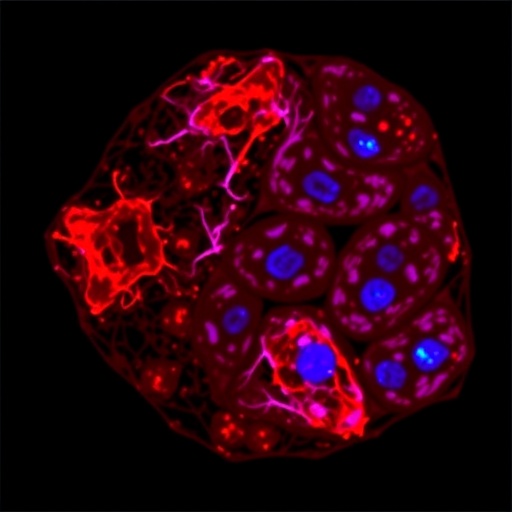
Recent advancements in cancer treatment continue to evolve, with researchers exploring the intricate mechanisms that drive tumorigenesis. A pivotal study conducted by Dai and colleagues has illuminated the role of the colony-stimulating factor 1 receptor (CSF-1R) in osteosarcoma, a common type of bone cancer predominantly affecting adolescents and young adults. This study, published in the Journal of Translational Medicine, presents groundbreaking findings on the effects of pharmacologic inhibition of CSF-1R, suggesting a promising avenue for therapeutic intervention in osteosarcoma characterized by CSF-1R overexpression.
Osteosarcoma is notorious for its aggressive nature and resistance to conventional therapies, leading to a pressing need for innovative treatment strategies. The study highlights that elevated levels of CSF-1R are commonly observed in osteosarcoma tumors, prompting researchers to investigate whether targeted inhibition of this receptor could curtail tumor growth. The compelling preliminary findings provided a strong rationale for further exploring the potential of CSF-1R as a therapeutic target in such malignancies.
Dai et al. employed various preclinical models to demonstrate that pharmacologic agents capable of inhibiting CSF-1R activity not only suppress tumor cell proliferation but also induce apoptosis, a process of programmed cell death that is often evaded by cancer cells. This finding is particularly significant, as it addresses one of the most challenging aspects of osteosarcoma treatment—the lack of effective mechanisms to induce cancer cell death. By pharmacologically blocking CSF-1R, there is a dual action: hindering growth signals and triggering apoptotic pathways unique to the cancer cells.
The study also delves into the molecular pathways affected by CSF-1R inhibition. Upon treatment, alterations in signaling cascades involved in cellular survival and growth were noted. Key pathways connected to both phosphoinositide 3-kinase (PI3K) and mitogen-activated protein kinase (MAPK) were notably impacted, revealing complex interdependencies that may provide insight into how osteosarcoma cells adapt to treatment pressures. By elucidating these pathways, the research opens doors to combination therapies that could enhance the efficacy of CSF-1R inhibitors when used alongside existing chemotherapeutics.
Moreover, researchers found that the immunological landscape within tumors transformed following CSF-1R blockade. This alteration could potentially heighten the effectiveness of immunotherapeutic strategies in osteosarcoma, as the tumor microenvironment responds to the disruption of growth signaling. Such findings underline the intricacies of the tumor-host interaction and suggest that CSF-1R inhibition may not only directly impair cancer cell growth but also modulate the immune system to mount a more effective anti-tumor response.
Patient-derived xenograft models, where human osteosarcoma cells are implanted into immunocompromised mice, further validated the efficacy of CSF-1R inhibitors. These models closely mimic the human disease, providing a robust platform to test the clinical relevance of the findings. The significant reduction in tumor size observed in treated animals underscores the potential for translating this therapeutic strategy into clinical practice. The promise of such translational research lies in its ability to offer novel solutions for cases resistant to current standard-of-care therapies.
The researchers also touched upon the scope of biomarkers associated with CSF-1R expression levels, indicating that patients with higher CSF-1R could be more suitable candidates for targeted therapies. This level of individualized medicine is vital for the future of oncological treatments, ensuring that patients receive therapies tailored to their specific tumor characteristics. Such precision medicine principles could enhance treatment outcomes and reduce unnecessary side effects that arise from non-targeted therapies.
Additionally, the potential for combination therapy with other agents that target key pathways activated in osteosarcoma presents an exciting frontier. Researchers are now contemplating the synergistic effects of CSF-1R inhibitors alongside established chemotherapeutics, which could lead to improved response rates in patients. This strategy can maximize therapeutic efficacy while minimizing toxicity—an ongoing goal in cancer treatment optimization.
Despite the promising findings surrounding CSF-1R inhibition, researchers remain cautious regarding the challenges associated with clinical implementation. The complex nature of osteosarcoma requires robust clinical trials to assess the safety and efficacy of new therapeutic protocols. Ensuring that these therapies can be administered safely alongside traditional treatments is crucial for patient outcomes, and the development of protocols is ongoing.
As the medical community remains vigilant for advancements in cancer therapies, studies like that of Dai et al. serve as pivotal milestones. Their contributions not only illuminate a previously underexplored avenue of osteosarcoma treatment but also foster hope that, with further investigation, targeted therapies could lead to improved prognoses for patients afflicted with this challenging disease. Such research drives the relentless pursuit of transforming the landscape of oncological care into a more effective, patient-centered approach.
Collectively, the multi-faceted exploration of CSF-1R as a therapeutic target highlights a significant step toward advancing treatment paradigms in osteosarcoma. The confluence of laboratory discoveries and strategic clinical applications remains essential to bridging the gap between research and real-world therapeutic advancements. The future of oncology is brightened by such innovations, as scientists aim to curb the impact of cancer on individuals and families worldwide.
In conclusion, the findings presented by Dai et al. bolster the case for pharmacologic inhibition of CSF-1R as a viable strategy in tackling osteosarcoma. As researchers glean insights from preclinical studies, the road ahead is paved with opportunities to enhance the quality of life for patients battling this formidable disease. The commitment to understanding, targeting, and ultimately conquering osteosarcoma exemplifies the endless pursuit of excellence within the realm of cancer research.
Dai, C., Shen, B., Liu, S. et al. Correction: Pharmacologic inhibition of CSF-1R suppresses intrinsic tumor cell growth in osteosarcoma with CSF-1R overexpression.
J Transl Med 23, 1063 (2025). https://doi.org/10.1186/s12967-025-07235-2
Cite Scienmag News
Nathaniel Bowman. (October 7, 2025). CSF-1R Inhibition Halts Osteosarcoma Growth. Scienmag. https://scienmag.com/csf-1r-inhibition-halts-osteosarcoma-growth/
Nathaniel Bowman. "CSF-1R Inhibition Halts Osteosarcoma Growth." Scienmag, 7 October 2025, https://scienmag.com/csf-1r-inhibition-halts-osteosarcoma-growth/. Accessed 3 September 2026.
Nathaniel Bowman. "CSF-1R Inhibition Halts Osteosarcoma Growth." Scienmag. October 7, 2025. https://scienmag.com/csf-1r-inhibition-halts-osteosarcoma-growth/


