

Monday, July 27, 2026
Science
No Result
View All Result
  • Login
  • HOME
  • SCIENCE NEWS
  • CONTACT US
  • HOME
  • SCIENCE NEWS
  • CONTACT US
No Result
View All Result
Scienmag
No Result
View All Result
Home Science News Chemistry

CRISPR Guides Bacteria’s Backup Defenses Like a Commanding Officer

July 27, 2026
in Chemistry
Reading Time: 2 mins read
0
CRISPR Guides Bacteria’s Backup Defenses Like a Commanding Officer

CRISPR Guides Bacteria’s Backup Defenses Like a Commanding Officer

65
SHARES
587
VIEWS
Share on FacebookShare on Twitter
ADVERTISEMENT

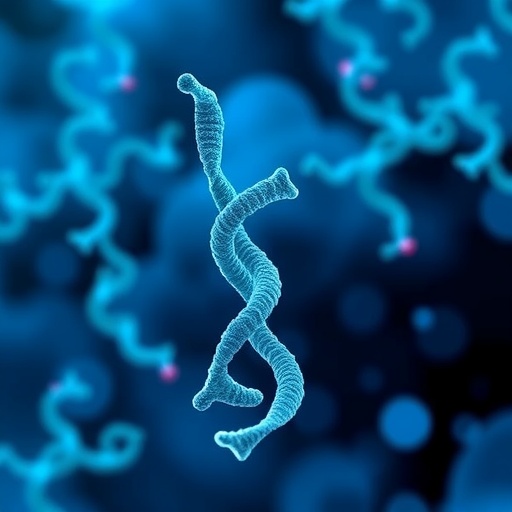
Bacteria rely on CRISPR-Cas systems to survive attacks from bacteriophages, viruses that infect and hijack bacterial cells. Beyond its well-known role as an adaptive immune mechanism, CRISPR-Cas is now emerging as a more versatile regulator of bacterial defense. In a new study, researchers investigated the type I CRISPR-Cas system in Neisseria and uncovered an unexpected layer of innate immunity encoded directly within the CRISPR-Cas genomic region.

The work highlights that additional “embedded” defense genes are present in and around the CRISPR-Cas locus. Rather than acting solely as a frontline sensor and slicer, the CRISPR apparatus appears to coordinate expression across multiple antimicrobial programs. By organizing defenses into a layered regulatory hierarchy, the system can switch the bacterium from a growth-favoring baseline to a rapid defensive state when phages arrive.

Type I CRISPR-Cas complexes can repress neighboring innate defense genes by binding specific promoter sequences. This binding functions like a molecular roadblock, limiting transcription and preventing the costly production of defense proteins under normal conditions. The study argues that this repression is essential for bacterial fitness: constitutively high defense gene expression would slow growth and reduce survival in the absence of phage threat.

When CRISPR-Cas function is impaired or disarmed, the repression is lifted. The result is a burst of innate defense gene expression, producing backup defenses that can eliminate phages even if the primary CRISPR pathway fails. This creates an anti-phage fail-safe, where disruption of the main defense triggers the activation of additional weapons.

The team also considered how phages counterattack CRISPR. Some phages encode peptide inhibitors that disable Cas machinery. However, the newly described regulatory architecture suggests that such inhibitors may not be sufficient: disabling CRISPR can indirectly activate the embedded backup defenses, undermining the phage’s strategy.

These findings broaden the conceptual framework of CRISPR-Cas biology by showing that CRISPR loci may carry both regulatory and effector roles. The discovery was made possible by established Neisseria genetics and phage platforms from prior work by former postdoc Xufei Zhou and the Zhang lab’s current student Xin Li, enabling functional tests in a native host context.

From an applied perspective, the layered defenses could help engineer phage-resistant bacterial strains for industrial processes such as fermentation and biofuel production. The study may also inform phage therapy design, especially against antibiotic-resistant pathogens, by identifying hidden immune systems that therapeutic phages must evade or circumvent.

Ultimately, the research reframes CRISPR-Cas as a commander that governs not only targeted immunity, but also the timing and magnitude of broader innate defenses embedded within the genome. In doing so, it reveals a dynamic, multi-tiered bacterial strategy for surviving viral predation.

Subject of Research: CRISPR-Cas regulation of embedded anti-phage innate defense systems in Neisseria
Article Title: CRISPR-Cas regulates expression of embedded anti-phage defence systems
News Publication Date: 2026
Web References: https://www.nature.com/articles/s41586-026-10833-9
References: DOI: 10.1038/s41586-026-10833-9
Image Credits:

Tags: bacterial adaptive immune system hierarchybacterial defense gene regulation by CRISPRCRISPR as a bacterial command centerCRISPR-based regulation of antimicrobialCRISPR-Cas bacterial immune regulationCRISPR-Cas gene regulation in bacterial survivalCRISPR-Cas role in bacterial innate immunityCRISPR-guided repression of defense genesembedded defense genes in CRISPR locilayered bacterial immune response mechanismstype I CRISPR-Cas system in Neisseria
Share26Tweet16
Previous Post

Long-Term Research Reveals Widespread Lithium Contamination in Western Drinking Water

Next Post

Study Explains Why DNA Damage from Smoking or UV Causes Cancer in Some

Related Posts

KAIST Finds Molecular Switch Activating Cell Growth Signaling for Anticancer Therapy
Chemistry

KAIST Finds Molecular Switch Activating Cell Growth Signaling for Anticancer Therapy

July 26, 2026
Can sparkling water be gentler on your teeth than other drinks?
Chemistry

Can sparkling water be gentler on your teeth than other drinks?

July 26, 2026
Versatile On-Support Phosphitylation Enables Efficient Oligonucleotide Functionalization
Chemistry

Versatile On-Support Phosphitylation Enables Efficient Oligonucleotide Functionalization

July 26, 2026
UW Chemists Develop New Approach to Improve Electron Transfer Selectivity
Chemistry

UW Chemists Develop New Approach to Improve Electron Transfer Selectivity

July 26, 2026
Researchers Enhance Hydrogen Production with Single-Element Dual-Site Substitution
Chemistry

Researchers Enhance Hydrogen Production with Single-Element Dual-Site Substitution

July 17, 2026
Satellite Observations Improve Global Mapping of Soil Moisture
Chemistry

Satellite Observations Improve Global Mapping of Soil Moisture

July 17, 2026
Next Post
Study Explains Why DNA Damage from Smoking or UV Causes Cancer in Some

Study Explains Why DNA Damage from Smoking or UV Causes Cancer in Some

  • Mothers who receive childcare support from maternal grandparents show more

    Mothers who receive childcare support from maternal grandparents show more parental warmth, finds NTU Singapore study

    27656 shares
    Share 11059 Tweet 6912
  • University of Seville Breaks 120-Year-Old Mystery, Revises a Key Einstein Concept

    1061 shares
    Share 424 Tweet 265
  • Bee body mass, pathogens and local climate influence heat tolerance

    682 shares
    Share 273 Tweet 171
  • Researchers record first-ever images and data of a shark experiencing a boat strike

    546 shares
    Share 218 Tweet 137
  • Groundbreaking Clinical Trial Reveals Lubiprostone Enhances Kidney Function

    531 shares
    Share 212 Tweet 133
Science

Embark on a thrilling journey of discovery with Scienmag.com—your ultimate source for cutting-edge breakthroughs. Immerse yourself in a world where curiosity knows no limits and tomorrow’s possibilities become today’s reality!

RECENT NEWS

  • Lipid-Shelled Nanobubble Ultrasound Agents: Formulation and Activation Study
  • Land Degradation Linked to Wider Crop Yield Gaps Across Global Croplands
  • CLEAR Builds Auditable Radiology Foundation Model Based on Clinical Concepts
  • Cellular Signaling Mechanisms Controlling the Blood-Brain Barrier

Categories

  • Agriculture
  • Anthropology
  • Archaeology
  • Athmospheric
  • Biology
  • Biotechnology
  • Blog
  • Bussines
  • Cancer
  • Chemistry
  • Climate
  • Earth Science
  • Editorial Policy
  • Marine
  • Mathematics
  • Medicine
  • Pediatry
  • Policy
  • Psychology & Psychiatry
  • Science Education
  • Social Science
  • Space
  • Technology and Engineering

Subscribe to Blog via Email

Enter your email address to subscribe to this blog and receive notifications of new posts by email.

Join 5,146 other subscribers

© 2025 Scienmag - Science Magazine

Welcome Back!

Login to your account below

Forgotten Password?

Retrieve your password

Please enter your username or email address to reset your password.

Log In
No Result
View All Result
  • HOME
  • SCIENCE NEWS
  • CONTACT US

© 2025 Scienmag - Science Magazine

Discover more from Science

Subscribe now to keep reading and get access to the full archive.

Continue reading
