

Sunday, August 16, 2026
Science
No Result
View All Result
  • Login
  • HOME
  • SCIENCE NEWS
  • CONTACT US
  • HOME
  • SCIENCE NEWS
  • CONTACT US
No Result
View All Result
Scienmag
No Result
View All Result
Home Science News Cancer

Study Explains Why DNA Damage from Smoking or UV Causes Cancer in Some

July 27, 2026
in Cancer
Reading Time: 2 mins read
0
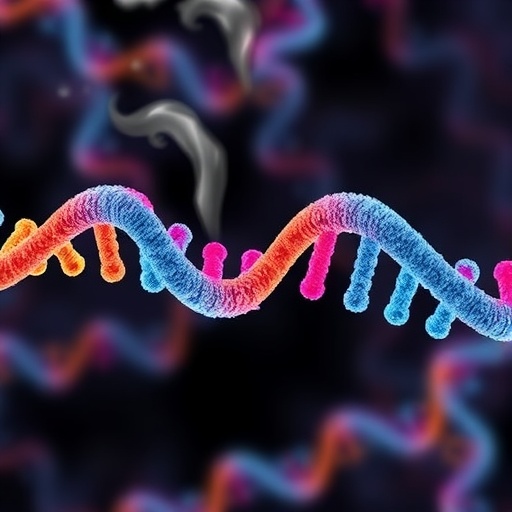
Study Explains Why DNA Damage from Smoking or UV Causes Cancer in Some

Study Explains Why DNA Damage from Smoking or UV Causes Cancer in Some

65
SHARES
587
VIEWS
Share on FacebookShare on Twitter
ADVERTISEMENT

Scientists have uncovered direct evidence that inherited genetics can steer how cancers emerge and evolve, even after the same environmental DNA insult. The work, reported in Nature from experiments in mice, shows that germline variation and acquired mutations jointly determine the eventual evolutionary “route” a tumor takes.

Instead of treating inherited risk as a background factor, the study links it to the mechanics of mutation and signaling. Tumors develop when DNA damage accumulates, producing mutations that let cells ignore growth-control cues and evade death signals.

A key challenge in humans has been separating genetic effects from messy differences in lifestyle and exposure history. Even within the same risk setting, only some individuals develop cancer—while others do not—suggesting that inherited genetics can buffer or amplify the consequences of DNA damage.

To isolate the variable, researchers bred four mouse strains with genetic diversity comparable to that found across human populations. Every animal received an identical single dose of the liver carcinogen diethylnitrosamine (DEN) at a fixed age, removing differences in dose, timing, and environment.

The team then sequenced nearly 600 tumors and profiled gene activity, comparing them with untreated controls. With these data, they reconstructed tumor histories from the initial cancer-causing mutation to the later genomic and transcriptional states.

Across strains, tumors repeatedly converged on a shared cancer-promoting outcome: activation of the MAPK signaling pathway. Yet convergence did not mean sameness. Depending on inherited background, the specific driver mutation differed, reshaping other signaling circuits engaged during progression.

One striking divergence was the tendency for whole-genome duplication, where an entire chromosome set is doubled. This event can accelerate evolution by providing extra genetic material for selection, potentially altering how rapidly malignant cells adapt.

The findings suggest that DNA-damaging therapies may not affect all patients identically. If inherited genetics influences both mutation trajectories and pathway choices, then treatment response could vary in ways not captured by standard clinical variables.

“Our results show for the first time how genetic background influences the mutation processes and the pathways leading to tumor development,” the researchers conclude. They argue that future prevention, screening, and precision oncology should incorporate population diversity and inherited genomic context to improve targeting and prognostic power.

Subject of Research: Animals (mice)
Article Title: Genetic background sets the trajectory of experimental cancer evolution
News Publication Date: 22-Jul-2026
Web References: https://www.nature.com/articles/s41586-026-10821-z
References: Aitken, SJ et al. Nature; 22 July 2026; DOI: 10.1038/s41586-026-10821-z
Keywords: cancer, cancer genomics, cancer cells, MAPK pathway, genetic background, tumor evolution, whole-genome duplication, precision medicine

Tags: cancer risk variability among individualsDNA damage and mutationenvironmental DNA insults and genetic responseGenetic factors in cancer developmentgermline variation and tumor progressioninherited risk and cancer susceptibilitymouse models of cancer geneticsmutation signaling mechanisms in cancerrole of genetics in cancer resistancesequencing and profiling cancer genomestumor evolution and mutation pathwaysUV and smoking-induced DNA damage
Share26Tweet16
Previous Post

CRISPR Guides Bacteria’s Backup Defenses Like a Commanding Officer

Next Post

KAIST Creates AI That Theorizes the World from Observation, Like Children

Related Posts

4D-Printed Breast Cancer Model Mimics Ducts, Revealing Treatment Resistance
Cancer

4D-Printed Breast Cancer Model Mimics Ducts, Revealing Treatment Resistance

August 15, 2026
Lipid droplet signatures classify liver cancer and reveal PLIN3 therapeutic potential
Cancer

Lipid droplet signatures classify liver cancer and reveal PLIN3 therapeutic potential

August 15, 2026
Monocyte-derived IL-1β/p65/KRT7/ILK pathway drives epithelial–mesenchymal transition in colorectal cancer
Cancer

Monocyte-derived IL-1β/p65/KRT7/ILK pathway drives epithelial–mesenchymal transition in colorectal cancer

August 15, 2026
DKMS Opens John Hansen Grant: Nearly €1 Million for Blood Cancer Research
Cancer

DKMS Opens John Hansen Grant: Nearly €1 Million for Blood Cancer Research

August 15, 2026
3D imaging maps glioma infiltration and tumor boundaries within 30 minutes
Cancer

3D imaging maps glioma infiltration and tumor boundaries within 30 minutes

August 15, 2026
Study links body mass and prediagnosis weight loss to colorectal cancer survival
Cancer

Study links body mass and prediagnosis weight loss to colorectal cancer survival

August 15, 2026
Next Post
KAIST Creates AI That Theorizes the World from Observation, Like Children

KAIST Creates AI That Theorizes the World from Observation, Like Children

  • Mothers who receive childcare support from maternal grandparents show more

    Mothers who receive childcare support from maternal grandparents show more parental warmth, finds NTU Singapore study

    27656 shares
    Share 11059 Tweet 6912
  • University of Seville Breaks 120-Year-Old Mystery, Revises a Key Einstein Concept

    1061 shares
    Share 424 Tweet 265
  • Bee body mass, pathogens and local climate influence heat tolerance

    682 shares
    Share 273 Tweet 171
  • Researchers record first-ever images and data of a shark experiencing a boat strike

    546 shares
    Share 218 Tweet 137
  • Groundbreaking Clinical Trial Reveals Lubiprostone Enhances Kidney Function

    531 shares
    Share 212 Tweet 133
Science

Embark on a thrilling journey of discovery with Scienmag.com—your ultimate source for cutting-edge breakthroughs. Immerse yourself in a world where curiosity knows no limits and tomorrow’s possibilities become today’s reality!

RECENT NEWS

  • Tropical Forest Biomass Responds to Diverse Climate Controls
  • Survey-Based Model Reveals How Preparedness Constraints Shape Cholera Transmission in Sudan
  • Waste-Based Retrofits Improve Thermal Performance in North Sinai Social Housing
  • KAIST develops semiconductor neuron that harnesses noise to selectively process signals

Categories

  • Agriculture
  • Anthropology
  • Archaeology
  • Athmospheric
  • Biology
  • Biotechnology
  • Blog
  • Bussines
  • Cancer
  • Chemistry
  • Climate
  • Earth Science
  • Editorial Policy
  • Marine
  • Mathematics
  • Medicine
  • Pediatry
  • Policy
  • Psychology & Psychiatry
  • Science Education
  • Social Science
  • Space
  • Technology and Engineering

Subscribe to Blog via Email

Success! An email was just sent to confirm your subscription. Please find the email now and click 'Confirm Follow' to start subscribing.

Join 5,149 other subscribers

© 2025 Scienmag - Science Magazine

Welcome Back!

Login to your account below

Forgotten Password?

Retrieve your password

Please enter your username or email address to reset your password.

Log In
No Result
View All Result
  • HOME
  • SCIENCE NEWS
  • CONTACT US

© 2025 Scienmag - Science Magazine
