


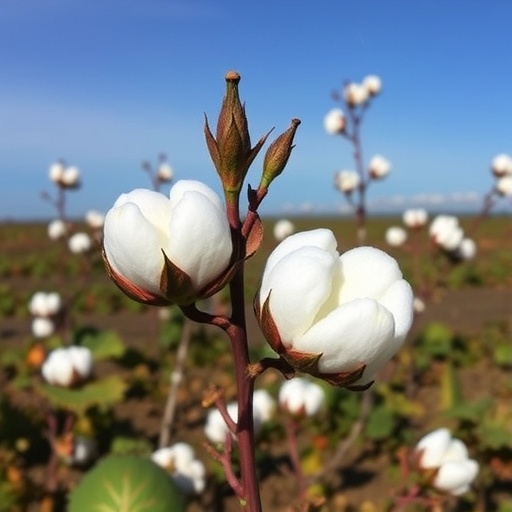
In an extraordinary leap forward for agricultural biotechnology, scientists from China have unveiled a transformative method enabling genome editing in elite cotton varieties previously impervious to traditional genetic modification techniques. Published online on March 27, 2026, in The Crop Journal, this pioneering research surmounts the long-standing limitations associated with tissue culture and regeneration in cotton, particularly in the esteemed long-staple species Gossypium barbadense. By harnessing an innovative sexual hybridization-based delivery strategy, the team has effectively bridged species boundaries to introduce CRISPR/Cas genome editing systems, promising a new era of precise and efficient crop improvement.
One of the most formidable challenges in cotton biotechnology has been the genome editing of recalcitrant elite varieties. These cultivars, prized for their superior fiber quality and agronomic traits, resist regeneration in tissue culture, rendering direct genetic intervention nearly impossible. The research led by Dr. Shuangxia Jin at the Hubei Hongshan Laboratory and Huazhong Agricultural University ingeniously circumvents these obstacles by transferring the CRISPR/Cas machinery via sexual hybridization from a regenerable donor line of Gossypium hirsutum ‘Jin668’ into the elite nonregenerative recipient Gossypium barbadense ‘Hai-7124’. This conceptual shift avoids the pitfalls of tissue culture entirely, leveraging natural reproductive processes as a conduit for genome editing.
The crux of this breakthrough lies in the successful knockout of the GbPGF gene—responsible for pigment gland formation—in the elite G. barbadense background. These glands house gossypol, a toxic terpenoid that has historically restricted cottonseed use due to its detrimental effects on non-ruminant animals and humans. By generating glandless bolls through precise genome editing, the research not only improves the safety of cottonseed protein as a food and feed resource but also adds immense economic value to cotton by-products previously considered waste. This feat was rigorously confirmed through backcrossing experiments and comprehensive whole-genome resequencing, underscoring the fidelity and efficiency of the editing process.
The implications of this method extend beyond mere trait improvement. It elegantly addresses the genotype-dependence bottleneck that has plagued genetic engineering in many crop species, particularly those with complex genomes and recalcitrant phenotypes. Unlike conventional approaches that necessitate the isolation and manipulation of tissue cultures—a process often marred by low regeneration rates and somaclonal variation—the sexual hybridization transfer acts as a form of “genetic minimally invasive surgery”. It facilitates the seamless incorporation of CRISPR tools as hereditary elements, allowing these molecular scalpel-like instruments to autonomously excise deleterious genes during progeny development.
Furthermore, the strategy preserves the elite agronomic and fiber qualities of the recipient varieties by employing successive backcrossing with the elite recurrent parent. This ensures that while the undesirable traits are precisely removed, the invaluable genetic background conferring superior fiber attributes remains intact. Such a balancing act between innovation and tradition is critical for maintaining market competitiveness and farmer acceptance in the cotton industry, where fiber quality commands premium prices and defines cultivar identity.
Notably, this genome editing paradigm is compatible with existing accelerated breeding programs, including greenhouse-based “speed breeding,” which substantially shortens the generational turnover time for backcrossing cycles. By enabling multiple backcrosses in condensed timeframes, this integrated approach expedites the release of new cotton lines that combine enhanced agronomic traits—such as insect and disease resistance—with the coveted fiber quality traits of elite G. barbadense genotypes.
The elimination of gossypol toxicity through GbPGF knockout heralds a significant advance toward tackling global protein shortages. Cottonseed protein, enriched and de-toxified, could serve as a resource-efficient and renewable protein source for both human nutrition and monogastric animal feed, effectively transforming what was once an agricultural by-product waste into a nutritional asset. This breakthrough addresses not only agricultural sustainability but also global food security challenges, emphasizing the multifaceted benefits of advanced genome editing.
Technically, the innovation demonstrates the feasibility of crossing reproductive barriers to introduce genome editing constructs in species previously considered intractable for genetic engineering. This could set a precedent for similar interventions in other crops where genotype recalcitrance and regeneration inefficiency have limited biotechnological advances. By marrying classical breeding strategies with cutting-edge molecular tools, the research charts a new course for precision breeding that respects genetic complexity and cultivar integrity.
Above all, the study exemplifies an important paradigm shift in biotechnology: instead of enforcing direct genetic manipulation, it leverages natural reproductive mechanisms to transmit and activate genome editing systems, thereby respecting the biological constraints of recalcitrant plant varieties. This strategy could revitalize breeding pipelines and unlock genetic improvement pathways long deemed too challenging or impossible.
This novel approach stands to accelerate the upgrading of the textile industry’s raw material base by improving yield and biotic stress tolerance traits in long-staple cotton without compromising fiber excellence. As cotton remains a cornerstone of global textile markets, enhancing its resilience and productivity through genome editing aligns seamlessly with future agricultural sustainability and economic growth goals.
In sum, Dr. Jin and colleagues have dynamically redefined the boundaries of genome editing in plants, providing a versatile, genotype-independent, and replicable platform for crop improvement. Their work not only impacts cotton breeding but also showcases the power of integrating molecular biology with visionary breeding strategies, fostering innovation that could reverberate across multiple crop species in the years ahead.
News Publication Date:
March 27, 2026
Web References:
DOI: 10.1016/j.cj.2026.02.020
Cite Scienmag News
Juliet Wilcox. (April 28, 2026). CRISPR/CAS Genome Editing Advances High-Quality Cotton Development, New Crop Journal Study Reveals. Scienmag. https://scienmag.com/crispr-cas-genome-editing-advances-high-quality-cotton-development-new-crop-journal-study-reveals/
Juliet Wilcox. "CRISPR/CAS Genome Editing Advances High-Quality Cotton Development, New Crop Journal Study Reveals." Scienmag, 28 April 2026, https://scienmag.com/crispr-cas-genome-editing-advances-high-quality-cotton-development-new-crop-journal-study-reveals/. Accessed 4 September 2026.
Juliet Wilcox. "CRISPR/CAS Genome Editing Advances High-Quality Cotton Development, New Crop Journal Study Reveals." Scienmag. April 28, 2026. https://scienmag.com/crispr-cas-genome-editing-advances-high-quality-cotton-development-new-crop-journal-study-reveals/


