


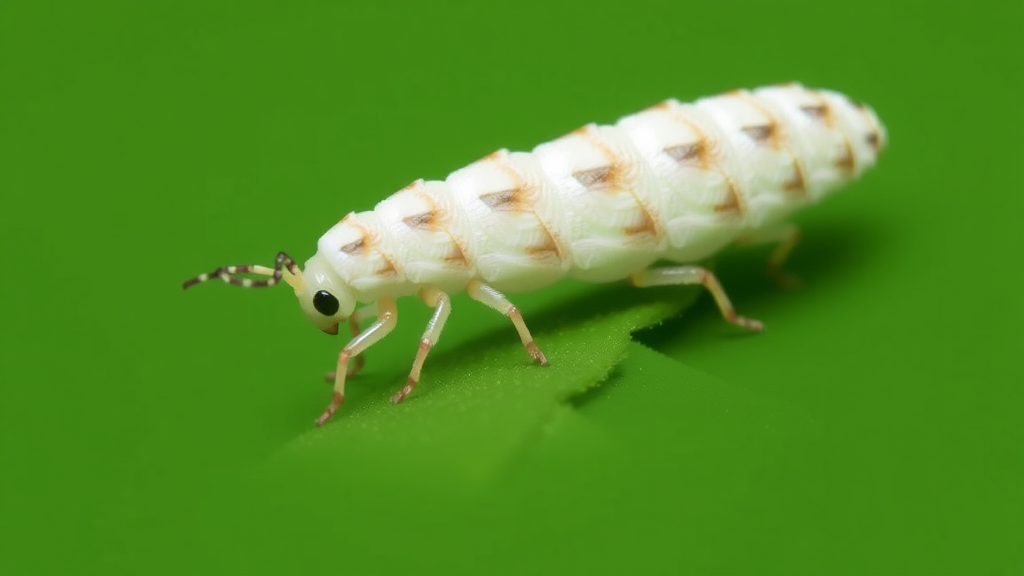
One of the world’s most destructive agricultural pests may be quietly arming itself against one of farmers’ most trusted chemical weapons. A new laboratory study has shown that the cotton leafworm, Spodoptera littoralis, can develop more than 400-fold resistance to chlorantraniliprole within just fifteen generations, a speed of adaptation that raises urgent questions about how long this cornerstone insecticide can remain effective in the field. The findings, published in the journal Ecotoxicology, offer the most detailed genetic portrait yet of how this moth species builds tolerance to a compound many growers depend upon.
Chlorantraniliprole belongs to the diamide class of insecticides, a group celebrated for targeting the ryanodine receptors of insect muscle cells. By binding to these receptors, the compound triggers uncontrolled release of calcium stores, causing paralysis and death while sparing most beneficial insects and vertebrates. This favorable selectivity profile has made chlorantraniliprole a pillar of integrated pest management programs worldwide. Yet the very success of the molecule has placed enormous selection pressure on target pests, and evidence from across the globe suggests that multiple lepidopteran species are already responding.
The research team, led by El-Sayed M. S. Mokbel of Egypt’s Central Agricultural Pesticides Laboratory alongside Nourhan A. El-Said and Eman A. Fouad, set out to quantify exactly how quickly resistance could emerge under controlled conditions. Starting from a susceptible laboratory strain of the cotton leafworm, they applied successive rounds of selection with chlorantraniliprole across fifteen generations, measuring the lethal dose required to kill half of each successive cohort. By the end of the experiment, the resistance ratio had climbed to a striking 402.85-fold, confirming that the genetic raw material for tolerance is readily available within pest populations.
Central to the study was the estimation of realized heritability, a metric that captures how much of the observed phenotypic change in resistance is driven by genetic inheritance rather than environmental variation. The calculated value came in at 0.37, a figure the authors describe as indicating considerable potential for resistance development under sustained selection pressure. In practical terms, this means that when chlorantraniliprole is applied repeatedly without rotation or refuge strategies, the odds are strongly stacked in favor of rapid evolutionary response by the pest. The finding aligns with patterns observed in other crop-damaging moths, where similar heritability estimates have foreshadowed field-scale control failures.
But knowing that resistance can evolve is only part of the puzzle. Equally important is understanding how the trait is inherited from one generation to the next, because the genetic architecture of a resistance trait shapes both its spread and the management strategies most likely to contain it. Through a series of reciprocal crosses between resistant and susceptible strains, followed by backcrosses of the hybrid offspring, the researchers mapped the inheritance pattern of chlorantraniliprole tolerance in remarkable detail. The results pointed unambiguously toward an autosomal mode of inheritance, meaning the resistance factors reside on chromosomes shared equally by both sexes rather than on the sex chromosomes.
Even more significant was the discovery that resistance is polygenic, controlled by multiple genes acting in concert rather than by a single dominant mutation. This polygenic architecture has profound implications for resistance management. When a single gene confers resistance, strategies that exploit recessive inheritance, such as high-dose refuge combinations used against Bt crops, can be highly effective. But when many genes each contribute a modest effect, resistance accumulates more gradually and is harder to reverse once established, because there is no single vulnerable target to eliminate. The polygenic basis also means that resistance levels can build incrementally with each application, making early detection and intervention especially critical.
The dominance analysis added yet another layer of complexity. The researchers found that resistance exhibits incomplete dominance, meaning heterozygous individuals carrying one resistant and one susceptible allele display an intermediate phenotype between the two homozygous parents. This partial dominance means that resistance alleles are not fully masked in heterozygotes, allowing them to be partially selected even when rare in a population. It also means that backcross generations will show graded responses to the insecticide, consistent with the gradual buildup of tolerance across multiple genetic loci. The combination of polygenic inheritance and incomplete dominance creates a scenario where resistance can quietly gain ground before reaching detectable thresholds.
Fitness costs, the biological price that resistant insects pay for their tolerance, are another crucial variable in the resistance equation. In many cases, resistance mutations impose energetic burdens that make resistant individuals less competitive when the insecticide is absent, creating a natural counterweight that can cause resistance to fade if chemical pressure is removed. The Egyptian team’s fitness assessments revealed a mixed picture: the resistant strain showed no significant reproductive penalties, meaning females laid eggs and produced viable offspring at rates comparable to their susceptible counterparts. However, the resistant larvae did exhibit a notable developmental delay during the larval and pre-adult stages, taking longer to progress through their life cycle. This modest cost is far from the severe reproductive penalties that would allow resistance to collapse quickly once selection pressure eases.
The relative absence of major fitness costs carries a sobering message for pest management. If resistance imposes little penalty when chlorantraniliprole is not in use, resistant individuals can persist in field populations even during periods when the compound is rotated out or withheld. This stability means that once resistance alleles become established, they are unlikely to disappear simply because farmers stop spraying. Instead, the resistant genotypes will remain poised to surge in frequency the moment the insecticide returns, creating a ratchet-like dynamic where each episode of use pushes resistance higher without meaningful recovery in between.
These laboratory findings resonate with a growing body of field evidence from across the pest’s range. Diamide resistance has already been documented in multiple Spodoptera species and related lepidopteran pests, with mechanisms ranging from mutations in the ryanodine receptor target site to enhanced detoxification via cytochrome P450 enzymes. The cotton leafworm itself is a notoriously polyphagous feeder, attacking cotton, vegetables, and countless other crops across Africa, the Middle East, and southern Europe. Its economic importance in Egypt, where it ranks among the most consequential pests, makes the erosion of chlorantraniliprole efficacy a matter of direct food security concern.
The study’s authors emphasize that the polygenic inheritance pattern and low fitness costs together necessitate proactive, integrated management strategies rather than reactive responses. Chief among their recommendations is the rotation of chlorantraniliprole with insecticides operating through different modes of action, which denies pests the sustained, unbroken selection pressure that drives polygenic resistance accumulation. They also advocate for integrating non-chemical control measures, including biological agents, cultural practices, and pheromone-based mating disruption, to reduce overall reliance on any single compound. Vigilant resistance monitoring in field populations emerges as an essential early-warning system, allowing growers to detect rising tolerance before control failures cascade through entire growing regions.
For farmers and agricultural advisors, the research underscores a broader truth about evolutionary biology in agroecosystems: pests are not static targets but dynamic populations capable of rapid genetic response to the tools deployed against them. Chlorantraniliprole remains a valuable asset in the fight against the cotton leafworm, but its longevity depends entirely on how judiciously it is used. The findings serve as both a warning and a roadmap, demonstrating that resistance can evolve faster than many might expect while also identifying the management practices most likely to preserve this important chemical tool for future generations of growers.
Subject of Research: Genetic basis and fitness costs of chlorantraniliprole resistance in the cotton leafworm Spodoptera littoralis
Article Title: Realized heritability, mode of inheritance, and fitness costs of Spodoptera littoralis (Boisd.) (Lepidoptera: Noctuidae) resistance to chlorantraniliprole
Article References: Mokbel, E.-S. M. S., El-Said, N. A., & Fouad, E. A. (2026). Realized heritability, mode of inheritance, and fitness costs of Spodoptera littoralis (Boisd.) (Lepidoptera: Noctuidae) resistance to chlorantraniliprole. Ecotoxicology, 35(8), Article 167. https://doi.org/10.1007/s10646-026-03142-4
Image Credits: AI Generated
DOI: 10.1007/s10646-026-03142-4
Keywords: Spodoptera littoralis, chlorantraniliprole, insecticide resistance, realized heritability, polygenic inheritance, fitness costs, diamide insecticides, cotton leafworm, pest management, resistance monitoring, integrated pest management, Egypt
Cite Scienmag News
Gavin Prescott. (September 12, 2026). Cotton Leafworm Can Rapidly Evolve Potent Resistance to a Key Insecticide. Scienmag. https://scienmag.com/cotton-leafworm-can-rapidly-evolve-potent-resistance-to-a-key-insecticide/
Gavin Prescott. "Cotton Leafworm Can Rapidly Evolve Potent Resistance to a Key Insecticide." Scienmag, 12 September 2026, https://scienmag.com/cotton-leafworm-can-rapidly-evolve-potent-resistance-to-a-key-insecticide/. Accessed 17 October 2026.
Gavin Prescott. "Cotton Leafworm Can Rapidly Evolve Potent Resistance to a Key Insecticide." Scienmag. September 12, 2026. https://scienmag.com/cotton-leafworm-can-rapidly-evolve-potent-resistance-to-a-key-insecticide/


