


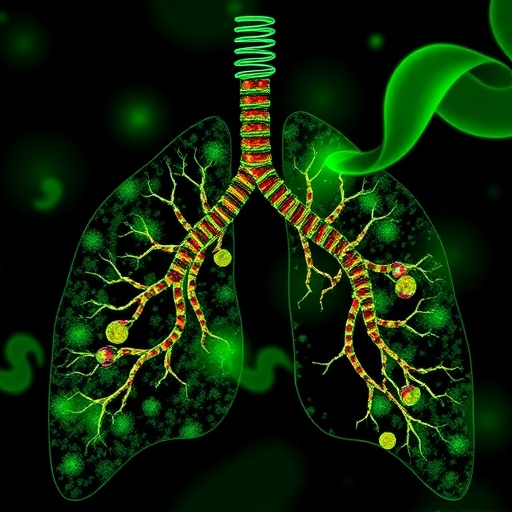
A new study published in Nature Communications reports that corisin, a virus-associated molecular factor, can disrupt the protein-management systems of lung epithelial cells and initiate a chain of events linked to tissue injury and pulmonary fibrosis. The work by Fujimoto, Yasuma, D’Alessandro-Gabazza and colleagues focuses on a biological process that is increasingly recognized as a major determinant of whether viral damage resolves or develops into long-term disease: proteostasis stress, the loss of balance in the production, folding, transport and disposal of proteins inside cells.
The lungs are particularly vulnerable to disturbances in proteostasis. Their epithelial lining is continuously exposed to inhaled particles, inflammatory signals and infectious agents, while also maintaining the delicate barrier that separates air from the bloodstream. Epithelial cells must manufacture large quantities of structural and secreted proteins, repair damaged surfaces and coordinate communication with immune cells. When newly produced proteins fail to fold correctly or accumulate in the wrong cellular compartments, the resulting stress can impair cell function and activate emergency pathways designed to restore order.
The study identifies corisin as a trigger of this cellular crisis. Rather than viewing viral injury solely as the consequence of direct cell destruction or an uncontrolled immune response, the research places intracellular protein mismanagement at the center of the process. Corisin-induced proteostasis stress may overload quality-control systems, including pathways that detect misfolded proteins, reduce new protein synthesis and promote the removal of damaged molecules. These responses are essential for survival when tightly regulated, but persistent activation can itself become harmful.
One of the principal consequences of sustained proteostasis stress is epithelial dysfunction. Lung epithelial cells form physical junctions that preserve barrier integrity and regulate the movement of fluids, proteins and immune mediators across the respiratory surface. If these cells lose their normal architecture or become injured, the barrier can become leaky, allowing inflammatory signals and plasma components to enter surrounding tissue. Such disruption can intensify local inflammation and create conditions in which repair is no longer orderly.
The findings also connect corisin-driven stress with pulmonary fibrosis, a pathological process in which normal lung tissue is progressively replaced by excess extracellular matrix. This matrix, composed largely of proteins such as collagens, provides structural support in healthy tissue. During fibrosis, however, excessive matrix deposition stiffens the lung, reduces its elasticity and interferes with the exchange of oxygen and carbon dioxide. Fibroblasts and related repair cells can become persistently activated, transforming a temporary healing response into a self-reinforcing cycle of scarring.
The biological link between epithelial injury and fibrosis is complex. Damaged epithelial cells can release signals that recruit immune cells and alter the behavior of neighboring stromal cells. In turn, inflammatory and profibrotic mediators can further stress the epithelium, creating a feedback loop between cellular injury and abnormal repair. By placing corisin upstream of proteostasis failure, the study suggests that early disturbances in protein quality control may help explain how a viral insult can produce consequences that continue after the initial infection has subsided.
Proteostasis is maintained through several coordinated systems. The endoplasmic reticulum monitors the folding of proteins destined for secretion or insertion into cell membranes, while the unfolded protein response adjusts cellular activity when folding capacity is exceeded. The ubiquitin-proteasome system marks selected proteins for destruction, and autophagy delivers larger aggregates or damaged cellular components to lysosomes for recycling. A viral factor capable of interfering with this network could affect not only individual proteins but also the broader decisions that determine whether a cell adapts, enters a dysfunctional state or dies.
The study’s implications extend beyond the immediate molecular activity of corisin. If proteostasis stress is an initiating event in lung injury, therapeutic strategies could potentially be designed to protect protein-quality-control pathways, limit prolonged stress signaling or interrupt the transition from epithelial damage to fibrotic remodeling. Such approaches would differ from treatments aimed only at suppressing inflammation. They would target the cellular systems that determine how lung tissue responds to damage, although the safety and effectiveness of any such intervention would require careful evaluation because proteostasis pathways are also essential for normal cell survival.
The findings may also help scientists interpret why some patients recover from viral respiratory disease while others experience persistent structural damage. Differences in epithelial resilience, viral factor exposure, immune activity and the ability to restore protein balance could influence the outcome. The work does not reduce pulmonary fibrosis to a single mechanism, but it highlights a potentially important connection between a viral-associated molecule, intracellular stress and maladaptive tissue repair. Further studies will be needed to determine how corisin behaves in living organisms, whether its effects vary among lung cell types and whether blocking its activity can prevent fibrosis without compromising antiviral defenses.
Cite Scienmag News
Kristina Jarvis. (August 1, 2026). Corisin triggers proteostasis stress, causing epithelial damage and lung fibrosis. Scienmag. https://scienmag.com/corisin-triggers-proteostasis-stress-causing-epithelial-damage-and-lung-fibrosis/
Kristina Jarvis. "Corisin triggers proteostasis stress, causing epithelial damage and lung fibrosis." Scienmag, 1 August 2026, https://scienmag.com/corisin-triggers-proteostasis-stress-causing-epithelial-damage-and-lung-fibrosis/. Accessed 3 September 2026.
Kristina Jarvis. "Corisin triggers proteostasis stress, causing epithelial damage and lung fibrosis." Scienmag. August 1, 2026. https://scienmag.com/corisin-triggers-proteostasis-stress-causing-epithelial-damage-and-lung-fibrosis/


