


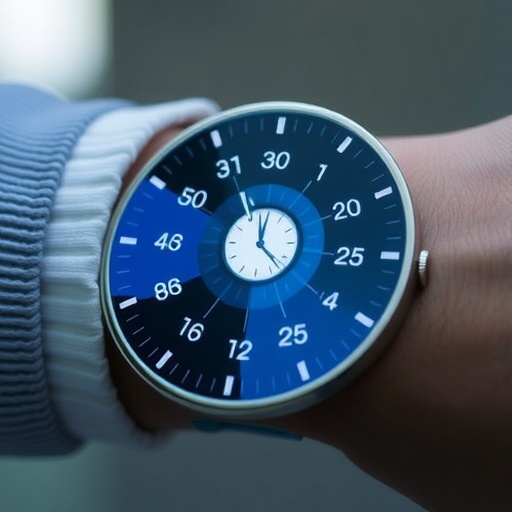
In a groundbreaking analysis that delves deep into the evolving landscape of healthcare technology, MedTech expert Blythe Karow, MBA, exposes how consumer wearable devices are rapidly transforming from mere fitness trackers into pivotal clinical gatekeepers. Traditionally, primary care physicians have long been the first point of contact in the healthcare continuum, guiding patients through diagnostic referrals and treatment pathways. However, a seismic shift is underway as wearable health platforms harness advanced biosensors and artificial intelligence to capture, analyze, and interpret physiological data on an unprecedented scale.
These wearable devices continuously monitor vital signals such as heart rate variability, sleep cycles, and blood pressure trends, often identifying subtle health deviations even before the user perceives symptoms. This continuous data stream, when coupled with sophisticated AI algorithms capable of detecting patterns and anomalies, positions wearables as the primary informants of an individual’s health status. Consequently, these platforms are claiming the crucial “first conversation” with the patient about their well-being, effectively reshaping how clinical decisions begin and potentially influencing subsequent specialist referrals and treatment options.
This emerging paradigm highlights a critical technological shift where consumer tech companies are essentially building the infrastructure for what Karow terms “clinical routing.” Large industry players are not only innovating hardware but are aggressively embedding themselves into healthcare frameworks traditionally dominated by medical institutions. The fitness technology company WHOOP’s recent $575 million fundraising — notably backed by healthcare giants Abbott and Mayo Clinic — signals the magnitude and seriousness of this trend. WHOOP’s selection into a Medicare outcome-based chronic care program exemplifies the successful integration of wearable tech into regulated healthcare environments.
Similarly, other ventures like Oura have actively interfaced with Medicare electronic health record (EHR) systems, enhancing interoperability and clinical usability. Meanwhile, tech behemoths such as Apple, Samsung, and Verily are investing heavily in the regulatory and reimbursement arenas, fortifying their roles as healthcare intermediaries. Collectively, these developments exemplify a robust shift from wearables as fitness accessories toward powerful clinical tools with capabilities to mitigate strain on healthcare providers by enabling proactive patient monitoring and early intervention.
However, these advancements come with a complex web of regulatory and ethical challenges. The rapid aggregation of control over physiological monitoring, data analytics, and clinical decision-making by a handful of private entities raises structural antitrust concerns seldom addressed in the consumer tech domain. Unlike licensed physicians, who face strict legal constraints preventing financial conflicts of interest in patient referrals, wearable technology companies operate under business models reliant on user engagement, subscription services, and monetization of vast health datasets. This convergence of roles—data custodian, clinical advisor, and reimbursement facilitator—within single corporate entities underscores the urgent need for regulatory scrutiny.
Karow warns that existing U.S. policy frameworks are ill-equipped to manage the risks introduced by this fusion of consumer tech and healthcare delivery. As wearables’ influence expands, their ability to shape patient journeys and clinical decisions without established healthcare oversight mechanisms opens potential pitfalls related to patient privacy, data security, and equitable access to care. Current healthcare antitrust laws and ethical standards lag behind technological progress, creating a vulnerability where commercialization strategies may overshadow patient welfare priorities.
From a technical perspective, these wearable platforms leverage cutting-edge sensor technologies, including photoplethysmography, accelerometers, and electrocardiography, that exponentially increase the granularity of captured physiological metrics. The extensive datasets generated feed into machine learning models trained on diverse populations, enhancing predictive accuracy for conditions such as arrhythmias, sleep apnea, and hypertension. Real-time analytics and cloud connectivity allow for seamless interaction between wearables, mobile apps, and electronic health record systems, thereby fostering an ecosystem where data-driven health insights are dynamically delivered to patients and clinicians.
Moreover, the integration of outcome-based care models further incentivizes wearable adoption in clinical workflows. By tying reimbursement to measurable health improvements documented via continuous monitoring, payers and providers alike see wearables as valuable tools to enhance chronic disease management efficiency and reduce hospital readmissions. This clinical validation encourages further innovation in device accuracy, battery longevity, and user experience — all critical for sustained patient engagement.
Despite these promising developments, the dual-use nature of wearable technologies necessitates rigorous transparency regarding data sharing practices and algorithmic decision-making biases. Inaccurate or opaque AI interpretations could misguide patient behavior or provider recommendations, prolonging health disparities rather than mitigating them. Hence, establishing robust governance structures encompassing patient consent, algorithm validation, and real-time audit trails is imperative to safeguard ethical standards within this rapidly evolving domain.
Looking beyond the United States, international regulatory bodies are also grappling with similar questions about integrating consumer wearables into healthcare ecosystems. Harmonizing standards for data privacy, AI safety, and clinical efficacy across jurisdictions will be essential to enable scalable, cross-border applications of this technology. Collaborative frameworks involving technology vendors, healthcare stakeholders, and policymakers must be forged to craft resilient and adaptive health governance models that keep pace with relentless innovation.
In sum, the transformation driven by wearable health platforms heralds a new era in which the conventional gatekeeping role of primary care may be supplanted by algorithmically driven devices that initiate the first touches of healthcare interaction. While this holds immense promise for earlier detection and personalized management, it also necessitates vigilant oversight to prevent monopolistic practices and protect patient interests. As consumer wearables advance into the clinical mainstream, stakeholders must align technical innovation with ethical and regulatory rigor to ensure these powerful tools serve as true allies in health rather than mere extensions of commercial enterprise.
Keywords
Health care policy, Health care delivery, Medical economics, Medical ethics, Patient monitoring, Doctor patient relationship, Medical products, Medical technology
Cite Scienmag News
Denise Maddox. (May 29, 2026). Consumer Wearables Take Center Stage as the New Gatekeepers in Health Care: Insights from JMIR Analysis. Scienmag. https://scienmag.com/consumer-wearables-take-center-stage-as-the-new-gatekeepers-in-health-care-insights-from-jmir-analysis/
Denise Maddox. "Consumer Wearables Take Center Stage as the New Gatekeepers in Health Care: Insights from JMIR Analysis." Scienmag, 29 May 2026, https://scienmag.com/consumer-wearables-take-center-stage-as-the-new-gatekeepers-in-health-care-insights-from-jmir-analysis/. Accessed 4 September 2026.
Denise Maddox. "Consumer Wearables Take Center Stage as the New Gatekeepers in Health Care: Insights from JMIR Analysis." Scienmag. May 29, 2026. https://scienmag.com/consumer-wearables-take-center-stage-as-the-new-gatekeepers-in-health-care-insights-from-jmir-analysis/


