


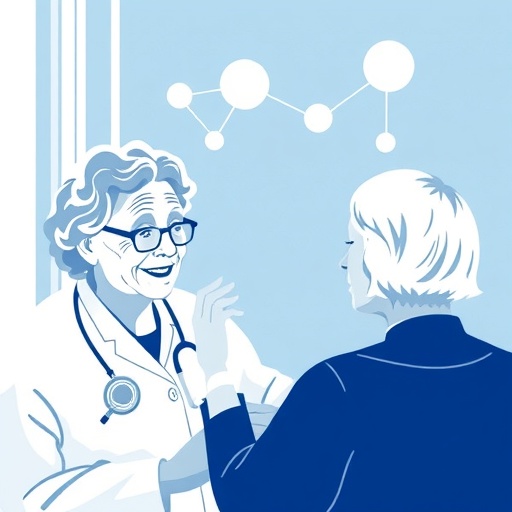
In the unfolding landscape of geriatric healthcare, a revolutionary shift is underway, seeking to redefine how the needs and desires of older adults are understood and addressed. In an insightful qualitative study conducted by Julien, Ravensbergen-Roobol, van der Klei, and colleagues, the essence of what genuinely resonates with aging individuals in both life and treatment is examined with an unprecedented focus on the phenomenon of connectedness within person-centered care. This work, published in BMC Geriatrics in 2026, paves new pathways in conceptualizing eldercare by emphasizing the profound psychological and social dimensions alongside the traditional medical parameters.
At its core, the study delves into the intricate fabric of older adults’ experiences, seeking to unravel the essence of connectedness that transcends mere physical health. Connectedness, framed as the meaningful bonds individuals maintain with people, communities, and their own selves, emerges as a pivotal influencer of well-being, decisively shaping life satisfaction and treatment outcomes. Through meticulous qualitative methodologies, including in-depth interviews and thematic analysis, the researchers have accentuated the subtleties of interpersonal relationships and their therapeutic potential in the aging process.
This paradigm shift is particularly critical as the global population ages at an unprecedented rate, stretching healthcare systems and inviting innovative strategies for care delivery. The team’s approach moves away from a purely biomedical model to one that holistically integrates emotional, social, and existential dimensions, seeking to tailor interventions that resonate with personal values and social realities of older adults. Such integration challenges long-standing clinical frameworks, urging healthcare providers to adopt more nuanced, empathetic practices.
The investigators explored how older adults perceive their identity and autonomy when engaged in their own care. This exploration revealed that instilling a sense of agency is inseparable from nurturing connectedness. Participants frequently articulated that feelings of isolation or neglect profoundly undermine their treatment adherence and overall life quality. Contrastingly, when care systems incorporated social support and recognized individual narratives, patients displayed enhanced engagement and optimism about their health trajectories.
Technological advancements also feature prominently in this discourse, as digital innovations offer promising avenues to foster connectedness when physical proximity is unfeasible. However, the study cautiously critiques over-reliance on technology, underscoring the necessity of balancing human touch with digital communication. The researchers advocate for hybrid care models where telehealth complements, rather than replaces, personalized interaction, ensuring that empathy and responsiveness remain at the forefront.
Furthermore, the investigation sheds light on the role of caregivers—both professional and familial—and their impact on sustaining connectedness. The study highlights that caregiver training must emphasize relational competencies alongside clinical skills, enabling meaningful interactions that validate the lived experiences of older adults. Support systems for caregivers themselves emerge as vital, recognizing the emotional labor involved and its influence on the quality of care delivered.
Person-centered care, as depicted in this study, extends beyond symptom management, engaging deeply with the existential questions that often accompany aging—purpose, legacy, and emotional fulfillment. Integrating philosophical insights with clinical practice allows for more humane and resonant healthcare, which respects the dignity and complex identities of elders. This holistic perspective challenges institutions to re-evaluate their metrics of success, expanding them to include psychological well-being and social integration.
The qualitative nature of the research reveals rich narratives, offering nuanced insights into the diverse ways connectedness manifests across cultural backgrounds and personal histories. This diversity calls for culturally sensitive frameworks that accommodate a spectrum of values and social conventions, avoiding one-size-fits-all approaches. By amplifying the voices of older adults themselves, the study champions participatory research models that democratize knowledge production in geriatric health.
It is notable that the findings underscore a reciprocal nature of connectedness where older adults are not passive recipients but active agents shaping the relational dynamics. This reframing contests stereotypical depictions of aging as decline alone, presenting it instead as a phase ripe with potential for growth, learning, and contribution. Empowerment emerges not as a mere concept but as an actionable component within therapeutic contexts, capable of transforming health outcomes.
From a policy perspective, the implications are vast. Health administrators and policymakers are called to rethink resource allocation, prioritizing programs that integrate social and emotional support mechanisms. Funding models may need to pivot toward interdisciplinary teams where psychologists, social workers, and community organizers collaborate alongside medical practitioners, delivering comprehensive and nuanced eldercare.
The role of community infrastructure in facilitating connectedness is equally emphasized. Accessible public spaces, social clubs, and volunteer networks function as vital lifelines that sustain social engagement and prevent loneliness. Urban design and public health initiatives thus intersect in this framework, advocating for age-friendly environments that actively promote social inclusion for seniors.
Moreover, this investigation prompts a re-examination of medical education curricula. Training future healthcare providers to understand and implement person-centered practices that prioritize connectedness could transform clinical encounters. Embracing empathy, active listening, and contextual awareness becomes imperative, equipping professionals to respond effectively to the complex psychosocial needs of older patients.
Importantly, the research navigates the challenges of operationalizing connectedness in busy clinical settings, where time constraints and systemic pressures often limit relational depth. Innovative workflow designs and technology-enhanced communication tools are proposed to mitigate these hurdles, ensuring connectedness remains a feasible priority without overburdening practitioners.
On a broader scientific note, this study contributes to growing evidence that psychosocial factors are as critical as physiological markers in predicting health trajectories among older populations. Incorporating connectedness into health assessments may enhance prognostic accuracy and enable more personalized care plans, reflecting the intricate interplay between mind, body, and social environment.
In summary, the exploration led by Julien and colleagues marks a seminal advance in geriatric healthcare understanding. By foregrounding connectedness within the fabric of person-centered care, they illuminate pathways for enhanced quality of life and treatment responsiveness among older adults. This integrative model calls for a reimagining of healthcare paradigms that respect and harness the social and emotional dimensions of aging, fostering environments where seniors can thrive with dignity, engagement, and hope.
Cite Scienmag News
Beatrice Stafford. (June 3, 2026). Connectedness Key to Person-Centered Care for Elders. Scienmag. https://scienmag.com/connectedness-key-to-person-centered-care-for-elders/
Beatrice Stafford. "Connectedness Key to Person-Centered Care for Elders." Scienmag, 3 June 2026, https://scienmag.com/connectedness-key-to-person-centered-care-for-elders/. Accessed 3 September 2026.
Beatrice Stafford. "Connectedness Key to Person-Centered Care for Elders." Scienmag. June 3, 2026. https://scienmag.com/connectedness-key-to-person-centered-care-for-elders/


