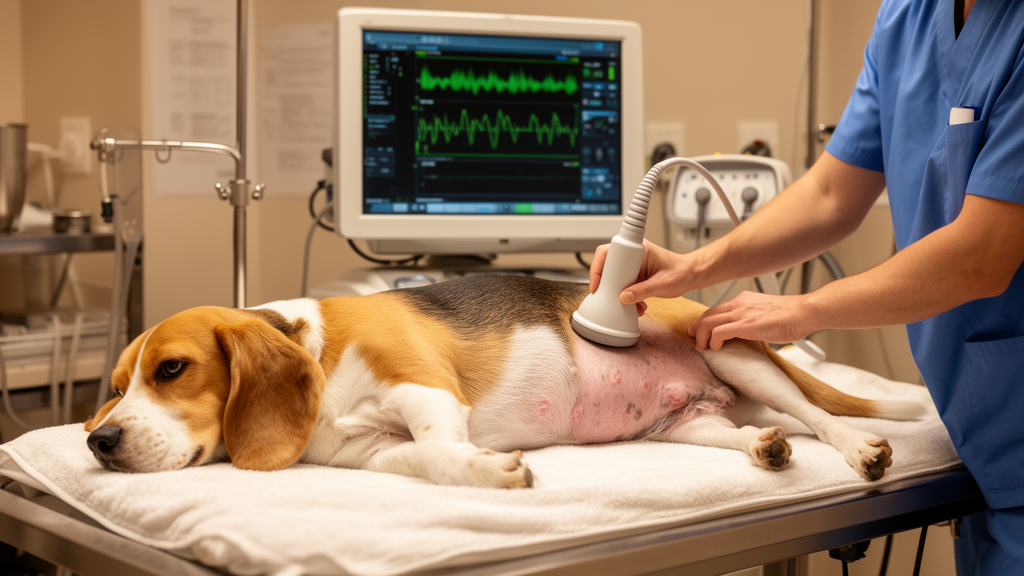
A new large-animal study has delivered a striking result in the quest for gentler prostate ablation: a pulse strategy that mixes two different electrical waveforms destroyed far more prostate tissue than either waveform alone, while triggering only mild muscle contractions and no serious adverse events. The research, published in Frontiers in Urology, evaluated compound steep-pulse irreversible electroporation (CSP-IRE) in twenty healthy male Beagle dogs and offers one of the most detailed parameter maps yet for this emerging non-thermal ablation technology.
Irreversible electroporation, or IRE, is not a new idea. The technique uses high-voltage, low-energy electrical pulses delivered between thin needle electrodes to punch permanent nanoscale pores into cell membranes. Once membrane integrity is irreversibly lost, cells die through apoptotic and necrotic pathways rather than through the heat-driven protein denaturation that characterizes radiofrequency or laser ablation. Because tissue destruction is electrical rather than thermal, the scaffolding of the tissue—the extracellular matrix, blood vessels, and nerves—largely survives. That property has made IRE attractive for treating tumors in organs such as the liver, pancreas, and prostate, where preserving surrounding structures matters enormously.
Conventional IRE, however, has an uncomfortable side effect. The unipolar pulses it employs are strong enough to stimulate nerves and muscles, producing dramatic whole-body contractions that typically require deep anesthesia and neuromuscular blockade. High-frequency irreversible electroporation, known as H-FIRE, addressed this by delivering ultra-short bipolar pulses that fall within the refractory period of nerve cells, keeping stimulation below the threshold for action potentials. Preclinical and early clinical studies of H-FIRE in prostate ablation have confirmed effective lesion formation with markedly reduced muscle contraction. But most of these studies relied on fixed waveform structures or single pulse widths, leaving open whether a smarter pulse recipe could do better.
The team behind the new work, based at Shanghai Municipal Hospital of Traditional Chinese Medicine and Shanghai Nortion Medical Technology, developed a device that generates what they call highly heavy-frequency bipolar compound steep pulses. Their hypothesis was simple but consequential: if pulses of different durations and field strengths interact with tissue in complementary ways, combining them in a single ablation sequence should permeabilize a broader population of cells than any single waveform could. The device has passed registration testing at the Shanghai Testing and Inspection Institute for Medical Devices and is cleared for clinical trials, making this canine study a critical preclinical stepping stone.
The experiment was designed as a sequential, stepwise parameter optimization. Each of the twenty Beagles contributed two prostate lobes, giving forty treatment sites and reducing the number of animals required. In the first phase, escalating voltages established safe operating ranges: with 5-microsecond pulses, voltages up to 2500 volts produced muscle contractions graded at most as moderate, while 50-microsecond pulses remained acceptable up to 1500 volts. In the second phase, the researchers compared single-pulse and compound-pulse protocols head to head under identical electrode placement. The results were unambiguous. A 5-microsecond pulse at 1500 V/cm ablated 39.30 square millimeters of tissue; a 50-microsecond pulse at 1000 V/cm managed 64.44 square millimeters. The compound protocol—both pulses in sequence—carved out 307.27 square millimeters, roughly five to eight times the area of either single-pulse approach.
The third phase systematically varied electric-field strength, interelectrode spacing, and insertion depth. Mean ablation areas in the low-, medium-, and high-parameter groups were 39.74, 175.46, and 228.49 square millimeters, respectively. The medium and high groups both significantly outperformed the low group, but the difference between medium and high was not statistically significant. Crucially, the high-parameter group produced significantly greater muscle contraction than the medium group. The authors interpret this through the sigmoidal dose-response characteristic of electroporation: once the tissue-specific ablation threshold—estimated at roughly 1072 V/cm for canine prostate—is exceeded, pushing the field higher adds little therapeutic benefit but preferentially amplifies neuromuscular stimulation, since nerve and muscle excitation thresholds sit far below the ablation threshold.
Electrode geometry proved equally important. At spacings of 10, 14, and 18 millimeters, mean ablation areas were 83.93, 226.25, and 216.20 square millimeters. The 14-millimeter configuration delivered the largest lesion, and the researchers conclude that the practical spacing window lies between 14 and 18 millimeters rather than at a single optimum. Increasing insertion depth from 10 to 20 millimeters, by contrast, yielded only a modest gain—from 83.93 to 90.10 square millimeters—suggesting that cross-sectional lesion size is governed more by electrode spacing than by how deep the needles sit within the gland.
Safety findings were reassuring across the seven-day follow-up. No serious adverse events occurred, wounds healed without complication, and gross prostate appearance remained normal. Red blood cell counts, hemoglobin, and platelets showed no clinically relevant changes relative to published reference change values for laboratory Beagles. White blood cell counts rose transiently after the procedure, a pattern the authors attribute to surgical stress and the localized inflammatory response that follows tissue injury rather than systemic toxicity. Only one dog showed a leukocyte increase exceeding the reference change value, consistent with a more pronounced inflammatory reaction.
The mechanism behind the compound-pulse advantage remains an open question, though a plausible model has emerged from earlier work in potato tubers, rabbit liver, mouse tumors, and porcine liver. High-voltage narrow pulses can perforate cell membranes, but those perforations often reseal without killing the cell. A subsequent lower-voltage, broader pulse may widen these transient pores past the point of recovery, pushing cells into irreversible death. In effect, the two waveforms act as a one-two punch: the first creates the vulnerability, the second exploits it. The authors caution that this synergy was not directly tested in prostate tissue and that impedance measurements and computational field modeling will be needed to confirm it.
Limitations temper the enthusiasm appropriately. The study was conducted in healthy canine prostates, which may not fully mirror the electrical and tissue properties of human benign or malignant prostate disease. Each parameter configuration was evaluated in only three prostate lobes, and the reported field strengths represent device output settings rather than measured tissue distributions. Adjacent critical structures such as the urethra were preserved histologically but not systematically evaluated, and longer follow-up with electromyography will be needed to fully characterize neuromuscular responses. Still, the core conclusion stands: the medium-parameter compound protocol—5-microsecond pulses at 1500 V/cm combined with 50-microsecond pulses at 1000 V/cm—achieved a favorable balance between ablation area and muscle contraction, and no serious adverse events emerged. As the first systematic parameter optimization of compound steep-pulse ablation in a large-animal prostate model, the study lays the quantitative groundwork for the clinical trials that must follow before this technology reaches patients with benign prostatic hyperplasia or prostate cancer.
Subject of Research: Compound steep-pulse irreversible electroporation for prostate ablation in Beagle dogs: parameter evaluation and short-term safety
Article Title: Compound steep-pulse irreversible electroporation for prostate ablation in Beagle dogs: parameter evaluation and short-term safety
Article References: Chen, Z., Zhao, L., Zhang, Z., & Luo, Z. (2026). Compound steep-pulse irreversible electroporation for prostate ablation in Beagle dogs: parameter evaluation and short-term safety. Frontiers in Urology, 6, Article 1721078. https://doi.org/10.3389/fruro.2026.1721078
Image Credits: AI Generated
DOI: 10.3389/fruro.2026.1721078
Keywords: Compound, steep-pulse, irreversible, electroporation, prostate, ablation, Beagle, dogs, parameter, evaluation, short-term, safety
Cite Scienmag News
William Thompson. (October 17, 2026). Compound Steep Pulses Show Promise for Prostate Ablation in Landmark Canine Study. Scienmag. https://scienmag.com/compound-steep-pulses-show-promise-for-prostate-ablation-in-landmark-canine-study/
William Thompson. "Compound Steep Pulses Show Promise for Prostate Ablation in Landmark Canine Study." Scienmag, 17 October 2026, https://scienmag.com/compound-steep-pulses-show-promise-for-prostate-ablation-in-landmark-canine-study/. Accessed 17 October 2026.
William Thompson. "Compound Steep Pulses Show Promise for Prostate Ablation in Landmark Canine Study." Scienmag. October 17, 2026. https://scienmag.com/compound-steep-pulses-show-promise-for-prostate-ablation-in-landmark-canine-study/