


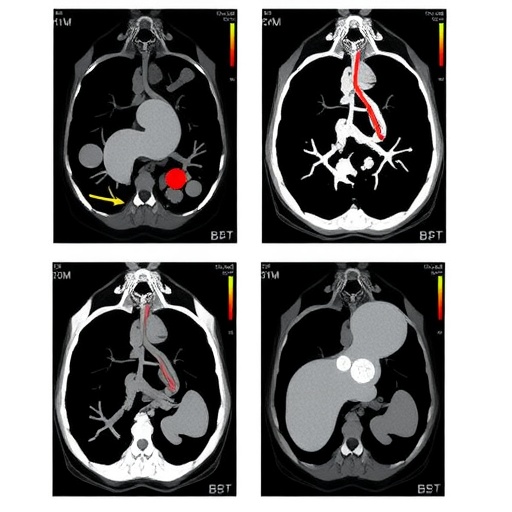
A recent study published in the Journal of Clinical and Translational Hepatology explores the therapeutic potential of combining sequential transarterial chemoembolization (TACE) with stereotactic body radiation therapy (SBRT) in the treatment of recurrent hepatocellular carcinoma (HCC). This retrospective analysis sheds light on the comparative efficacy of this combination versus SBRT alone, offering promising but preliminary insights into improved clinical outcomes for patients battling recurrent liver cancer.
Recurrent HCC poses a significant clinical challenge due to its frequent resistance to conventional therapies and the complex hepatic environment in which tumors often develop. SBRT has emerged as an innovative local treatment modality by delivering high doses of focused radiation to tumor sites with precision, thereby sparing surrounding healthy liver tissue. Meanwhile, TACE remains a cornerstone in managing liver cancer, functioning through catheter-based delivery of chemotherapeutic agents paired with embolic materials to induce ischemic tumor necrosis.
The novelty of this investigation lies in the sequential application of TACE following SBRT, a treatment protocol that aims to leverage the complementary mechanisms of radiation-induced tumor damage and chemoembolization-induced ischemic cytotoxicity. Until now, limited comparative data existed to convincingly assess whether this sequential combination confers survival advantages without imposing additional toxicity burdens on patients.
The researchers retrospectively reviewed 152 patients with recurrent HCC, subdividing them into two cohorts: 109 patients treated with SBRT alone and 43 patients receiving the combination of SBRT followed by TACE. To reduce confounding variables and selection bias, propensity score matching was employed, yielding 68 patients in the SBRT-alone group and 36 patients in the SBRT plus TACE group for robust comparative analyses.
Outcomes such as overall survival (OS), progression-free survival (PFS), and local control were analyzed through Kaplan-Meier survival methods. Notably, the combination therapy group exhibited numerically higher survival rates across multiple time points. The one-, three-, and five-year OS rates in the SBRT-alone group were 91.2%, 76.3%, and 61.8% respectively, compared to 100.0%, 86.1%, and 77.5% in the combined therapy group. Progression-free survival similarly trended higher in patients receiving the sequential treatment.
Despite these encouraging trends, the differences between groups did not attain statistical significance, with p-values of 0.069 for overall survival and 0.091 for progression-free survival. Nevertheless, this signals a potentially meaningful clinical benefit that warrants further validation. Importantly, the safety assessment revealed no occurrence of acute grade 3 or higher toxicities in either group, affirming that the addition of TACE to SBRT does not exacerbate treatment-related adverse events.
The underlying biological rationale for combining SBRT with TACE is multifaceted. Radiation therapy may enhance tumor oxygenation and permeability temporarily, facilitating better delivery and retention of chemotherapeutic agents during subsequent TACE. Additionally, SBRT-induced tumor necrosis can sensitize residual cancer cells to ischemic insult, thus potentially amplifying the cytotoxic effects of chemoembolization.
Moreover, SBRT’s precise radiation targeting limits damage to adjacent hepatic parenchyma, which is critical in patients with compromised liver function frequently encountered in recurrent HCC. Integrating TACE post-radiation might further consolidate local tumor control by eradicating microscopic residual disease and inhibiting tumor angiogenesis, thereby reducing recurrence risk.
This exploratory study’s findings contribute valuable clinical insights by establishing a safety profile for the sequential approach and generating initial efficacy signals. However, the authors emphasize the necessity of larger-scale, prospective randomized controlled trials to definitively ascertain whether combining SBRT with TACE improves long-term survival and quality of life outcomes in recurrent HCC patients.
Implementing combination locoregional therapies also requires careful patient selection and multidisciplinary collaboration, balancing therapeutic intensification with preservation of liver function. Optimization of treatment sequencing, dosing parameters, and interval timing between SBRT and TACE warrants further investigation to maximize synergistic effects while minimizing complications.
In the context of evolving systemic therapies and immunotherapeutic agents under development for liver cancer, integrating local modalities like SBRT and TACE into multimodal regimens may unlock new therapeutic frontiers. Understanding the molecular and immunological tumor microenvironment alterations induced by these treatments could pave the way for personalized strategies that harness immune responses alongside direct cytotoxicity.
As the global burden of HCC continues to rise, innovative approaches addressing recurrent disease are urgently needed. This study’s demonstration of favorable trends without increased toxicity highlights a promising avenue in the pursuit of improved survival outcomes for patients facing limited options after initial treatments fail.
In summary, the sequential administration of transarterial chemoembolization after stereotactic body radiation therapy offers a potentially effective and safe treatment strategy for recurrent hepatocellular carcinoma. While definitive conclusions await more extensive trials, these preliminary results provide a compelling foundation for future research aimed at refining liver cancer therapeutics and ultimately enhancing patient prognosis.
News Publication Date:
13 March 2026
Web References:
https://www.xiahepublishing.com/journal/jcth
http://dx.doi.org/10.14218/JCTH.2025.00568
Cite Scienmag News
Nathaniel Bowman. (May 13, 2026). Comparing Sequential Transarterial Chemoembolization After Stereotactic Body Radiation Therapy to Radiation Alone in Treating Recurrent Hepatocellular Carcinoma. Scienmag. https://scienmag.com/comparing-sequential-transarterial-chemoembolization-after-stereotactic-body-radiation-therapy-to-radiation-alone-in-treating-recurrent-hepatocellular-carcinoma/
Nathaniel Bowman. "Comparing Sequential Transarterial Chemoembolization After Stereotactic Body Radiation Therapy to Radiation Alone in Treating Recurrent Hepatocellular Carcinoma." Scienmag, 13 May 2026, https://scienmag.com/comparing-sequential-transarterial-chemoembolization-after-stereotactic-body-radiation-therapy-to-radiation-alone-in-treating-recurrent-hepatocellular-carcinoma/. Accessed 4 September 2026.
Nathaniel Bowman. "Comparing Sequential Transarterial Chemoembolization After Stereotactic Body Radiation Therapy to Radiation Alone in Treating Recurrent Hepatocellular Carcinoma." Scienmag. May 13, 2026. https://scienmag.com/comparing-sequential-transarterial-chemoembolization-after-stereotactic-body-radiation-therapy-to-radiation-alone-in-treating-recurrent-hepatocellular-carcinoma/


