


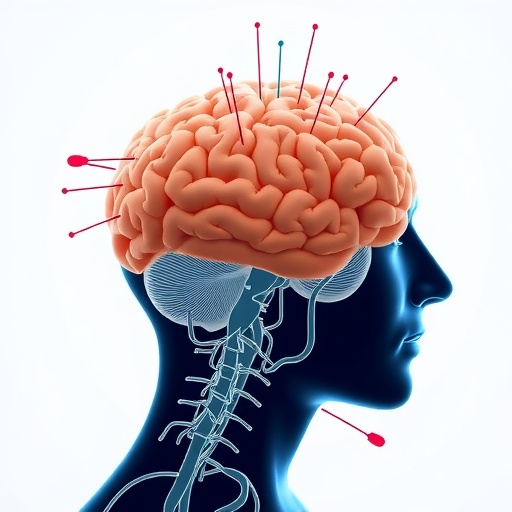
Paralysis following a stroke remains one of the most challenging neurological impairments, profoundly affecting patients’ quality of life through diminished motor control and physical independence. Recent clinical research published in the esteemed journal CNS Neuroscience & Therapeutics sheds light on a promising intervention for post-stroke motor recovery: acupuncture. This study offers compelling evidence that acupuncture, applied at specific neural acupoints, triggers neuroplastic adaptations in the brain, correlating with significant improvements in motor function among stroke survivors.
This randomized controlled trial enrolled 56 patients diagnosed with stroke-induced hemiparesis, systematically assigning them in a 2:1 ratio to either a true-acupoint treatment group or a sham-acupuncture control. Over a structured two-week regimen, participants in the true-acupoint group underwent targeted acupuncture designed to stimulate precise neuroanatomical loci implicated in sensorimotor integration. Crucially, only this group demonstrated robust enhancements in motor recovery, as assessed by standardized motor function evaluations, thereby attesting to the specificity of acupoint stimulation in therapeutic efficacy.
Perhaps the most groundbreaking facet of this study lies in its application of multimodal magnetic resonance imaging (MRI) to map the neuroplastic changes accompanying acupuncture treatment. Patients in the true-acupuncture cohort exhibited pronounced increases in gray matter volume localized to the right opercular inferior frontal gyrus, postcentral gyrus, and cerebellar regions—areas heavily implicated in the orchestration of cognitive and motor functions. These structural brain modifications suggest that acupuncture may potentiate the rewiring and recovery of neural circuits disrupted by ischemic injury.
The right opercular inferior frontal gyrus is strategically involved in higher-order motor planning and initiation, while the postcentral gyrus serves as the primary somatosensory cortex, critical for integrating tactile feedback essential to refined motor execution. Enhancement of gray matter in these regions likely reflects an improved capacity for sensorimotor integration, enabling more coordinated and purposeful voluntary movements. Additionally, the cerebellar enhancements align with its well-established role in motor coordination, balance, and error correction, further supporting a comprehensive neurobiological mechanism underlying acupuncture’s effects.
From a mechanistic perspective, this study aligns with contemporary theories of neuroplasticity, where targeted peripheral stimulation influences central nervous system remodeling. Acupuncture’s capacity to modulate synaptic connectivity and promote neurogenesis in specific brain regions suggests the activation of intrinsic recovery pathways pivotal for functional restitution post-stroke. These central modulations may enhance motor initiation, execution precision, movement control, and coordination, collectively contributing to the observed clinical improvements.
Importantly, the clinical trial’s design incorporating sham-acupoint controls provides vital evidence that the improvements observed are not attributable to placebo effects or non-specific tactile stimulation. This strengthens the argument that acupuncture’s therapeutic action is mediated through precise neuroanatomical pathways rather than general sensory input, marking an advancement in validating acupuncture within evidence-based neurorehabilitation protocols.
The implications of these findings resonate beyond acupuncture alone, offering a framework for integrating traditional and modern therapeutic modalities in neurorehabilitation. Leveraging neuroimaging biomarkers to gauge treatment response enables personalized rehabilitation strategies, optimizing functional outcomes in stroke survivors. This multimodal approach epitomizes the convergence of ancient medical traditions with cutting-edge neuroscientific methodologies.
Furthermore, the neuroplastic adaptations observed raise intriguing questions about the temporal dynamics of brain recovery and the potential for sustained benefits with prolonged or repeated acupuncture interventions. It invites further inquiry into the optimal dosing, frequency, and acupoint selection tailored to individual neuroanatomical injury profiles, promoting maximal synaptic reorganization.
This study paves the way for future interdisciplinary research encompassing clinical neurology, neuroscience, and complementary medicine. Expanding sample sizes and longitudinal follow-ups will be essential to corroborate these preliminary findings and explore long-term functional and structural outcomes. Additionally, investigations into molecular mechanisms—such as neurotrophic factor modulation or neurotransmitter system alterations—may elucidate the biochemical substrates driving these observed anatomical changes.
From a therapeutic standpoint, acupuncture represents a minimally invasive, low-risk intervention that could complement conventional physical therapy and pharmacological management in stroke rehabilitation. Its ability to harness endogenous neuroplastic mechanisms positions it as an attractive adjunct strategy, particularly for patients with limited responsiveness to standard treatments.
In summary, this rigorous randomized trial foregrounds acupuncture as a potent facilitator of brain plasticity and motor recovery post-stroke. By demonstrating tangible increases in gray matter in critical sensorimotor regions alongside clinically meaningful motor improvements, this research bridges traditional Chinese medicine with modern neuroimaging science, heralding new vistas in stroke recovery therapeutics.
Cite Scienmag News
Cassandra Pierce. (June 3, 2026). Exploring How Acupuncture Influences Motor Recovery After Stroke. Scienmag. https://scienmag.com/exploring-how-acupuncture-influences-motor-recovery-after-stroke/
Cassandra Pierce. "Exploring How Acupuncture Influences Motor Recovery After Stroke." Scienmag, 3 June 2026, https://scienmag.com/exploring-how-acupuncture-influences-motor-recovery-after-stroke/. Accessed 5 September 2026.
Cassandra Pierce. "Exploring How Acupuncture Influences Motor Recovery After Stroke." Scienmag. June 3, 2026. https://scienmag.com/exploring-how-acupuncture-influences-motor-recovery-after-stroke/


