


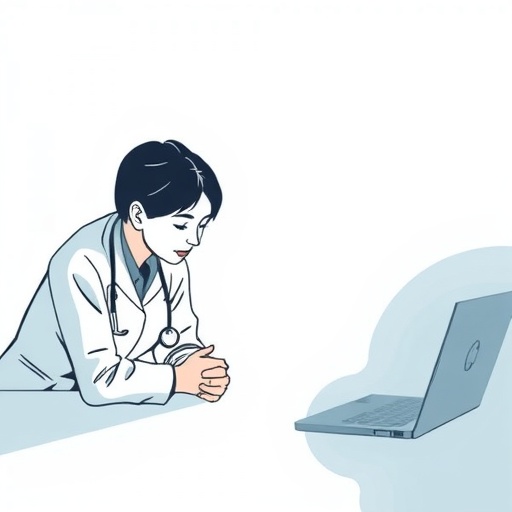
Delivering bad news in clinical practice is a significant challenge confronted by healthcare professionals. This task often involves not only the factual communication of harsh realities but also a nuanced interplay of emotional intelligence and effective communication skills. Recent research conducted by Kosydar-Bochenek, Kobak, and Szczupak has shed light on how Polish healthcare professionals navigate this delicate balance. Their study emphasizes the importance of fostering both interpersonal skills and emotional acuity in order to enhance the patient experience during these difficult conversations.
The research begins by framing the context: healthcare professionals frequently find themselves in situations where they must convey unfortunate diagnoses or prognoses. This can create tension, resulting in anxiety—not only for the patient but the provider as well. The researchers highlight that these conversations are more than just transactional exchanges of information; they require empathy, support, and clarity. Their investigation thus seeks to augment existing knowledge on how communication skills and emotional intelligence play crucial roles.
One of the notable findings of the research is the profound impact of emotional intelligence on the delivery of bad news. Emotional intelligence encompasses the ability to perceive, understand, and manage one’s emotions as well as the emotions of others. The study revealed that healthcare professionals who exhibit higher emotional intelligence tend to foster a more supportive environment for their patients. As a result, patients are not only more likely to understand their diagnosis, but they also feel more acknowledged and supported through one of the most challenging times in their lives.
Moreover, the researchers provide evidence showing that training in communication skills can directly enhance healthcare professionals’ effectiveness in delivering difficult news. Workshops that focus on role-playing scenarios, active listening, and nuanced verbal and non-verbal communication methods are particularly effective in improving performance in these high-stakes conversations. The paper underscores the necessity for healthcare systems to integrate such training into their ongoing professional development programs.
The impact of the training is significant; healthcare providers who engage in skill-building exercises display improved confidence and composure during patient interactions. This enhanced capacity contributes to a more compassionate delivery of bad news, allowing professionals the chance to demonstrate empathy. The interplay between effective communication and emotional intelligence creates a foundation of trust that can lead to better patient outcomes and overall satisfaction.
Not only is the emotional state of the healthcare provider essential, but the emotional landscape of the patient also plays a determining role. Understanding that patients may react with denial, anger, or sadness, those equipped with higher emotional intelligence can better manage these reactions. This leads to a more patient-centered approach, in which professionals adapt their communication styles based on the unique emotional needs of the individuals they serve.
The research also acknowledges cultural sensitivities, which is particularly pertinent in Poland, where societal norms and expectations can influence communication styles. By considering these factors, healthcare professionals can tailor their approaches to respect cultural nuances while still delivering critical information. The study calls for a more localized understanding of communication methods, thereby promoting a national conversation on best practices across medical institutions.
In comparison to other countries, Poland’s healthcare system is still evolving concerning the emphasis placed on communication training. This research, therefore, serves as a clarion call for educational institutions to prioritize communication coursework in medical and nursing curricula. Developing these competencies early on will prepare future healthcare workers to handle sensitive conversations with confidence and grace.
As the study progresses, it introduces various case studies from Polish hospitals, showcasing instances where improved communication practices have led to tangible, positive outcomes. For example, patients who were treated with empathy and clarity reported feeling more empowered in their treatment decisions, leading to increased adherence to medical guidelines. Such evidence provides concrete justification for implementing educational reforms aimed at bolstering communication skills among healthcare providers.
On a broader scale, the findings of this research resonate well beyond Poland. As healthcare systems worldwide grapple with the emotional toll of delivering bad news, the principles identified by Kosydar-Bochenek and colleagues can be adapted to any context. Emotional intelligence and communication skills are universally applicable, highlighting a growing recognition of their importance in healthcare.
Looking ahead, the researchers call for more expansive studies examining the longitudinal effects of training programs on patient and provider outcomes. Rigorous follow-up assessments could reveal the lasting benefits of improved communication skills and emotional intelligence, ultimately emphasizing their necessity within the healthcare framework. The ripple effect of instilling strong communication principles can transform the patient experience, demonstrating how essential these skills are to modern medicine.
Consequently, the pursuit of excellence in delivering bad news highlights a core truth: the human element in healthcare is irreplaceable. Those in positions of care must continuously strive to elevate their skills, cultivating an environment where patients feel heard, valued, and supported. Equipped with the knowledge from this vital research, healthcare professionals can indeed evolve to meet the comprehensive needs of their patients.
In conclusion, the study by Kosydar-Bochenek, Kobak, and Szczupak serves to not only document the current landscape of communication in healthcare but also to inspire tangible change. By merging communication techniques with emotional intelligence, healthcare systems can significantly enhance the quality of care provided to patients during their most vulnerable moments. As the medical community takes heed of these insights, a new standard for patient interaction will inevitably take shape, leading to a more compassionate and empathetic healthcare system.
Kosydar-Bochenek, J., Kobak, J., Szczupak, M. et al. Delivering bad news in clinical practice: the role of communication skills and emotional intelligence among Polish healthcare professionals.
BMC Med Educ (2025). https://doi.org/10.1186/s12909-025-08222-3
Cite Scienmag News
Glenn Wilkins. (November 30, 2025). Communicating Bad News: Skills and Empathy in Polish Healthcare. Scienmag. https://scienmag.com/communicating-bad-news-skills-and-empathy-in-polish-healthcare/
Glenn Wilkins. "Communicating Bad News: Skills and Empathy in Polish Healthcare." Scienmag, 30 November 2025, https://scienmag.com/communicating-bad-news-skills-and-empathy-in-polish-healthcare/. Accessed 8 September 2026.
Glenn Wilkins. "Communicating Bad News: Skills and Empathy in Polish Healthcare." Scienmag. November 30, 2025. https://scienmag.com/communicating-bad-news-skills-and-empathy-in-polish-healthcare/


