


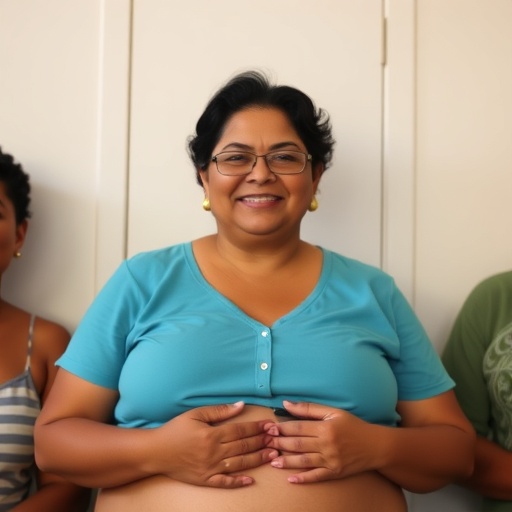
Obesity has long been described as a disease of poverty in wealthy nations and a disease of affluence in poorer ones. A new study from Brazil, one of the world’s most populous middle-income countries, shows that this tidy dichotomy breaks down the moment researchers look at the intersection of education, race, and sex. Analyzing nationally representative health survey data from 2013 and 2019, a team of Brazilian and Spanish investigators has found that educational inequalities in obesity run in opposite directions depending on who you are: among women, higher education generally protects against obesity—but far less so for Black women—while among men, obesity paradoxically rises with education, and most steeply so among Black and Brown men.
The research, published in the International Journal for Equity in Health, drew on the Brazilian National Health Survey (PNS), a large household survey conducted by the Brazilian Institute of Geography and Statistics that samples adults aged 23 years and older. The team, led by Luciana Alves de Medeiros and Catarina Machado Azeredo of the Federal University of Uberlândia, together with Renata Bertazzi Levy of the University of São Paulo and the Instituto de Investigación Biomédica de Salamanca, compared obesity prevalence across two survey waves, 2013 and 2019, using body mass index calculated from self-reported weight and height. Rather than simply comparing averages between groups, the researchers deployed sophisticated measures of health inequality that are increasingly standard in the global health literature: the Slope Index of Inequality (SII) and the Relative Index of Inequality (RII).
These two indices deserve explanation, because they are what allow the study to make claims about gradients rather than mere differences. The Slope Index of Inequality expresses, in percentage points, the absolute difference in obesity prevalence between the most educated and least educated individuals after ranking the population by educational attainment. A positive SII means obesity is more common among the more educated; a negative SII means the opposite. The Relative Index of Inequality expresses the same contrast as a ratio: an RII of 0.5, for instance, indicates that the most educated group has roughly half the obesity prevalence of the least educated, while an RII greater than one signals that obesity increases with education. By computing these measures separately for men and women, and within categories of race and skin color as self-identified in the Brazilian census tradition—White, Black, and Brown (pardo)—the team was able to probe what epidemiologists call intersectionality: the idea that social categories do not act independently but combine to produce unique patterns of health risk.
The headline finding concerns the direction of the educational gradient. In high-income countries, decades of research have established that obesity concentrates among the least educated, reflecting the greater availability of cheap, calorie-dense ultra-processed foods in disadvantaged neighborhoods and the protective effect of health literacy, leisure-time exercise, and access to fresh foods among the better off. As countries undergo what demographers call the nutritional transition, the burden of obesity is expected to migrate down the socioeconomic ladder. Brazil, the new analysis suggests, is following this script—but only for part of its population.
Among women, the expected inverse relationship between education and obesity was clearly visible for White and Brown women in 2019. White women showed a Slope Index of Inequality of −15.0 percentage points, meaning that obesity prevalence fell by fifteen percentage points as one moved from the least to the most educated; Brown women showed a negative SII of −9.7 percentage points. Their relative indices, 0.5 and 0.7 respectively, confirmed that higher education was associated with substantially lower obesity prevalence. But the same pattern was not statistically significant for Black women, a striking silence in the data that the authors interpret as evidence that education confers a weaker protective effect against obesity for this group.
For Brown women, the study also detected change over time. The relative index of inequality shifted from 0.5 in 2013 to 0.7 in 2019, a weakening of the protective gradient that the researchers attribute largely to rising obesity among women with secondary and tertiary education. In other words, the obesity epidemic in Brazil is no longer sparing educated women, particularly Brown women, and the social gradient that once clearly separated them from their less educated peers is flattening. This is consistent with the idea that as ultra-processed foods and sedentary lifestyles saturate an entire society, education loses some of its shielding power.
Among men, the picture is nearly inverted. Obesity in Brazilian men increases, rather than decreases, with education—a pattern frequently observed in early and middle stages of the nutritional transition, when sedentary white-collar work, restaurant meals, and higher disposable income accompany schooling. Crucially, the new study shows that this positive gradient is not uniform across racial groups. In 2019, both absolute and relative educational inequality in obesity were significantly higher for Black and Brown men than in 2013, with Slope Index values of 9.9 and 8.5 percentage points respectively, indicating that obesity prevalence among the more educated Black and Brown men exceeded that of their less educated counterparts by roughly nine to ten percentage points. Among White men, by contrast, no significant educational inequality in obesity was detected at all.
Perhaps the most revealing temporal finding concerns Black men: between 2013 and 2019, the burden of obesity shifted from the less educated to the more educated within this group. That reversal within a single six-year window offers a rare real-time glimpse of the nutritional transition at work, and it suggests that the pace of change can differ sharply across racial categories even within the same national population. For Black men, rising education appears to have become associated with rising obesity risk, a combination that complicates any assumption that socioeconomic advancement automatically translates into better cardiometabolic health.
The authors situate these findings within Brazil’s broader nutritional and epidemiological context. Over recent decades, Brazilian diets have shifted markedly toward ultra-processed foods, a trend documented extensively in national dietary surveys and linked to weight gain, and physical activity patterns have grown more sedentary. In such an environment, the classical inverse relationship between education and obesity among women is beginning to erode, while the positive gradient among men persists or intensifies. Overlaying race on this picture, the study argues, reveals structural disadvantages that would otherwise be invisible: Black and Brown individuals of both sexes fare worse, whether because education buys less protection for Black women or because the obesity risk of upward mobility weighs more heavily on Black and Brown men.
Methodologically, the study has both strengths and limits worth noting. The use of two waves of a nationally representative survey with large sample sizes lends statistical power, and the SII and RII indices are considered gold-standard measures for summarizing socioeconomic gradients in health because they take the full distribution of education into account rather than comparing only extreme categories. The intersectional stratification—crossing sex with race and education—represents a methodological commitment to the idea that health inequities are multiply determined. On the other hand, obesity was classified using self-reported weight and height, which is known to introduce measurement error, typically underestimating BMI; the authors also note that the cross-sectional design of each survey wave, even with two time points, cannot establish causation. Education is a marker of many things—income, occupation, neighborhood, food environments, stress exposure—and the survey data cannot disentangle which of these pathways drives the observed gradients.
The public health implications are considerable. Brazil’s national obesity rates have climbed steadily enough that the health ministry has repeatedly revised its surveillance projections upward, and noncommunicable diseases linked to excess weight now rank among the country’s leading causes of death and disability. If anti-obesity policy continues to be designed around the assumption that risk concentrates among the poor and less educated, it may miss growing segments of the educated population—Brown women with secondary and tertiary education, for instance—while simultaneously failing the Black and Brown men for whom education appears to magnify rather than mitigate risk. Targeted interventions, the authors imply, must be intersectional by design: food labeling and ultra-processed food regulation, areas where Brazil has been a global leader with its front-of-package warning labels, will need to be evaluated for their differential reach across racial and educational groups.
The study was funded by the Brazilian National Council for Scientific and Technological Development (CNPq) and approved by the Brazilian National Research Ethics Committee, with all participants providing written informed consent. As Brazil—and much of the middle-income world—continues its nutritional transition, this research serves as a reminder that averages conceal as much as they reveal. The obesity epidemic, the data insist, does not distribute itself randomly, nor does it follow a single socioeconomic gradient. It follows the fault lines of history, race, and gender, and only analyses sharp enough to see those intersections can guide policies that reach everyone the epidemic touches.
Cite Scienmag News
Courtney Benton. (September 8, 2026). Race and education shape obesity disparities among Brazilians, study finds. Scienmag. https://scienmag.com/race-and-education-shape-obesity-disparities-among-brazilians-study-finds/
Courtney Benton. "Race and education shape obesity disparities among Brazilians, study finds." Scienmag, 8 September 2026, https://scienmag.com/race-and-education-shape-obesity-disparities-among-brazilians-study-finds/. Accessed 8 September 2026.
Courtney Benton. "Race and education shape obesity disparities among Brazilians, study finds." Scienmag. September 8, 2026. https://scienmag.com/race-and-education-shape-obesity-disparities-among-brazilians-study-finds/


