


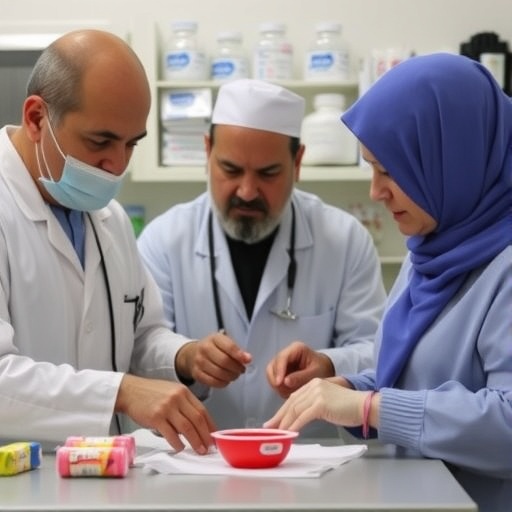
Iran’s ambitious effort to overhaul how prescription medicines are subsidized—shifting billions in support from cheap foreign currency allocations to insurance-based coverage—has delivered some gains but remains hamstrung by unstable financing, fragmented governance, and weak coordination among the agencies that must make it work, according to a new qualitative study published in the International Journal for Equity in Health.
The research, led by Anahita Behzadi and Maryam Amiresmaili of the Social Determinants of Health Research Center at Kerman University of Medical Sciences, together with Amirhossein Fatahpour and Maliheh Ghobadi of the National Center for Health Insurance Research in Tehran, examines the implementation of Iran’s Darooyar policy from the perspective of the people charged with running it. Through 27 semi-structured interviews with policymakers, pharmaceutical sector managers, insurance experts, and regulatory stakeholders, the team built a detailed picture of why a reform designed to protect the sick has struggled to reach them consistently.
The Darooyar policy represents a fundamental re-engineering of pharmaceutical financing in Iran. For years, the country subsidized medicines indirectly by allocating foreign currency at preferential rates for importing raw materials and finished drugs. Economists have long criticized such exchange-rate subsidies as blunt instruments: the benefits diffuse across the entire supply chain, much of the subsidized medicine leaks into a gray market, and the fiscal burden balloons when official and market exchange rates diverge. Darooyar sought to replace this producer-side subsidy with consumer-oriented insurance coverage, theoretically ensuring that financial protection flows directly to patients who need medicines rather than to intermediaries in the import business.
To understand how the reform has fared in practice, the researchers employed an inductive thematic analysis, following the widely used six-step framework of Braun and Clarke. Participants were recruited through purposive and snowball sampling to capture diversity in organizational affiliation and hands-on implementation experience—a methodological choice that matters, because the challenges the study identifies are precisely the kind that only become visible to people working inside the system.
The findings paint a picture of a policy whose architecture is sound on paper but fragile in execution. The most prominent theme to emerge was financial instability. The reform depends on a steady stream of resources to fund insurance reimbursements, yet participants described chronic delays in those reimbursements rippling through the pharmaceutical supply chain. When insurers are slow to pay pharmacies and distributors, those businesses face liquidity shortages, and the shortage travels backward through the chain—suppressing wholesalers’ ability to pay manufacturers, and manufacturers’ ability to import or produce. In a pharmaceutical system, cash flow is not an accounting abstraction; it is the mechanism by which medicines physically reach shelves.
The second cluster of problems was governance-related. Iran’s health system, like many, is institutionally fragmented: the Ministry of Health, the Health Insurance Organization, other insurers, the Food and Drug Administration, and the customs and trade authorities each hold a piece of pharmaceutical policy. The study found weak coordination among these actors, with unclear delineation of responsibilities and insufficient accountability mechanisms. Monitoring and information systems were described as inadequate, meaning that policymakers lacked timely, integrated data on whether subsidized medicines were actually reaching patients—a question the study’s title poses bluntly: do subsidies reach the sick?
Participants also highlighted a persistent policy tension that sits at the heart of any drug-subsidy scheme: the trade-off between financial protection and rational use of medicines. When insurance coverage lowers the out-of-pocket price of drugs at the point of sale, demand rises—not only among patients who genuinely need treatment, but also among those who might purchase medicines unnecessarily, and among intermediaries who exploit the price gap for profit. Generous coverage without robust stewardship invites overuse and diversion; stringent controls without coverage leave the chronically ill paying out of pocket. The Darooyar reform has navigated this tension imperfectly, according to the stakeholders interviewed.
Not everything in the assessment was negative. Participants credited the policy with reducing “reverse smuggling”—the paradoxical phenomenon in which subsidized medicines exported or diverted to neighboring countries, where they command higher prices, undercut domestic supply. By narrowing the gap between subsidized and market prices, the reform diminished the arbitrage incentive that had drained essential medicines out of the legal supply chain. The expansion of insurance coverage was also viewed as a genuine improvement in financial protection for patients with chronic conditions.
But these gains, the authors conclude, have been constrained by weaknesses in governance arrangements and implementation capacity. The study’s central conceptual contribution is its reframing of pharmaceutical subsidy reform: not as a purely economic intervention—a question of how money moves—but as a complex governance process whose success depends on financial sustainability, institutional transparency, implementation capacity, and coordination among health system actors. A subsidy reform that changes who pays for medicines without simultaneously building the monitoring systems, accountability structures, and inter-organizational machinery to manage the change will underperform, regardless of its economic logic.
The equity implications are significant. Iran, like many middle-income countries, faces a persistent challenge with catastrophic health expenditures, and medicines constitute a large share of household out-of-pocket health spending. Patients with chronic diseases—diabetes, cardiovascular conditions, cancers, respiratory illnesses—face recurring costs that accumulate over years. A subsidy mechanism that reliably shields these patients is one of the most direct instruments available for improving health equity. Conversely, a mechanism whose reimbursements are delayed, whose monitoring is blind, and whose agencies do not coordinate can leave the same vulnerable patients exposed, while the fiscal resources nominally devoted to protecting them dissipate somewhere in the system.
The findings carry lessons well beyond Iran. Exchange-rate-based medicine subsidies were once common across the region and remain in various forms in other countries facing currency pressure and sanctions. The Iranian experience offers a rare, well-documented case of what happens when a country attempts the technically difficult transition from such subsidies to insurance-based coverage under constrained fiscal conditions. The study’s authors argue that strengthening accountability mechanisms, developing integrated monitoring systems, and improving inter-organizational coordination are prerequisites for making such reforms effective and sustainable in resource-constrained health systems—recommendations that generalize to any country contemplating similar restructuring.
The research also speaks to a broader trend in health policy scholarship: the recognition that implementation, not design, is where ambitious reforms succeed or fail. Iran has a history of bold health financing initiatives, from the Health Transformation Plan of 2014 to earlier insurance expansion efforts, and each has contended with the same underlying realities of fiscal volatility and institutional fragmentation. The Darooyar study adds granular, insider-verified evidence about how those realities play out at the operational level of the pharmaceutical supply chain—a level that macroeconomic analyses of subsidy reform often miss entirely.
The study received no specific external funding and was approved by the Ethics Committee of Kerman University of Medical Sciences. The authors note that the article was shared early to provide faster access to peer-reviewed, accepted research, with a final version of record to follow. As countries worldwide grapple with pharmaceutical pricing, shortages, and the fiscal sustainability of drug benefits, the Iranian experience stands as a cautionary but instructive case: the money for subsidies must reach the sick, and whether it does depends less on the economics of the subsidy than on the governance of the system that delivers it.
Cite Scienmag News
Courtney Benton. (September 8, 2026). Iran’s drug subsidy reform: do the sick really benefit? Scienmag. https://scienmag.com/irans-drug-subsidy-reform-do-the-sick-really-benefit/
Courtney Benton. "Iran’s drug subsidy reform: do the sick really benefit?" Scienmag, 8 September 2026, https://scienmag.com/irans-drug-subsidy-reform-do-the-sick-really-benefit/. Accessed 8 September 2026.
Courtney Benton. "Iran’s drug subsidy reform: do the sick really benefit?" Scienmag. September 8, 2026. https://scienmag.com/irans-drug-subsidy-reform-do-the-sick-really-benefit/


