


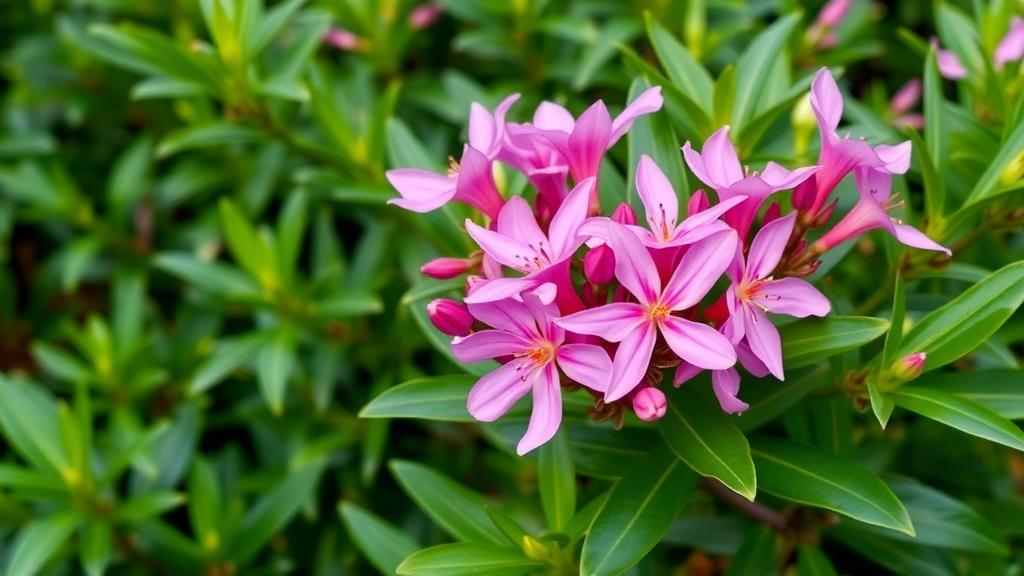
Oleander is one of the most recognizable ornamental shrubs in the world, lining highways and gardens from the Mediterranean to the American South with its showy pink, red, and white blossoms. It is also one of the most toxic plants in cultivation, packed with cardiac glycosides that can be lethal if ingested. Yet the very chemistry that makes Nerium oleander dangerous has long intrigued researchers hunting for new bioactive compounds. A new study from Al-Azhar University in Cairo, published in BMC Complementary Medicine and Therapies, systematically dissects the plant’s stems, leaves, and flowers to map their phytochemical content and test their ability to kill harmful bacteria and fungi, offering a carefully documented picture of how this notorious shrub might be converted into a source of natural antimicrobial agents.
The research team, led by Mohamed T. Selim and Nashaat N. Mahmoud of the Botany and Microbiology Department, took a deliberately comparative approach. Rather than examining a single plant part or a single solvent, they prepared extracts of dried stems, leaves, and flowers using five solvents spanning a wide range of polarity: petroleum ether, ethyl acetate, acetone, methanol, and water. This polarity gradient matters because different classes of plant metabolites dissolve preferentially in solvents of different chemical character. Non-polar solvents such as petroleum ether tend to pull out lipids, waxes, and steroids, while highly polar water and methanol extract sugars, glycosides, tannins, and other hydrophilic compounds. By running the full spectrum, the researchers could determine exactly where the plant’s chemical treasure is concentrated.
Before any extraction began, the team characterized the proximate composition of each plant part, and the results revealed striking differences. The flowers carried the highest moisture content at 9.40 percent, while the stems were unusually mineral-rich, showing an ash content of 18.58 percent that exceeded both leaves and flowers. The flowers also proved to be the most nutritionally dense tissue, with a lipid content of 4.33 percent, a carbohydrate content of 66.16 percent, and a crude protein content of 15.29 percent. These baseline measurements are more than academic bookkeeping; they help determine which plant part is worth processing for which purpose, since a tissue dominated by carbohydrates will behave very differently in extraction and formulation than one rich in lipids or minerals.
When it came to extraction efficiency, solvent choice dominated the outcome. Water extracts delivered the highest percentage yield across the plant parts, followed by methanol, acetone, ethyl acetate, and finally petroleum ether. Among the plant tissues, leaves produced the maximum extract yield, with flowers and stems trailing behind. This pattern is chemically intuitive: oleander tissues are loaded with polar glycosides and phenolic compounds that dissolve readily in water and methanol but remain locked away from non-polar solvents. For anyone hoping to industrialize the process, the message is clear: the cheapest and greenest solvent, plain water, is also the most productive one, an encouraging alignment of economic and environmental incentives.
The phytochemical screening painted a detailed portrait of the plant’s defensive arsenal. Across the different parts, the researchers detected alkaloids, flavonoids, tannins, glycosides, steroids, coumarins, quinones, phenols, cardiac glycosides, and terpenoids, the full roster of secondary metabolites that plants typically deploy against microbes and herbivores. Two classes were conspicuously absent: saponins and anthraquinones were not found in any part of the plant. Anthocyanins, the pigments responsible for red and purple coloration, appeared exclusively in the flowers and were completely absent from stems and leaves. This tissue-specific distribution underscores a key principle of natural product chemistry: a plant is not a uniform bag of chemicals but a mosaic of specialized tissues, each with its own metabolic profile.
Quantitative assays sharpened that picture considerably. The acetone extract of the flowers emerged as the phytochemical powerhouse, registering the greatest levels of total phenols at 157.12 milligrams of gallic acid equivalents per gram, total flavonoids at 187.43 milligrams of quercetin equivalents per gram, and tannins at 89.93 milligrams of tannic acid equivalents per gram. At the opposite extreme, the petroleum ether extract of stems contained the lowest amounts of all three, at just 5.45, 6.43, and 3.45 milligrams per gram respectively. The roughly thirtyfold spread between these extremes illustrates how dramatically solvent polarity and plant tissue interact to determine the composition of an extract, and why screening studies of this kind are essential before any product development can begin.
The antimicrobial testing then put these chemical inventories to work. Using the agar well diffusion method, a standard technique in which extract-loaded wells are cut into plates seeded with microorganisms and zones of inhibited growth are measured, the team challenged six strains. The panel included Gram-positive bacteria Staphylococcus aureus ATCC 6538 and Bacillus subtilis ATCC 6633, Gram-negative bacteria Pseudomonas aeruginosa ATCC 9027, Salmonella Typhimurium ATCC 14028, and Escherichia coli ATCC 11229, and the unicellular fungal pathogen Candida albicans ATCC 10231. The extracts showed the ability to inhibit representatives of all these groups, a breadth of activity that spans both major bacterial membrane architectures as well as a eukaryotic pathogen responsible for serious infections in immunocompromised patients.
That broad-spectrum activity is significant in the context of the global antimicrobial resistance crisis. Gram-negative bacteria such as Pseudomonas aeruginosa and E. coli are wrapped in an outer membrane that excludes many conventional antibiotics and makes new drug development notoriously difficult, which is why the World Health Organization has flagged carbapenem-resistant Pseudomonas among its priority pathogens. Plant phenolics, tannins, and flavonoids are known to attack microbial cells through multiple mechanisms simultaneously, including membrane disruption, enzyme inhibition, and interference with quorum sensing, and this multi-target action makes resistance harder to evolve. The oleander extracts’ activity against both Gram-positive and Gram-negative organisms, along with Candida, suggests a complex mixture whose components complement one another rather than a single narrow-spectrum compound.
The study also carries a sustainability angle that fits squarely within the green chemistry movement. Oleander is fast-growing, drought-tolerant, and widely cultivated as an ornamental, which means substantial biomass is already generated through routine pruning in parks and along roadsides. Converting that low-value biomass into standardized bioactive extracts would require no dedicated agricultural land, and the finding that water, the greenest solvent of the five tested, gives the highest yields strengthens the environmental case further. The researchers note that the collection of plant material complied with WHO guidelines for the assessment of herbal medicines, and the work was conducted at the Faculty of Science of Al-Azhar University in Cairo with open access funding provided through Egypt’s Science, Technology and Innovation Funding Authority and the Egyptian Knowledge Bank.
Important caveats remain before oleander extracts could ever reach a pharmacy shelf or a food-preservation line. The plant’s cardiac glycosides, including the compounds known as oleandrin and nerine referenced in the study, are potently toxic to humans and animals, so any practical application would demand rigorous fractionation, toxicity testing, and dosage control to separate antimicrobial benefit from systemic danger. The current work was conducted in vitro, meaning the results demonstrate inhibition on agar plates rather than efficacy in living organisms, and standardization of extract composition would be essential given the natural variability of plant chemistry. Still, as a foundational map of where oleander’s bioactive chemistry lives, which solvents unlock it, and which microbes it can suppress, the study provides a credible starting point. It transforms a familiar poisonous shrub from a hazard into a candidate feedstock for the search for new natural antimicrobials at a moment when such candidates are urgently needed.
Subject of Research: Phytochemical composition and antimicrobial activity of Nerium oleander extracts obtained with different solvents
Article Title: Green extraction routes for conversion of Nerium oleander L. biomass into bioactive agents: phytochemical insights and antimicrobial promise
Article References: Selim, M. T., & Mahmoud, N. N. (2026). Green extraction routes for conversion of Nerium oleander L. biomass into bioactive agents: phytochemical insights and antimicrobial promise. BMC Complementary Medicine and Therapies, 26(1), Article 288. https://doi.org/10.1186/s12906-026-05594-x
Image Credits: AI Generated
DOI: 10.1186/s12906-026-05594-x
Keywords: Nerium oleander, phytochemistry, green extraction, antimicrobial activity, natural products, phenolics, flavonoids, cardiac glycosides, antimicrobial resistance, plant biomass, solvent extraction, Candida albicans
Cite Scienmag News
Roy Phillips. (October 6, 2026). Common Oleander Shrub Yields Potent Antimicrobial Extracts in Green Chemistry Study. Scienmag. https://scienmag.com/common-oleander-shrub-yields-potent-antimicrobial-extracts-in-green-chemistry-study/
Roy Phillips. "Common Oleander Shrub Yields Potent Antimicrobial Extracts in Green Chemistry Study." Scienmag, 6 October 2026, https://scienmag.com/common-oleander-shrub-yields-potent-antimicrobial-extracts-in-green-chemistry-study/. Accessed 6 October 2026.
Roy Phillips. "Common Oleander Shrub Yields Potent Antimicrobial Extracts in Green Chemistry Study." Scienmag. October 6, 2026. https://scienmag.com/common-oleander-shrub-yields-potent-antimicrobial-extracts-in-green-chemistry-study/


