

Wednesday, November 4, 2026
Science
No Result
View All Result
  • Login
  • HOME
  • SCIENCE NEWS
  • CONTACT US
  • HOME
  • SCIENCE NEWS
  • CONTACT US
No Result
View All Result
Scienmag
No Result
View All Result
Home Science News Chemistry

Cobalt Oxide–Zinc Sulfide Junction Boosts Sacrificial-Agent-Free Photocatalytic Ammonia Synthesis

October 28, 2026
in Chemistry
Bethany Barker
By Bethany Barker Scienmag Editorial Profile - Catalysis
Reading Time: 2 mins read
0
Cobalt Oxide–Zinc Sulfide Junction Boosts Sacrificial-Agent-Free Photocatalytic Ammonia Synthesis

Cobalt Oxide–Zinc Sulfide Junction Boosts Sacrificial-Agent-Free Photocatalytic Ammonia Synthesis

65
SHARES
587
VIEWS
Share on FacebookShare on Twitter
ADVERTISEMENT

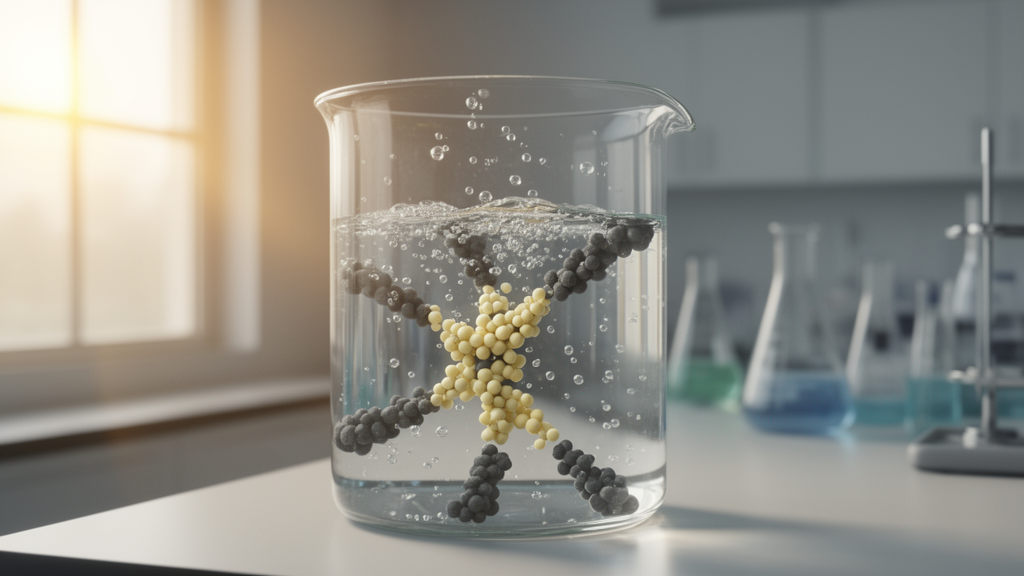
Chemists have reported a cobalt oxide–zinc sulfide heterostructure that converts nitrogen and water into ammonia using only light, with no externally added sacrificial agent. The optimized Co₃O₄/ZnS composite, prepared by in situ deposition, produced ammonia at a rate of 607.6 ± 9.1 µg·h⁻¹·gcat⁻¹ (n = 3), far exceeding the rates measured for the individual components: 131.2 ± 2.0 µg·h⁻¹·gcat⁻¹ for Co₃O₄ alone and 75.7 ± 1.9 µg·h⁻¹·gcat⁻¹ for ZnS alone.

The team characterized the materials with XRD, XPS, SEM, TEM, HRTEM, EDS and ICP analyses, all of which indicated the coexistence of Co₃O₄ and ZnS phases in intimate interfacial contact. Quantitative EDS analysis gave a Zn/S atomic ratio of 0.98 ± 0.04, consistent with the intended ZnS phase, and the actual ZnS loading in the optimized 2:1 sample was approximately 31.9 wt%. To confirm that the detected ammonia truly derived from the supplied nitrogen gas rather than contamination, the researchers performed ¹⁵N₂ isotopic labeling followed by ¹H NMR measurements, which supported the nitrogen source being the fed N₂.

Control experiments helped narrow down why the 2:1 composition performed best. BET surface area analysis, N₂ temperature-programmed desorption, and a Na₂S-treated Co₃O₄ control collectively indicated that the superior activity could not be explained solely by surface area, ZnS content, or sulfur treatment. Instead, the authors attribute the performance to the combined effects of an appropriate composition, N₂ adsorption, Co-based surface sites, and heterointerfacial interactions between the two phases.

On the mechanistic side, UV-vis diffuse reflectance spectroscopy, Mott-Schottky analysis and valence-band XPS established an experimental basis for the band alignment of the two semiconductors. Together with photocurrent and electrochemical impedance spectroscopy results, these measurements support a plausible S-scheme-like charge-transfer model, in which the n-type ZnS and p-type Co₃O₄ form a p–n heterojunction that promotes interfacial charge separation. The authors are careful to frame this as a proposed model: multi-frequency Mott–Schottky measurements and EPR spin-trapping experiments were consistent with the S-scheme-like pathway and p–n-junction-assisted carrier separation, but did not uniquely prove the microscopic interfacial transfer route.

The study also quantified the oxidative half-reaction. Water oxidation yielded 3.80 ± 0.18 µmol of O₂, and relative to the charge demand associated with 5.35 µmol of NH₃, the electron/hole balance was approximately 94.7%, supporting water oxidation as the major hole-consumption pathway. Durability was similarly encouraging: after five consecutive reaction cycles, 98.4% of the initial activity was retained, and post-reaction XPS, SEM and TEM showed that the principal surface chemical states, morphology and interfacial structure remained largely preserved.

Subject of Research: Sacrificial-agent-free photocatalytic nitrogen reduction to ammonia over a Co₃O₄/ZnS heterojunction

Article Title: Enhanced Sacrificial-Agent-Free Photocatalytic N₂ Reduction over a Co₃O₄/ZnS Heterojunction

Article References: Fu, S., Wang, X., Liu, Z., Hao, J., Li, W., Chen, X., Li, J., & Zhang, Q. (2026). Enhanced Sacrificial-Agent-Free Photocatalytic N₂ Reduction over a Co₃O₄/ZnS Heterojunction. Catalysis Letters, 156(11), Article 311. https://doi.org/10.1007/s10562-026-05556-5

Image Credits: AI Generated

DOI: 10.1007/s10562-026-05556-5

Keywords: photocatalysis, nitrogen reduction, ammonia synthesis, Co3O4/ZnS heterojunction, S-scheme charge transfer, water oxidation, 15N2 isotope labeling, p-n heterojunction, solar fuels, Catalysis Letters, Enhanced, Sacrificial-Agent-Free

Cite Scienmag News

Bethany Barker. (October 28, 2026). Cobalt Oxide–Zinc Sulfide Junction Boosts Sacrificial-Agent-Free Photocatalytic Ammonia Synthesis. Scienmag. https://scienmag.com/cobalt-oxide-zinc-sulfide-junction-boosts-sacrificial-agent-free-photocatalytic-ammonia-synthesis/

Bethany Barker. "Cobalt Oxide–Zinc Sulfide Junction Boosts Sacrificial-Agent-Free Photocatalytic Ammonia Synthesis." Scienmag, 28 October 2026, https://scienmag.com/cobalt-oxide-zinc-sulfide-junction-boosts-sacrificial-agent-free-photocatalytic-ammonia-synthesis/. Accessed 4 November 2026.

Bethany Barker. "Cobalt Oxide–Zinc Sulfide Junction Boosts Sacrificial-Agent-Free Photocatalytic Ammonia Synthesis." Scienmag. October 28, 2026. https://scienmag.com/cobalt-oxide-zinc-sulfide-junction-boosts-sacrificial-agent-free-photocatalytic-ammonia-synthesis/

Tags: 15N2 isotope labeling¹⁵N₂ isotopic labeling for source verificationadvanced microscopy and spectroscopy analysisammonia production rate measurementAmmonia synthesisCatalysis LettersCo3O4/ZnS heterojunctioncobalt oxide-zinc sulfide heterostructureEnhancedheterostructure characterization techniquesin situ deposition of Co₃O₄/ZnSinterfacial contact in photocatalystsnitrogen fixation using lightnitrogen reductionoptimized composite material performancep-n heterojunctionPhotocatalysisphotocatalytic ammonia synthesisS-scheme charge transferSacrificial-Agent-Freesacrificial-agent-free photocatalysissolar fuelssustainable nitrogen reduction methodswater oxidation
Share26Tweet16
Previous Post

Rare Ovarian Carcinoid Tumors Show Favorable Outlook in Seven-Case Analysis

Next Post

Rare Pulmonary Cancer With EWSR1::ATF1 Fusion Diagnosed in 60-Year-Old Woman

Related Posts

Magnetic carbon nitride photocatalyst strips dye from water under visible light
Chemistry

Magnetic carbon nitride photocatalyst strips dye from water under visible light

November 4, 2026
Justicia procumbens leaves and flowers curb gut inflammation while higher nutrient strength boosts lignan yields
Chemistry

Justicia procumbens leaves and flowers curb gut inflammation while higher nutrient strength boosts lignan yields

November 4, 2026
Fluoride-free etched MXene boosts cobalt MOF supercapacitor performance
Chemistry

Fluoride-free etched MXene boosts cobalt MOF supercapacitor performance

November 4, 2026
Triple-Interface Catalyst Pumps Hydrogen Fast in Neutral Seawater
Chemistry

Triple-Interface Catalyst Pumps Hydrogen Fast in Neutral Seawater

November 4, 2026
3D COMSOL Model of Industrial Water-Gas Shift Reactor Matches Ammonia Plant Data
Chemistry

3D COMSOL Model of Industrial Water-Gas Shift Reactor Matches Ammonia Plant Data

November 4, 2026
Soil Metals in China’s Daye Mining District Defy a Single Risk Driver
Earth Science

Soil Metals in China’s Daye Mining District Defy a Single Risk Driver

November 4, 2026
Next Post
Rare Pulmonary Cancer With EWSR1::ATF1 Fusion Diagnosed in 60-Year-Old Woman

Rare Pulmonary Cancer With EWSR1::ATF1 Fusion Diagnosed in 60-Year-Old Woman

  • Mothers who receive childcare support from maternal grandparents show more optimized

    Mothers who receive childcare support from maternal grandparents show more parental warmth, finds NTU Singapore study

    27656 shares
    Share 11059 Tweet 6912
  • University of Seville Breaks 120-Year-Old Mystery, Revises a Key Einstein Concept

    1061 shares
    Share 424 Tweet 265
  • Bee body mass, pathogens and local climate influence heat tolerance

    682 shares
    Share 273 Tweet 171
  • Researchers record first-ever images and data of a shark experiencing a boat strike

    546 shares
    Share 218 Tweet 137
  • Groundbreaking Clinical Trial Reveals Lubiprostone Enhances Kidney Function

    531 shares
    Share 212 Tweet 133
Science

Embark on a thrilling journey of discovery with Scienmag.com—your ultimate source for cutting-edge breakthroughs. Immerse yourself in a world where curiosity knows no limits and tomorrow’s possibilities become today’s reality!

RECENT NEWS

  • Echocardiographic myocardial work indices outperform ejection fraction in sepsis heart failure study
  • New Hashing Method Speeds Up Image and Text Search at Massive Scale
  • Fibrinogen and White Blood Cell Subtypes Shape Blood Clot Mechanics Beyond Hematocrit and Sex
  • Fit-Index Cutoffs Shift Dramatically in Sparse Ordinal CFA, Simulation Shows

Categories

  • Agriculture
  • Anthropology
  • Archaeology
  • Athmospheric
  • Biology
  • Biotechnology
  • Blog
  • Bussines
  • Cancer
  • Chemistry
  • Climate
  • Earth Science
  • Editorial Policy
  • Marine
  • Mathematics
  • Medicine
  • Pediatry
  • Policy
  • Psychology & Psychiatry
  • Science Education
  • Science News
  • Social Science
  • Space
  • Technology and Engineering

Subscribe to Blog via Email

Enter your email address to subscribe to this blog and receive notifications of new posts by email.

Join 5,150 other subscribers

© 2025 Scienmag - Science Magazine

Welcome Back!

Login to your account below

Forgotten Password?

Retrieve your password

Please enter your username or email address to reset your password.

Log In
No Result
View All Result
  • HOME
  • SCIENCE NEWS
  • CONTACT US

© 2025 Scienmag - Science Magazine

Discover more from Science

Subscribe now to keep reading and get access to the full archive.

Continue reading

