


Phosphate Buffer Boosts Nitrate Reduction Rate and Ammonia Selectivity on Copper
Researchers found that phosphate ions adsorbed on copper electrodes act as proton shuttles, substantially increasing the rate and selectivity of ...
Researchers found that phosphate ions adsorbed on copper electrodes act as proton shuttles, substantially increasing the rate and selectivity of ...

Engineering high-density topological carbon defects reconstructs interfacial water networks and accelerates proton transfer, achieving a 99.1 percent Faradaic efficiency in ...

A comprehensive review establishes that plasmonic photocatalytic mechanisms are dynamic pathways governed by reaction conditions, excitation parameters, and interfacial architecture ...

Researchers at Institute of Science Tokyo have developed an antiperovskite-supported cobalt catalyst that achieves efficient low-temperature ammonia synthesis by activating ...

An experimental study demonstrates that potassium promoters actively supply hydrogen during iron-catalyzed ammonia synthesis, with potassium hydride operating roughly six ...

A review published in the Journal of Electrochemistry evaluates in situ electrochemical characterization techniques used to probe active hydrogen behavior ...

Integrating photocatalytic nitrogen reduction with solar-driven interfacial evaporation accelerates reaction kinetics and yields high-concentration ammonia in collected condensate water.
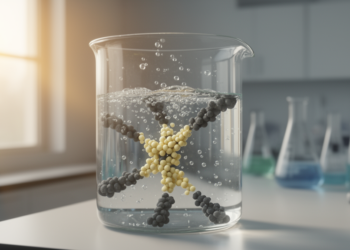
A Co₃O₄/ZnS heterojunction achieved sacrificial-agent-free photocatalytic ammonia synthesis from N₂ and water at 607.6 µg·h⁻¹·gcat⁻¹, retaining 98.4% of its activity ...
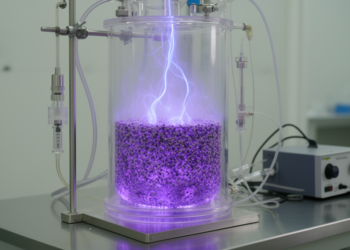
A 2026 mini review finds that fluidized particles can refresh catalytic surfaces and enhance plasma-driven reactions, but excessive loading or ...
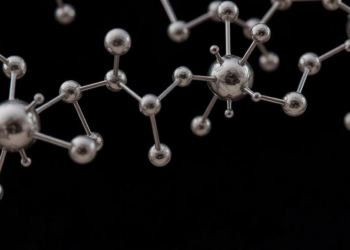
Researchers have built a ruthenium catalyst anchored to iron-nitrogen-carbon sites that synthesizes ammonia at 400 degrees Celsius and 1 megapascal ...


Embark on a thrilling journey of discovery with Scienmag.com—your ultimate source for cutting-edge breakthroughs. Immerse yourself in a world where curiosity knows no limits and tomorrow’s possibilities become today’s reality!