

Tuesday, October 27, 2026
Science
No Result
View All Result
  • Login
  • HOME
  • SCIENCE NEWS
  • CONTACT US
  • HOME
  • SCIENCE NEWS
  • CONTACT US
No Result
View All Result
Scienmag
No Result
View All Result
Home Science News Technology and Engineering

CO2 Mineralization Could Make 3D Printed Concrete Cleaner and Stronger

October 27, 2026
in Technology and Engineering
Denise Maddox
By Denise Maddox Scienmag Editorial Profile - Mechanical Engineering
Reading Time: 2 mins read
0
CO2 Mineralization Could Make 3D Printed Concrete Cleaner and Stronger

CO2 Mineralization Could Make 3D Printed Concrete Cleaner and Stronger

65
SHARES
587
VIEWS
Share on FacebookShare on Twitter
ADVERTISEMENT

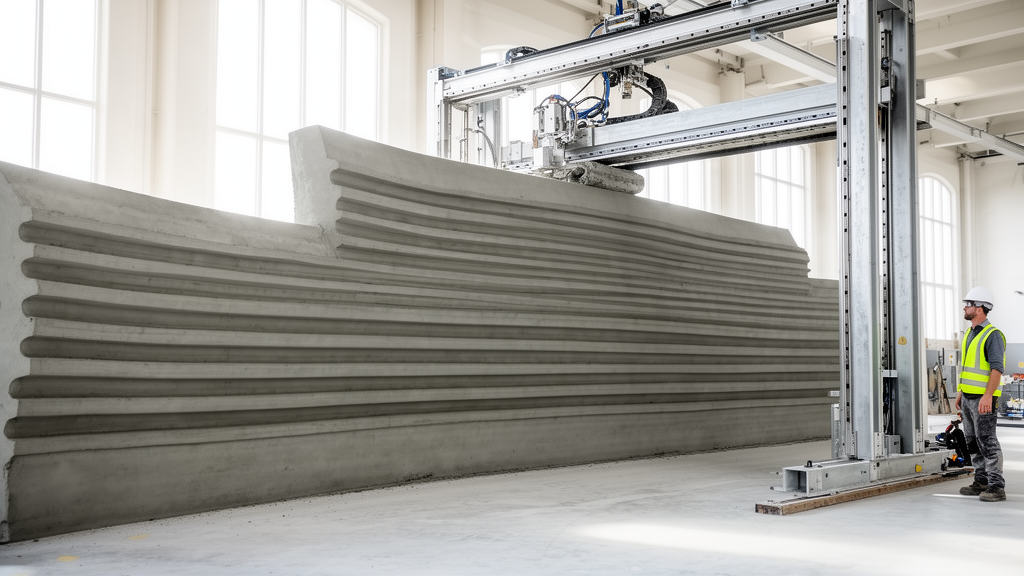
Three-dimensional printed concrete has a carbon problem. Because printed structures rely on a high binder content to hold their shape layer by layer, the technology carries a substantial carbon emission burden even as it transforms construction. A new review examines whether CO2 mineralization, which locks carbon dioxide into solid carbonate minerals, can turn that liability into an advantage by sequestering carbon while simultaneously improving material performance.

The review, published in Advanced Composites and Hybrid Materials, establishes a framework connecting material, process, performance, and sustainability. It examines mineralization mechanisms across different material systems, including cement-based systems, supplementary and novel cementitious materials, and aggregates used as mineralization carriers.

The authors identify three major integration pathways. The first is plastic-state mineralization, in which carbon dioxide reacts with the fresh, printable mix. This route is effective for rheological regulation and buildability enhancement, helping the printed material hold its shape. However, its carbon uptake is generally limited by the short reaction time available and by gas utilization efficiency.

The second pathway is hardening-stage CO2 curing, applied after the material has been deposited. This approach can achieve higher carbon uptake and stronger microstructural densification, but it is constrained by diffusion depth, moisture gradients, and the difficulty of scaling the process up to practical construction dimensions.

The third pathway is material precarbonation, in which constituent materials are treated with CO2 before they enter the printing process. The review compares these routes across the material-process-performance-sustainability framework to clarify where each offers the greatest benefit.

According to the available evidence, CO2 mineralization can improve printability, mechanical strength, and interlayer bonding through three mechanisms: accelerated hydration, carbonate precipitation, and pore refinement.

The benefits are not automatic. The review identifies non-uniform reactions, increased anisotropy, durability uncertainty, and additional energy or cost demands as major barriers that remain unresolved.

The authors argue that the future development of CO2 mineralization-integrated 3D printed concrete should move away from isolated performance optimization toward coordinated control of material reactivity, CO2 transport, the printing process, long-term durability, and net life-cycle benefit. In other words, carbon uptake, print quality, and mechanical performance must be managed together rather than pursued one at a time.

As an open-access review, the paper consolidates recent progress and maps the remaining challenges for researchers working at the intersection of carbon capture and additive construction. It positions CO2 mineralization as a promising route for simultaneous carbon sequestration and performance enhancement in 3D printed concrete, while making clear that the technology is still short of coordinated, scalable deployment.

Subject of Research: CO2 mineralization integrated into 3D printed concrete, covering mechanisms, integration pathways, and challenges

Article Title: CO2 mineralization-integrated 3D printed concrete: Review and challenges

Article References: Liu, H., Liu, L., Liu, C., & Xiao, J. (2026). CO2 mineralization-integrated 3D printed concrete: Review and challenges. Advanced Composites and Hybrid Materials. https://doi.org/10.1007/s42114-026-02140-8

Image Credits: AI Generated

DOI: 10.1007/s42114-026-02140-8

Keywords: 3D printed concrete, CO2 mineralization, carbon sequestration, CO2 curing, precarbonation, interlayer bonding, buildability, pore refinement, durability, life-cycle assessment, cementitious materials, additive construction

Cite Scienmag News

Denise Maddox. (October 27, 2026). CO2 Mineralization Could Make 3D Printed Concrete Cleaner and Stronger. Scienmag. https://scienmag.com/co2-mineralization-could-make-3d-printed-concrete-cleaner-and-stronger/

Denise Maddox. "CO2 Mineralization Could Make 3D Printed Concrete Cleaner and Stronger." Scienmag, 27 October 2026, https://scienmag.com/co2-mineralization-could-make-3d-printed-concrete-cleaner-and-stronger/. Accessed 27 October 2026.

Denise Maddox. "CO2 Mineralization Could Make 3D Printed Concrete Cleaner and Stronger." Scienmag. October 27, 2026. https://scienmag.com/co2-mineralization-could-make-3d-printed-concrete-cleaner-and-stronger/


Tags: 3D printed concreteadditive constructionbuildabilitycarbon footprint reduction in 3D printingcarbon sequestrationcarbon sequestration in cementitious materialscementitious materialsCO2 curingCO2 mineralizationCO2 mineralization in constructiondurabilityenhanced durability of 3D printed structureshardening-stage CO2 curingintegration pathways for CO2 mineralizationinterlayer bondingLife Cycle Assessmentmineralization mechanisms in concreteplastic-state CO2 mineralizationpore refinementprecarbonationscalable CO2 curing processesstrengthening and environmental benefits of mineralized concretesustainable additive manufacturing
Share26Tweet16
Previous Post

Internalized Stigma Independently Predicts Depression in Adolescents with Acne

Next Post

Fermented Gallnut Extract Shows Mitochondrial Boost in UV-Damaged Skin Cells in Lab Study

Related Posts

MicroRNA changes persist in newborn blood after neonatal encephalopathy
Technology and Engineering

MicroRNA changes persist in newborn blood after neonatal encephalopathy

October 27, 2026
Stress-triggered mitochondrial protein aggregates relay quality-control signals to the ER
Medicine

Stress-triggered mitochondrial protein aggregates relay quality-control signals to the ER

October 27, 2026
Research report: Long-term electoral participation among Swedish survivors of the 2004 Indian Ocean tsunami
Technology and Engineering

Research report: Long-term electoral participation among Swedish survivors of the 2004 Indian Ocean tsunami

October 27, 2026
AI model designs working proteins from plain-language descriptions
Medicine

AI model designs working proteins from plain-language descriptions

October 27, 2026
Neonatal brain network growth tracks early cognitive, language and motor outcomes in critical congenital heart disease
Technology and Engineering

Neonatal brain network growth tracks early cognitive, language and motor outcomes in critical congenital heart disease

October 27, 2026
Fires and drought push Amazon carbon balance to 0.32 PgC per year
Medicine

Fires and drought push Amazon carbon balance to 0.32 PgC per year

October 27, 2026
Next Post
Fermented Gallnut Extract Shows Mitochondrial Boost in UV-Damaged Skin Cells in Lab Study

Fermented Gallnut Extract Shows Mitochondrial Boost in UV-Damaged Skin Cells in Lab Study

  • Mothers who receive childcare support from maternal grandparents show more optimized

    Mothers who receive childcare support from maternal grandparents show more parental warmth, finds NTU Singapore study

    27656 shares
    Share 11059 Tweet 6912
  • University of Seville Breaks 120-Year-Old Mystery, Revises a Key Einstein Concept

    1061 shares
    Share 424 Tweet 265
  • Bee body mass, pathogens and local climate influence heat tolerance

    682 shares
    Share 273 Tweet 171
  • Researchers record first-ever images and data of a shark experiencing a boat strike

    546 shares
    Share 218 Tweet 137
  • Groundbreaking Clinical Trial Reveals Lubiprostone Enhances Kidney Function

    531 shares
    Share 212 Tweet 133
Science

Embark on a thrilling journey of discovery with Scienmag.com—your ultimate source for cutting-edge breakthroughs. Immerse yourself in a world where curiosity knows no limits and tomorrow’s possibilities become today’s reality!

RECENT NEWS

  • Fermented Gallnut Extract Shows Mitochondrial Boost in UV-Damaged Skin Cells in Lab Study
  • CO2 Mineralization Could Make 3D Printed Concrete Cleaner and Stronger
  • Internalized Stigma Independently Predicts Depression in Adolescents with Acne
  • Engineered T-BET Pushes Lab-Grown NK Cells Toward Inflammation, Not Full Maturity

Categories

  • Agriculture
  • Anthropology
  • Archaeology
  • Athmospheric
  • Biology
  • Biotechnology
  • Blog
  • Bussines
  • Cancer
  • Chemistry
  • Climate
  • Earth Science
  • Editorial Policy
  • Marine
  • Mathematics
  • Medicine
  • Pediatry
  • Policy
  • Psychology & Psychiatry
  • Science Education
  • Science News
  • Social Science
  • Space
  • Technology and Engineering

Subscribe to Blog via Email

Enter your email address to subscribe to this blog and receive notifications of new posts by email.

Join 5,151 other subscribers

© 2025 Scienmag - Science Magazine

Welcome Back!

Login to your account below

Forgotten Password?

Retrieve your password

Please enter your username or email address to reset your password.

Log In
No Result
View All Result
  • HOME
  • SCIENCE NEWS
  • CONTACT US

© 2025 Scienmag - Science Magazine

Discover more from Science

Subscribe now to keep reading and get access to the full archive.

Continue reading