


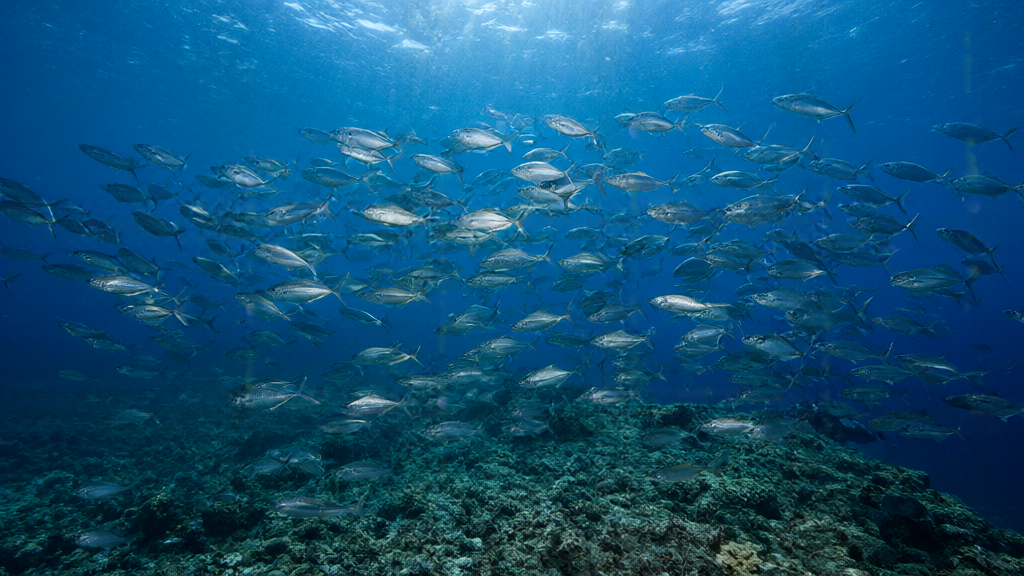
For three centuries, the strait known as the Sound, situated between Denmark and Sweden, served as the economic engine of northern Europe. From the thirteenth to the sixteenth century, salted herring harvested from the Skanör-Falsterbo fishery was not merely a food source but a primary trade commodity that sustained populations across the continent. The industry was so vital that it influenced political alliances and shaped the daily diet of millions. However, around the year 1570, this robust and centuries-old fishery collapsed with startling speed. The consequences were immediate and severe, disrupting trade networks, altering political dynamics, and causing social upheaval in the communities that depended on the catch. It would take nearly four hundred years, until the mid-twentieth century, for catch volumes to reach comparable levels again, highlighting the profound and lasting impact of this historical event.
An international team of researchers, led by scientists from Kiel University and the German Centre for Integrative Biodiversity Research (iDiv), has recently investigated the specific causes behind this sudden demise. Their findings, published in the journal Nature Sustainability, challenge the conventional narrative that a simple biological stock collapse was the sole driver of the fishery’s end. Instead, the study reveals a complex interplay of environmental, economic, and social factors that combined to bring the profitable industry to a halt. This interdisciplinary approach provides a more nuanced understanding of how fisheries systems fail, offering critical insights that are directly applicable to modern fisheries management and policy.
The research is grounded in a unique and extensive dataset that spans 450 years of herring catches in the Sound, covering the period from 1200 to 1650. This time series was reconstructed from fragmentary historical sources, including customs records, royal pre-emption rights known as kongekøb, and other archival materials that document trade volumes for specific years and locations. To address gaps in the historical record, the researchers utilized economic and ecological indicators, such as the availability of salt, which was the most critical production factor for the herring industry at the time, alongside reconstructed climate data. This comprehensive dataset extends far beyond the typical modern stock time series, which often span only a few decades, allowing the team to analyze how climate change, economic crises, and overexploitation interacted over centuries.
To reconstruct the dynamics of the fishery, the team employed two distinct methodological approaches that complemented each other. The first was a newly developed bio-economic stock assessment method, or BESA, which uses historical catch and price data to estimate both sustainable catch levels and the state of the herring stock over time. The second approach was a loop analysis, a method from ecology that maps complex interactions between ecological, economic, and social factors within a single model. This technique does not require every variable to be precisely quantified, making it particularly useful for historical data where precise measurements are often unavailable. By combining these methods, the researchers were able to create a coherent picture of the fishery’s trajectory and identify the specific mechanisms that led to its collapse.
The analysis revealed that overfishing had already weakened the herring stock and increased fishing costs well before the final collapse. Simultaneously, the onset of the Little Ice Age brought a period of significant cooling to the Baltic region, which negatively affected the stock’s productivity and reduced its biomass further. In parallel, social and economic conditions deteriorated in ways that compounded the biological and environmental pressures. Shifting dunes destroyed the infrastructure of the fishing sites, making operations more difficult and expensive. A newly imposed system of serfdom, which tied peasants to the land, deprived the fishery of a crucial labor force. Furthermore, the rise of the North Sea herring fishery introduced cheaper competition, pushing Baltic herring out of the market and reducing the economic viability of the Sound fishery.
The study emphasizes that no single factor was sufficient to cause the collapse on its own. It was the synergistic effect of environmental change, overfishing, and social disruption that brought the fishery to a sudden end. This finding underscores the importance of considering multiple stressors when assessing the health and sustainability of a fishery. The researchers note that the herring stock itself did shrink markedly in the sixteenth century, but it did not collapse completely in biological terms. The economic and social failures were just as critical as the biological decline in determining the fate of the industry. This holistic view provides a more accurate understanding of how complex systems fail and why isolated interventions may be insufficient to prevent collapse.
The implications of this historical case study are directly relevant to contemporary fisheries management. Herring in the western Baltic Sea currently lies outside safe biological limits and is on the brink of collapse, with a zero-catch recommendation already in place. The authors argue that an interdisciplinary approach, closely combining fisheries economics, climate research, ecology, and economic history, yields more than just new historical insights. These findings can be applied directly to today’s fisheries policy to better assess risk and develop more robust management strategies. By looking at the past, researchers and policymakers can identify patterns and vulnerabilities that may not be apparent when focusing solely on biological stock data.
Anyone who assesses the current state of a fishery based on biological stock data alone may overlook crucial risk factors that could lead to sudden failure. Although the focus today is on a different biological stock, what both the historical and current cases share is that environmental conditions, in addition to fishing pressure, are hindering recovery. Whereas a period of cooling during the Little Ice Age affected the stock in the past, today the warming of the Baltic Sea caused by climate change represents an additional and significant stressor. This parallel highlights the ongoing challenge of managing fisheries in a changing climate and the need for adaptive management strategies that account for environmental variability.
The study strongly supports the approach of Ecosystem-Based Fisheries Management, which takes ecological and socio-economic factors into account together. This includes considering infrastructure, economic diversification, and the social situation of fishing communities. By integrating these broader factors, managers can develop more resilient and sustainable fisheries that are better equipped to withstand shocks and changes. The historical evidence from the Sound demonstrates that sustainable fisheries only succeed if social and economic conditions are taken just as seriously as the state of the stock itself. This lesson from 450 years of herring fishing remains just as relevant today as it was then, offering a powerful reminder of the interconnectedness of nature, economy, and society.
As climate change continues to alter marine ecosystems worldwide, the need for such comprehensive and interdisciplinary approaches becomes increasingly urgent. The collapse of the Sound herring fishery serves as a cautionary tale, illustrating how the combination of multiple stressors can lead to rapid and long-lasting changes in fishery dynamics. By learning from this historical example, modern fisheries management can move beyond simplistic models and adopt a more nuanced and holistic perspective. This shift is essential for ensuring the long-term sustainability of global fisheries and the livelihoods of the communities that depend on them. The research provides a robust framework for understanding and addressing the complex challenges facing today’s fisheries, offering hope for more effective and resilient management in the future.
Subject of Research: Historical analysis of the Sound herring fishery collapse
Article Title: Historic fishery collapse holds lessons for the present
Article References: Historic fishery collapse holds lessons for the present. (n.d.). Original publication
Image Credits: AI Generated
DOI: Not provided
Keywords: herring fishery, climate change, overfishing, Baltic Sea, fisheries management, historical ecology, sustainability, Little Ice Age, bio-economic assessment, ecosystem-based management, Historic, fishery
Cite Scienmag News
Sloane Callahan. (October 2, 2026). Climate and Overfishing Ended Historic Herring Trade. Scienmag. https://scienmag.com/climate-and-overfishing-ended-historic-herring-trade/
Sloane Callahan. "Climate and Overfishing Ended Historic Herring Trade." Scienmag, 2 October 2026, https://scienmag.com/climate-and-overfishing-ended-historic-herring-trade/. Accessed 4 October 2026.
Sloane Callahan. "Climate and Overfishing Ended Historic Herring Trade." Scienmag. October 2, 2026. https://scienmag.com/climate-and-overfishing-ended-historic-herring-trade/


