

Tuesday, October 20, 2026
Science
No Result
View All Result
  • Login
  • HOME
  • SCIENCE NEWS
  • CONTACT US
  • HOME
  • SCIENCE NEWS
  • CONTACT US
No Result
View All Result
Scienmag
No Result
View All Result
Home Science News Social Science

Classmates’ Parents Marrying Up Linked to Better Student Outcomes

October 20, 2026
in Social Science
Courtney Benton
By Courtney Benton Scienmag Editorial Profile - Science and Technology Policy
Reading Time: 2 mins read
0
Classmates’ Parents Marrying Up Linked to Better Student Outcomes

Classmates’ Parents Marrying Up Linked to Better Student Outcomes

65
SHARES
587
VIEWS
Share on FacebookShare on Twitter
ADVERTISEMENT

Students in Chinese junior high school classes with higher rates of parental hypergamy among their classmates had better cognitive outcomes and non-cognitive skills, according to an analysis of a nationally representative dataset of randomly assigned school classes. The reported association was strongest among students from less-rich families and students with rural hukou, suggesting that the pattern was not confined to students from the most advantaged backgrounds. The study examined how the marriage patterns of peers’ parents related to students’ development.

Its main exposure was the rate of parental hypergamy within a student’s assigned class, while the outcomes included students’ cognitive performance and non-cognitive skills. By focusing on peer families rather than only a student’s own parents, the researchers were able to assess whether classroom composition was associated with differences in students’ outcomes. Several factors were reported as mechanisms through which the association may have operated.

These included greater parental involvement, stronger student motivation, improved classroom climates and increased teacher attention. Random assignment of junior high school classes is a central feature of the research design, providing a basis for comparing outcomes across class environments that differed in peers’ parental hypergamy rates. The analysis was restricted to students within those assigned classes in China, so its conclusions apply to the studied population and do not establish that the same pattern occurs universally.

The authors interpret the findings as evidence that peer socioeconomic backgrounds can influence the formation of human capital across generations. The research was published in Humanities and Social Sciences Communications as an open-access article. The supplied version was made available early as an accepted, peer-reviewed manuscript and was subject to further edits before the final version of record.

At its core, the study shifts attention from the consequences of marriage within a single family to the wider classroom footprint of marital matching: classmates whose parents married up were associated with an environment linked to stronger student performance and skills.

Subject of Research: Peer family marriage patterns and cognitive and non-cognitive outcomes among Chinese junior high school students

Article Title: Marry up, rise up: the spillover effect of marrying up on students’ cognitive and non-cognitive outcomes

Article References: Zhang, Y., & Cheng, Z. (2026). Marry up, rise up: the spillover effect of marrying up on students’ cognitive and non-cognitive outcomes. Humanities and Social Sciences Communications. https://doi.org/10.1057/s41599-026-08690-y

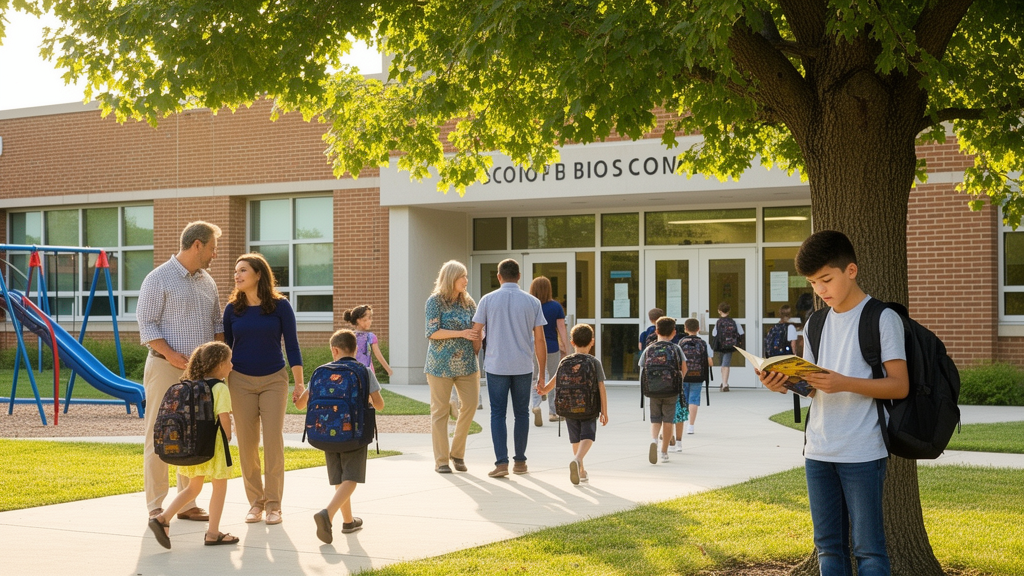
Image Credits: AI Generated

DOI: 10.1057/s41599-026-08690-y

Keywords: parental hypergamy, student outcomes, cognitive skills, non-cognitive skills, peer effects, social mobility, junior high school, China, classroom climate, randomly assigned classes, Marry, rise

Cite Scienmag News

Courtney Benton. (October 20, 2026). Classmates’ Parents Marrying Up Linked to Better Student Outcomes. Scienmag. https://scienmag.com/classmates-parents-marrying-up-linked-to-better-student-outcomes/

Courtney Benton. "Classmates’ Parents Marrying Up Linked to Better Student Outcomes." Scienmag, 20 October 2026, https://scienmag.com/classmates-parents-marrying-up-linked-to-better-student-outcomes/. Accessed 20 October 2026.

Courtney Benton. "Classmates’ Parents Marrying Up Linked to Better Student Outcomes." Scienmag. October 20, 2026. https://scienmag.com/classmates-parents-marrying-up-linked-to-better-student-outcomes/


Tags: Chinaclassroom climateclassroom climate and student successcognitive skillseffects of marriage patterns of parents on educational attainmentimpact of classroom composition on student developmentjunior high schoolMarrynon-cognitive skillsparental hypergamyParental hypergamy and student cognitive outcomesparental involvement in educationpeer effectspeer influence on non-cognitive skillsrandomized class assignment in educational researchrandomly assigned classesriserole of peer families in student motivationrural hukou and academic performancesocial mobilitysocioeconomic disparities in junior high school studentssocioeconomic status and educational achievementstudent outcomesteacher attention and student outcomes
Share26Tweet16
Previous Post

Cognitive demand may expose hidden metabolic failures in diabetes-related cognitive impairment

Next Post

Single-fossil taxonomic study places new non-glossatan moth tentatively in Heterobathmiidae

Related Posts

Seismic evaluation of transmission tower structures under coupled ice-earthquake action
Social Science

Seismic evaluation of transmission tower structures under coupled ice-earthquake action

October 20, 2026
Income precarity links differently to India’s handloom sustainability outcomes
Social Science

Income precarity links differently to India’s handloom sustainability outcomes

October 20, 2026
Research report: Speech acts in humanitarian crowdfunding campaigns
Social Science

Research report: Speech acts in humanitarian crowdfunding campaigns

October 20, 2026
Monte Carlo testing identifies stable multi-hazard priorities in Kerala watershed
Social Science

Monte Carlo testing identifies stable multi-hazard priorities in Kerala watershed

October 20, 2026
Generative AI in Higher Education: New Study Reveals How Students and Instructors Are Negotiating Academic Integrity
Social Science

From diffusion to negotiation: generative AI and academic integrity in higher education assessment

October 20, 2026
Nigerian campuses feel the strain as cultural values shift, study finds
Social Science

Quantitative study of 375 Nigerian tertiary students links societal factors to perceived value-reorientation need

October 20, 2026
Next Post
99-Million-Year-Old Moth in Amber Rewrites the Story of Butterflies’ Earliest Ancestors

Single-fossil taxonomic study places new non-glossatan moth tentatively in Heterobathmiidae

  • Mothers who receive childcare support from maternal grandparents show more optimized

    Mothers who receive childcare support from maternal grandparents show more parental warmth, finds NTU Singapore study

    27656 shares
    Share 11059 Tweet 6912
  • University of Seville Breaks 120-Year-Old Mystery, Revises a Key Einstein Concept

    1061 shares
    Share 424 Tweet 265
  • Bee body mass, pathogens and local climate influence heat tolerance

    682 shares
    Share 273 Tweet 171
  • Researchers record first-ever images and data of a shark experiencing a boat strike

    546 shares
    Share 218 Tweet 137
  • Groundbreaking Clinical Trial Reveals Lubiprostone Enhances Kidney Function

    531 shares
    Share 212 Tweet 133
Science

Embark on a thrilling journey of discovery with Scienmag.com—your ultimate source for cutting-edge breakthroughs. Immerse yourself in a world where curiosity knows no limits and tomorrow’s possibilities become today’s reality!

RECENT NEWS

  • Single-fossil taxonomic study places new non-glossatan moth tentatively in Heterobathmiidae
  • Classmates’ Parents Marrying Up Linked to Better Student Outcomes
  • Cognitive demand may expose hidden metabolic failures in diabetes-related cognitive impairment
  • Research report: HIV-1 Vpr: a multifunctional accessory protein with potential contributions to AIDS pathogenesis and persistence

Categories

  • Agriculture
  • Anthropology
  • Archaeology
  • Athmospheric
  • Biology
  • Biotechnology
  • Blog
  • Bussines
  • Cancer
  • Chemistry
  • Climate
  • Earth Science
  • Editorial Policy
  • Marine
  • Mathematics
  • Medicine
  • Pediatry
  • Policy
  • Psychology & Psychiatry
  • Science Education
  • Science News
  • Social Science
  • Space
  • Technology and Engineering

Subscribe to Blog via Email

Enter your email address to subscribe to this blog and receive notifications of new posts by email.

Join 5,150 other subscribers

© 2025 Scienmag - Science Magazine

Welcome Back!

Login to your account below

Forgotten Password?

Retrieve your password

Please enter your username or email address to reset your password.

Log In
No Result
View All Result
  • HOME
  • SCIENCE NEWS
  • CONTACT US

© 2025 Scienmag - Science Magazine

Discover more from Science

Subscribe now to keep reading and get access to the full archive.

Continue reading