

Tuesday, October 20, 2026
Science
No Result
View All Result
  • Login
  • HOME
  • SCIENCE NEWS
  • CONTACT US
  • HOME
  • SCIENCE NEWS
  • CONTACT US
No Result
View All Result
Scienmag
No Result
View All Result
Home Science News Social Science

Quantitative study of 375 Nigerian tertiary students links societal factors to perceived value-reorientation need

October 20, 2026
in Social Science
Courtney Benton
By Courtney Benton Scienmag Editorial Profile - Science and Technology Policy
Reading Time: 2 mins read
0
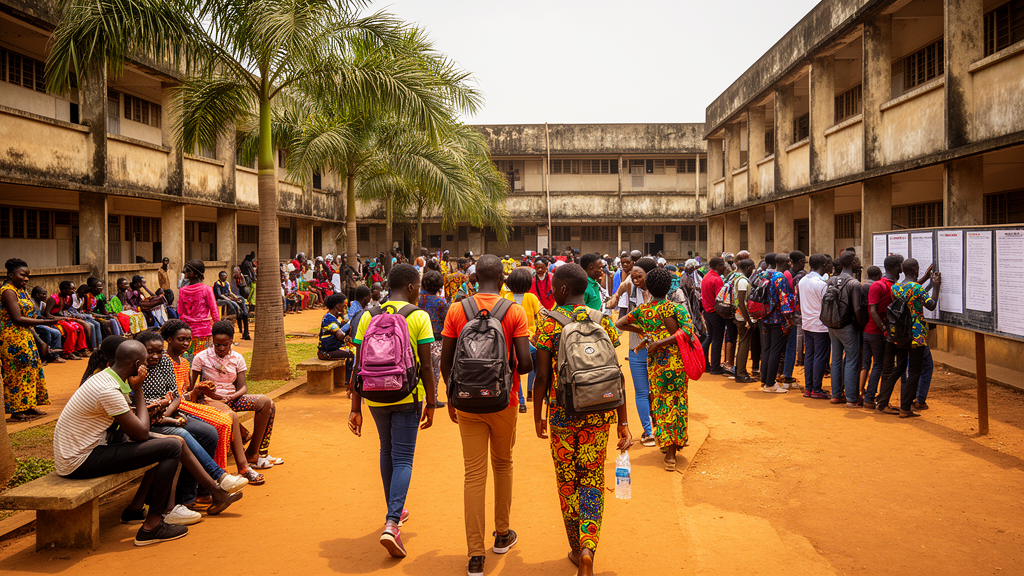
Nigerian campuses feel the strain as cultural values shift, study finds

Nigerian campuses feel the strain as cultural values shift, study finds

65
SHARES
587
VIEWS
Share on FacebookShare on Twitter
ADVERTISEMENT

A quantitative study of 375 students from diverse Nigerian tertiary institutions found that the sociocultural atmosphere within institutions was significantly associated with students’ perceived need for value reorientation concerning obedience, honesty, discipline and patriotism. The article’s abstract also identifies evolving societal norms and ethical challenges as strong predictors of that perceived need, while describing the results as preliminary.

Researchers collected data on cultural and societal factors and used structural equation modeling in SmartPLS 4 to examine relationships among those factors and the perceived need for value reorientation. The analysis was intended to assess how sociocultural conditions relate to students’ views about reorienting four major human values in tertiary education. The abstract reports associations and model-based predictors rather than changes in students’ behavior or the effects of implementing a reorientation program.

According to the abstract, the findings indicate that complex interactions among cultural and societal factors can shape the perceived need for value-reorientation programs. They provide evidence relevant to policymakers, educators and institutions considering how programs might respond to changing social conditions and a diverse student population. The reported results do not, however, establish that any such program is effective or that the four values have measurably declined among Nigerian tertiary students.

The evidence summarized here is limited to the published abstract and its preliminary findings. The abstract identifies the quantitative design, sample size and structural equation modeling approach, but does not provide sampling procedures, measurement instruments, effect sizes or detailed model results. It also does not indicate how representative the 375 participants were of Nigeria’s tertiary student population, so the findings should not be treated as a national assessment of student values. Moreover, the observational relationships reported do not by themselves demonstrate causality. The authors recommend further analysis to clarify the nuanced dynamics between cultural and societal factors and the perceived need for value reorientation in tertiary education.

Subject of Research: Perceived need for value reorientation among Nigerian tertiary students

Article Title: Shifting socio-cultural values: the call for re-orientation in Nigerian tertiary institutions

Article References: Olohunfunmi, A. I., Bamiro, N. B., & Taofeek, Q. A. (2026). Shifting socio-cultural values: the call for re-orientation in Nigerian tertiary institutions. SN Social Sciences, 6(9), Article 375. https://doi.org/10.1007/s43545-026-01644-w

Image Credits: AI Generated

DOI: 10.1007/s43545-026-01644-w

Keywords: Nigeria, tertiary education, value reorientation, student culture, societal norms, ethical challenges, structural equation modeling, survey research, Shifting, socio-cultural, values, call

Cite Scienmag News

Courtney Benton. (October 20, 2026). Quantitative study of 375 Nigerian tertiary students links societal factors to perceived value-reorientation need. Scienmag. https://scienmag.com/quantitative-study-of-375-nigerian-tertiary-students-links-societal-factors-to-perceived-value-reorientation-need/


Courtney Benton. "Quantitative study of 375 Nigerian tertiary students links societal factors to perceived value-reorientation need." Scienmag, 20 October 2026, https://scienmag.com/quantitative-study-of-375-nigerian-tertiary-students-links-societal-factors-to-perceived-value-reorientation-need/. Accessed 20 October 2026.

Courtney Benton. "Quantitative study of 375 Nigerian tertiary students links societal factors to perceived value-reorientation need." Scienmag. October 20, 2026. https://scienmag.com/quantitative-study-of-375-nigerian-tertiary-students-links-societal-factors-to-perceived-value-reorientation-need/

Tags: callcultural and societal predictors of student valuesdiversity in Nigerian tertiary student populationsethical challengesimpact of societal challenges on student ethicsinfluence of evolving societal norms on student behaviorNigeriaNigerian tertiary studentsperceived need for ethical value reorientationpolicy implications for value-based educationpreliminary findings on student value perceptionsShiftingsocietal factors and value reorientationsocietal normssocio-culturalsociocultural atmosphere in higher educationstructural equation modelingstructural equation modeling in educational researchstudent culturesurvey researchtertiary educationvalue reorientationvalue reorientation programs in Nigerian universitiesvalues
Share26Tweet16
Previous Post

48-hour nomogram stratifies NEC risk among neonates with gastrointestinal symptoms

Next Post

Ethiopian breast cancer tissue study links immune-cell infiltration to subtype and grade

Related Posts

From Office Layout to Well-Being: Four Decades of Workplace Research Mapped
Social Science

Bibliometric review maps four decades of physical work environment research

October 20, 2026
Prenatal choline trial links supplementation to better child cognition
Social Science

Prenatal choline trial links supplementation to better child cognition

October 20, 2026
Global Map of Civil Society Research Reveals a Field Still Dominated by the North
Social Science

Scopus bibliometric analysis maps global civil society research, 2019–2024

October 20, 2026
Climate Exposure and Weak Assets Leave Tribal Households in Rural Jharkhand Highly Vulnerable, Study Finds
Social Science

Survey of 400 tribal households in rural Jharkhand finds livelihood vulnerability varies across tribes and districts

October 20, 2026
How Multidimensional Energy Poverty Shapes Child Learning Outcomes in Developing Countries
Social Science

Survey analysis links multidimensional energy poverty to poorer child learning in West and Central Africa

October 20, 2026
Why Africa’s Research Rarely Reaches Policy: Institutions Hold the Missing Link
Social Science

Evidence-informed policy-making in Africa: the role of institutions in bridging the gap between research and policy

October 20, 2026
Next Post
Immune Landscapes of Ethiopian Breast Cancer Mirror Findings From Wealthier Nations

Ethiopian breast cancer tissue study links immune-cell infiltration to subtype and grade

  • Mothers who receive childcare support from maternal grandparents show more optimized

    Mothers who receive childcare support from maternal grandparents show more parental warmth, finds NTU Singapore study

    27656 shares
    Share 11059 Tweet 6912
  • University of Seville Breaks 120-Year-Old Mystery, Revises a Key Einstein Concept

    1061 shares
    Share 424 Tweet 265
  • Bee body mass, pathogens and local climate influence heat tolerance

    682 shares
    Share 273 Tweet 171
  • Researchers record first-ever images and data of a shark experiencing a boat strike

    546 shares
    Share 218 Tweet 137
  • Groundbreaking Clinical Trial Reveals Lubiprostone Enhances Kidney Function

    531 shares
    Share 212 Tweet 133
Science

Embark on a thrilling journey of discovery with Scienmag.com—your ultimate source for cutting-edge breakthroughs. Immerse yourself in a world where curiosity knows no limits and tomorrow’s possibilities become today’s reality!

RECENT NEWS

  • IL-6 and lactate better discriminated 28-day mortality than CRP, procalcitonin and NLR in retrospective ICU sepsis cohort
  • Saudi physiotherapists report favorable perceptions of micro-learning in cross-sectional survey
  • Ethiopian breast cancer tissue study links immune-cell infiltration to subtype and grade
  • Quantitative study of 375 Nigerian tertiary students links societal factors to perceived value-reorientation need

Categories

  • Agriculture
  • Anthropology
  • Archaeology
  • Athmospheric
  • Biology
  • Biotechnology
  • Blog
  • Bussines
  • Cancer
  • Chemistry
  • Climate
  • Earth Science
  • Editorial Policy
  • Marine
  • Mathematics
  • Medicine
  • Pediatry
  • Policy
  • Psychology & Psychiatry
  • Science Education
  • Science News
  • Social Science
  • Space
  • Technology and Engineering

Subscribe to Blog via Email

Enter your email address to subscribe to this blog and receive notifications of new posts by email.

Join 5,150 other subscribers

© 2025 Scienmag - Science Magazine

Welcome Back!

Login to your account below

Forgotten Password?

Retrieve your password

Please enter your username or email address to reset your password.

Log In
No Result
View All Result
  • HOME
  • SCIENCE NEWS
  • CONTACT US

© 2025 Scienmag - Science Magazine

Discover more from Science

Subscribe now to keep reading and get access to the full archive.

Continue reading