


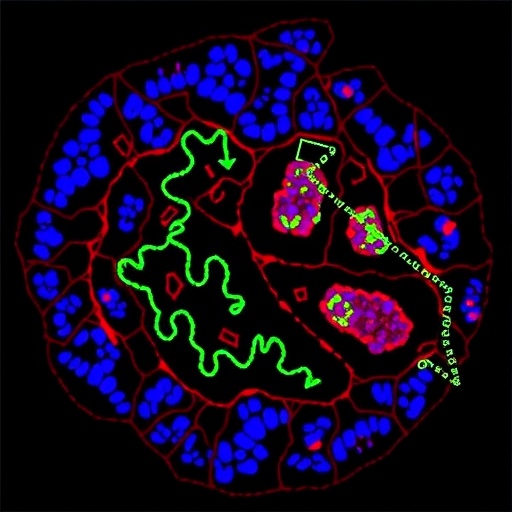
Recent developments in cancer research have brought to light the complex mechanisms that regulate tumor growth and metastasis. Among these, circular RNAs (circRNAs) have emerged as potential players in the regulation of gene expression, particularly in relation to cancer progression. A noteworthy study published in Molecular Cancer by Dong, W., Bi, J., Liu, H., and colleagues sheds light on one such circRNA named ACVR2A. The authors present compelling evidence that ACVR2A is instrumental in inhibiting the proliferation and metastasis of bladder cancer cells through the miR-626/EYA4 axis, suggesting novel therapeutic avenues for patients afflicted with this malignancy.
Bladder cancer is a significant health concern, characterized by its high recurrence rate and potential for invasion into surrounding tissues and distant organs. Understanding the molecular underpinnings that drive bladder cancer progression is critical for developing effective treatment strategies. In their study, the authors aim to demystify the role of circRNAs in the pathology of bladder cancer, highlighting how ACVR2A specifically interacts with microRNAs to influence cellular behaviors.
CircRNA ACVR2A appears to function as a tumor suppressor in bladder cancer. Unlike linear RNAs, the unique structure of circRNAs, formed by backsplicing, confers stability and allows them to act as scaffolds for protein interactions or as sponges for microRNAs. By sequestering certain microRNAs, circRNAs can modulate the downstream effects of these regulatory RNAs, effectively altering gene expression profiles within cancer cells. The study posits that ACVR2A’s interaction with miR-626 is pivotal to its role in tumor suppression.
The authors provide compelling data illustrating that overexpression of ACVR2A significantly inhibits the proliferation and migration of bladder cancer cells in vitro. This finding is coupled with in vivo studies showing that forced expression of ACVR2A reduces tumor growth and metastatic potential in murine models. Through these comprehensive analyses, the study delineates a crucial pathway wherein ACVR2A exerts its effects via miR-626, which in turn targets the EYA4 gene involved in oncogenic signaling pathways.
One of the striking aspects of this research is the focus on the miR-626/EYA4 axis in the context of bladder cancer. MiR-626 is recognized as a crucial regulator, influencing various cellular processes, including apoptosis and cell cycle progression. By understanding how ACVR2A modulates the availability of miR-626, researchers can begin to piece together a broader picture of the regulatory networks at play in bladder cancer biology. The implications extend beyond mere tumor biology; they challenge existing paradigms regarding RNA functions and open the door to novel diagnostic and therapeutic strategies.
The study also underscores the importance of circRNAs in cancer pathology, suggesting that their role extends beyond mere transcriptional noise. The authors emphasize that circRNAs, such as ACVR2A, are dynamically expressed and can adapt to changes in the tumor microenvironment, potentially influencing therapeutic responses. This adaptive capability raises interesting questions about the potential for targeting circRNAs as a means of enhancing cancer treatment efficacy while mitigating resistance.
Moreover, the authors addressed the need for further investigation into the mechanisms through which ACVR2A exerts its effects on bladder cancer cells. They advocate for more extensive studies that explore the broader implications of circRNA interactions with various microRNAs and their downstream targets. Such investigations could unveil new therapeutic targets and establish detailed cellular networks that are pivotal in cancer progression.
The significance of this research cannot be overstated, especially in light of the growing burden of bladder cancer globally. The findings encourage a paradigm shift in our approach to understanding cancer biology, highlighting the necessity of integrating circRNA investigation into mainstream oncological research. This shift could lead to the identification of novel biomarkers for early diagnosis and provide a basis for therapeutic advancements directed at circRNA modulation.
As we venture into an era characterized by personalized medicine, the insights derived from such studies hold promise for tailored treatment strategies that leverage the unique molecular profiles of individual tumors. The potential for circRNA-based therapies, which could either restore the function of tumor suppressive circRNAs like ACVR2A or inhibit oncogenic circRNAs, represents a frontier that warrants further exploration.
The study conducted by Dong, W., Bi, J., Liu, H., and their colleagues serves as a compelling illustration of how circRNAs can intersect with critical microRNA pathways to influence cancer cell behavior. It exemplifies a growing field of research that seeks to unravel the complexities of non-coding RNAs in human health and disease. The enthusiasm surrounding these findings is palpable, and they offer a glimpse of the future of cancer treatments that may emerge from a deeper understanding of the RNA landscape in tumors.
In conclusion, the research delineating the role of circular RNA ACVR2A in bladder cancer presents a beacon of hope for innovative therapies. With its ability to engage with key regulatory microRNAs and suppress aggressive tumor traits, ACVR2A stands as a potential target for future pharmacological interventions. As researchers continue to decipher the intricate dance of circRNAs and their interactions within the cellular milieu, there is optimism for breakthroughs that could redefine our strategies in combating cancer.
Cite Scienmag News
Nathaniel Bowman. (January 19, 2026). Circular RNA ACVR2A Inhibits Bladder Cancer via miR-626. Scienmag. https://scienmag.com/circular-rna-acvr2a-inhibits-bladder-cancer-via-mir-626/
Nathaniel Bowman. "Circular RNA ACVR2A Inhibits Bladder Cancer via miR-626." Scienmag, 19 January 2026, https://scienmag.com/circular-rna-acvr2a-inhibits-bladder-cancer-via-mir-626/. Accessed 3 September 2026.
Nathaniel Bowman. "Circular RNA ACVR2A Inhibits Bladder Cancer via miR-626." Scienmag. January 19, 2026. https://scienmag.com/circular-rna-acvr2a-inhibits-bladder-cancer-via-mir-626/


