


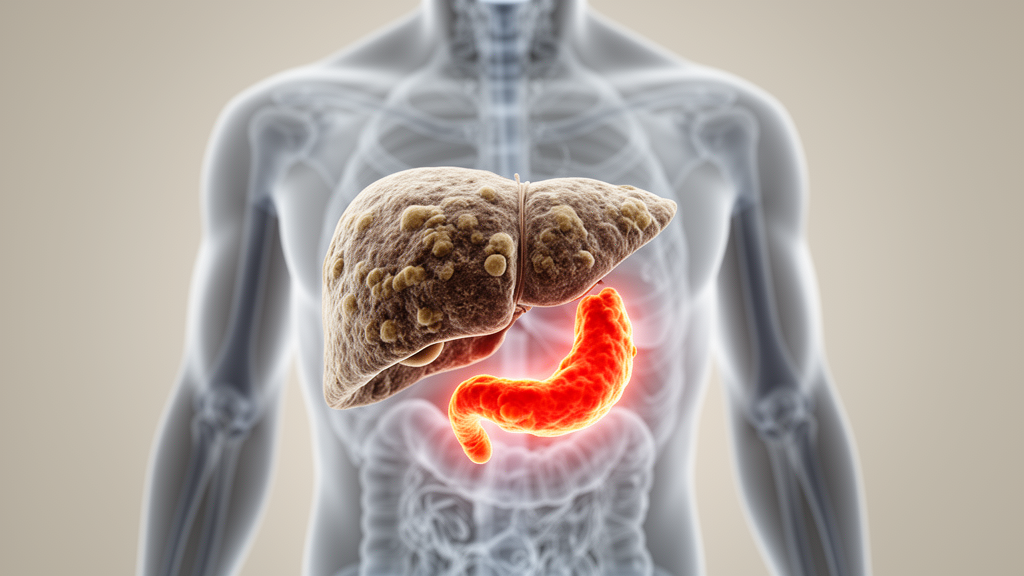
Acute pancreatitis is a dangerous condition on its own, but when it strikes a patient with chronic liver disease, the outcome can be far worse. A detailed narrative review published in Frontiers in Gastroenterology examines how cirrhosis, chronic hepatitis, and metabolic dysfunction-associated steatotic liver disease amplify the severity of acute pancreatitis, and it delivers a sobering message: patients carrying both diagnoses face roughly double the risk of death compared with those whose livers are healthy.
The review, led by researchers at King Edward Medical University in Lahore, Pakistan, and the Spinghar Institute of Higher Education in Kabul, Afghanistan, synthesizes evidence from two independent meta-analyses covering more than 3.5 million patients. The larger synthesis of 36 studies found that chronic liver disease raised the odds of death in acute pancreatitis with an odds ratio of 2.53. A subsequent analysis confined to cirrhosis reported a mortality risk ratio of 2.09, falling to 1.94 when only adjusted estimates were pooled. The same analysis found a risk ratio of 2.79 for severe pancreatitis, though notably, the risk of acute kidney injury showed no significant increase, suggesting that not every adverse outcome is uniformly elevated.
The pathophysiological explanation for this dangerous interaction rests on several overlapping mechanisms. Chronic liver disease produces a state of cirrhosis-associated immune dysfunction, in which the body’s ability to clear pathogens is impaired while systemic inflammation persists. The inflammatory cascade in chronic liver disease, characterized by elevated cytokines such as interleukin-6, tumor necrosis factor-alpha, and interleukin-1beta, closely mirrors the immunologic derangements seen in acute pancreatitis. When both conditions coexist, the compounded immune dysfunction can escalate systemic inflammatory response syndrome, leading to multiorgan dysfunction. Furthermore, portal hypertension and systemic vasodilation reduce effective arterial blood volume, exacerbating pancreatic ischemia during pancreatitis and increasing the risk of renal and cardiovascular complications.
Hepatic insufficiency also impairs production of essential proteins such as albumin and coagulation factors, which are critical for maintaining vascular integrity and controlling inflammation. Reduced oncotic pressure, splanchnic vasodilation, and altered hemostatic balance operate together rather than in isolation. Bacterial translocation across a permeable intestinal barrier, an established feature of advanced cirrhosis, provides a plausible route for secondary infection of pancreatic necrosis. The review notes that most of this mechanistic evidence is extrapolated from studies of cirrhosis without pancreatitis or pancreatitis with normal livers, and direct demonstration of liver-pancreas cross-talk in patients carrying both diagnoses remains confined to a small number of animal models and retrospective observational cohorts.
Diagnostic challenges compound the clinical difficulty. Patients with chronic liver disease and acute pancreatitis often present with non-specific overlapping symptoms such as abdominal pain, nausea, vomiting, and jaundice. Hepatic encephalopathy may be confused with sepsis-related delirium from pancreatitis, delaying diagnosis. Ascites, hepatomegaly, and varices can obscure imaging interpretation. The review identifies four distinct clusters of diagnostic uncertainty: analyte failure, in which serum amylase and lipase behave differently in the presence of liver disease; image interpretation failure, in which ascites and altered hepatic architecture degrade the reading; syndrome overlap, in which two conditions generate the same clinical picture; and threshold failure, in which decision thresholds derived from non-cirrhotic populations no longer correspond to the same post-test probability.
The assertion that pancreatic enzymes are unreliable in chronic liver disease warrants scrutiny. The reported reductions in serum amylase and lipase originate largely from small comparative series rather than from studies designed to establish diagnostic accuracy, and the only systematic assessment did not examine cirrhotic patients as a subgroup. Alcohol-related pancreatic exocrine insufficiency, which is common in this group and independently lowers enzyme output, is rarely controlled for. The practical implication is nonetheless reasonable: a normal or only modestly elevated lipase should not by itself exclude acute pancreatitis in a patient with cirrhosis, though this recommendation rests on indirect evidence rather than on formal accuracy data.
Conventional pancreatitis severity scores also underperform in this population for identifiable structural reasons. BISAP assigns points for blood urea nitrogen above 25 mg/dL, impaired mental status, systemic inflammatory response syndrome, age above 60 years, and pleural effusion. Three of these five variables behave abnormally in cirrhosis. Blood urea nitrogen is frequently low despite significant renal impairment because urea synthesis depends on hepatic function, so a cirrhotic patient with genuine renal compromise may score zero on the item intended to capture it. Pleural effusion is common in advanced liver disease from hepatic hydrothorax and therefore loses discriminative value. Altered mental status may reflect hepatic encephalopathy rather than pancreatitis-related organ dysfunction. The net effect is a score that is simultaneously falsely reassuring on one item and falsely alarming on another. APACHE II registers the presence of liver disease as a fixed increment that does not scale with hepatic decompensation, and it draws on physiological variables that are chronically deranged in cirrhosis independently of acute illness, compressing its dynamic range.
Evidence from a single-center retrospective cohort suggests that liver-specific scores outperform conventional pancreatitis scores in this population. MELD, calculated from bilirubin, creatinine, and the international normalized ratio, is continuous, objective, and free of subjective components, and creatinine captures the renal dysfunction that drives much of the mortality in severe pancreatitis. Its weakness is that all three components can be perturbed by pancreatitis itself rather than by liver disease. Child-Pugh includes ascites and encephalopathy, which are more specific to chronic liver disease, but it depends on subjective grading and has a ceiling effect. The comparative evidence is thin, coming from a single retrospective cohort that has not been replicated prospectively. A reasonable interim position is that liver-specific and pancreatitis-specific scores should be calculated in parallel rather than one substituted for the other.
Management of these patients requires modifications across nearly every domain of care. The hemodynamic state in cirrhosis is characterized by low systemic vascular resistance, high cardiac output, and low effective blood volume, narrowing the margin for safe fluid resuscitation. The WATERFALL trial, which randomized patients to aggressive or moderate goal-directed fluid therapy, found no reduction in disease progression and a substantially higher incidence of fluid overload in the aggressive arm, supporting moderate resuscitation. However, the trial did not report cirrhosis as a stratifying variable, so the applicability of its thresholds to patients with a hyperdynamic circulation is inferred rather than demonstrated. The review argues that resuscitation in this group should be guided by dynamic measures of fluid responsiveness and serial lactate rather than by fixed pressure and urine output targets, though no trial has tested this. Hypoalbuminemia is common in cirrhosis and has been associated with increased mortality in severe pancreatitis, with one retrospective cohort suggesting that albumin infusion in the first week was associated with lower mortality rates.
Nutritional support represents an area where the two disease-specific literatures conflict most directly. In pancreatitis, the PYTHON trial showed that early nasoenteric tube feeding within 24 hours was not superior to an oral diet started at 72 hours, and current guidance favors early oral intake as tolerated. In cirrhosis, by contrast, European guidance advises avoiding prolonged fasting, with a protein intake of 1.2 to 1.5 g/kg/day and late evening carbohydrate supplementation, because cirrhotic patients enter a catabolic state after relatively short periods without food and because sarcopenia is an independent predictor of mortality. A cirrhotic patient kept nil by mouth for 72 hours in accordance with pancreatitis practice may therefore accrue nutritional harm that the pancreatitis literature does not measure. The reasonable synthesis is that the permissive fasting window should be shortened in patients with cirrhosis, that enteral rather than parenteral routes should be preferred, and that protein should not be restricted in the absence of overt encephalopathy.
Procedural decisions also require modification. The APEC trial supported a restrictive approach to ERCP, reserving it for patients with cholangitis or persistent cholestasis. This restrictive position is more strongly justified in cirrhosis, because pooled data from 24 studies and more than 28,000 patients show that cirrhosis raises the overall risk of post-ERCP adverse events, with the clearest excess in bleeding, and that complication rates rise with Child-Pugh class. The prolonged international normalized ratio of cirrhosis reflects a rebalanced rather than a hypocoagulable state, and correction with fresh frozen plasma before procedures increases volume load without reliably reducing bleeding. For pancreatic necrosis, the step-up approach is amplified in cirrhosis, where open necrosectomy carries added hazards of bleeding from abdominal wall collaterals, difficult wound healing, ascitic leak, and postoperative hepatic decompensation.
Acute-on-chronic liver failure, defined as acute decompensation of cirrhosis accompanied by organ failure, is an under-recognized consequence of pancreatitis in cirrhotic patients. In one retrospective cohort, 44 percent of patients with pancreatitis and liver cirrhosis developed this syndrome. The clinical importance lies in prognosis and in the timing of escalation, since the CLIF-C organ failure scores provide dynamic prognostic information, and response to treatment assessed at days three to seven is more informative than admission severity alone. A patient whose grade does not improve over that interval has a poor outlook with continued supportive care and should prompt early discussion of transplant candidacy. The review emphasizes that this framework has been developed and validated for precipitants such as bacterial infection and variceal bleeding, and that its behavior when the precipitant is pancreatitis has not been formally studied.
The etiology of liver disease further modifies pancreatitis severity, though the evidence supporting etiology-specific effects is weaker than that supporting the overall association. Alcohol-related disease is where the association is most readily observed and hardest to interpret, because alcohol independently causes recurrent and necrotizing pancreatitis, so any cohort assembled based on alcoholic cirrhosis is enriched for severe pancreatitis before liver disease is considered. Effect sizes reported in alcohol-related cohorts should be treated as upper bounds rather than as best estimates. Viral hepatitis presents the opposite problem: confounding by shared etiology is minimal, making it the cleanest available exposure scientifically, yet it is the one least often reported separately. Metabolic dysfunction-associated steatotic liver disease is the largest group in the pooled literature, with 24 of 36 studies in the larger meta-analysis concerning steatotic disease against 12 concerning cirrhosis, creating a problem of representation that is easy to miss. Combining these exposures under one label is the single most consequential definitional problem in this field.
The review’s authors are candid about the limitations of the evidence base. Almost everything rests on retrospective observational data of level III to IV quality, drawn from heterogeneously defined populations with inconsistent adjustment for confounding. The direction of the association is secure; its magnitude is not. Publication bias has been formally tested and was negative, though several outcomes were pooled from fewer than ten studies, below which such tests have very low power. Outcome reporting bias is the more plausible mechanism, illustrated by the fact that the larger synthesis could not pool infection data at all because definitions varied and reporting was inconsistent. An outcome that cannot be pooled cannot be tested for bias.
Four research priorities emerge from the review. A prospective multicenter cohort using a standardized definition of chronic liver disease, stratified by Child-Pugh class, with severity adjudicated in a way that separates hepatic from pancreatic organ failure, would resolve much of the current uncertainty about effect size. Prospective validation of MELD and Child-Pugh against BISAP and APACHE II in this population would address the most immediately actionable clinical question. A trial of fluid resuscitation strategy in cirrhotic patients with pancreatitis, using dynamic measures of fluid responsiveness rather than fixed pressure targets, is both feasible and needed. Finally, the natural history of pancreatitis as a precipitant of acute-on-chronic liver failure warrants dedicated study. Until such data exist, the management of these patients will continue to rest on physiological reasoning applied to evidence generated in other populations, and clinicians should be explicit with themselves about that when making decisions at the bedside.
Subject of Research: Chronic liver disease amplifies the severity and mortality of acute pancreatitis through overlapping inflammatory, hemodynamic, and metabolic mechanisms
Article Title: Chronic liver disease impacting the severity of acute pancreatitis: a detailed narrative review of the literature
Article References: Basit, A., Usman, M. A., Ali, S. M., & Basil, A. M. (2026). Chronic liver disease impacting the severity of acute pancreatitis: a detailed narrative review of the literature. Frontiers in Gastroenterology, 5, Article 1921741. https://doi.org/10.3389/fgstr.2026.1921741
Image Credits: AI Generated
DOI: 10.3389/fgstr.2026.1921741
Keywords: acute pancreatitis, chronic liver disease, cirrhosis, inflammation, organ failure, severity scores, MELD, Child-Pugh, fluid resuscitation, nutrition, Chronic, liver
Cite Scienmag News
Kristina Jarvis. (October 17, 2026). Chronic liver disease doubles the danger of acute pancreatitis, review finds. Scienmag. https://scienmag.com/chronic-liver-disease-doubles-the-danger-of-acute-pancreatitis-review-finds/
Kristina Jarvis. "Chronic liver disease doubles the danger of acute pancreatitis, review finds." Scienmag, 17 October 2026, https://scienmag.com/chronic-liver-disease-doubles-the-danger-of-acute-pancreatitis-review-finds/. Accessed 17 October 2026.
Kristina Jarvis. "Chronic liver disease doubles the danger of acute pancreatitis, review finds." Scienmag. October 17, 2026. https://scienmag.com/chronic-liver-disease-doubles-the-danger-of-acute-pancreatitis-review-finds/


