


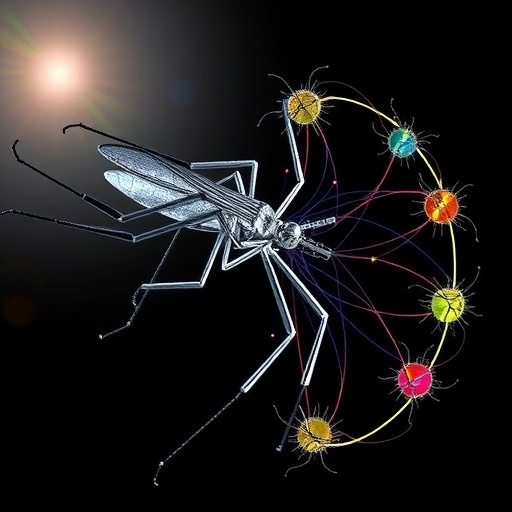
The intricate world of malaria parasites, particularly Plasmodium falciparum, continues to reveal its mysteries through ongoing scientific advancements. Recently, a profound study led by Brown, Llinás, and Mahony has highlighted the dynamic nature of chromatin states during the intraerythrocytic development cycle of P. falciparum. This research sheds light on the fundamental genomic mechanisms that govern the life cycle of this deadly pathogen, which remains a significant global health threat. Through their innovative approach, the researchers illustrate how chromatin remodeling serves as a vital component of cellular regulation, impacting gene expression and developmental processes during the parasitic stages within red blood cells.
Chromatin, a complex of DNA and proteins, plays a pivotal role in the modulation of genetic activity. The study dives deep into the various chromatin states that P. falciparum undergoes as it transitions through different developmental phases. Each phase of the parasitic cycle, particularly in the context of the intraerythrocytic environment, presents a unique landscape where genetic expression is meticulously regulated. Understanding these transitions is crucial, as they influence how the parasite reacts to environmental stresses and potential therapeutic interventions.
During its lifecycle, P. falciparum experiences rapid and significant transformations. The researchers meticulously characterize these chromatin state dynamics using advanced genomic techniques. They employ high-throughput sequencing methods, which enable them to capture comprehensive snapshots of chromatin modifications across different developmental stages. This method not only illuminates the nuances of chromatin structure but also provides insights into how specific genes are activated or silenced in response to physiological changes throughout the intraerythrocytic cycle.
Importantly, this study emphasizes the significance of epigenetic regulation in P. falciparum. The chromatin landscape is not static; rather, it is subject to alterations that correlate with various developmental stages. These transitions are influenced by histone modifications, DNA methylation patterns, and the recruitment of chromatin remodeling complexes. By dissecting these interconnected processes, the researchers unveil a complex regulatory network that can dictate the survival and proliferation of the malaria parasite under varying host conditions.
One of the key findings of the research is the identification of specific chromatin states that are associated with vital genes necessary for the parasite’s survival and virulence. The authors illustrate how the activation of these genes is tightly linked to the chromatin context, emphasizing that the cellular environment plays a critical role in gene expression outcomes. This connection between chromatin structure and gene activity provides a promising avenue for the development of targeted therapies aimed at disrupting these regulatory mechanisms.
Moreover, the study outlines how internal and external factors can influence chromatin states. For instance, variations in nutrient availability, immune responses from the host, and even competing pathogens can induce changes in chromatin dynamics. This adaptability may allow P. falciparum to withstand the pressures imposed by antimalarial drugs, thus accentuating the need for novel therapeutic strategies that consider the epigenetic landscape of the parasite.
The implications of this research extend beyond basic science. By unraveling the complexities of chromatin dynamics, the authors set a foundation for the development of innovative malaria treatment strategies. The potential to manipulate chromatin states offers a novel approach to making the parasite more susceptible to existing drug therapies. For instance, if specific chromatin modifications can be induced to silence key survival genes, the efficacy of current antimalarial drugs could be significantly enhanced, leading to improved patient outcomes.
Furthermore, the detailed exploration of the chromatin landscape adds a new dimension to our understanding of malaria biology. The contribution of chromatin remodeling in the life cycle of P. falciparum highlights the fact that this parasite is not merely a passive entity but an active participant in the complex interplay of biological and environmental factors. This understanding is crucial for devising comprehensive strategies to combat malaria and could inspire similar approaches in other infectious diseases.
The significance of this research lies not only in its scientific findings but also in its potential societal impact. Given that malaria continues to claim hundreds of thousands of lives annually, advancements in our understanding of its molecular biology could be life-saving. As the study showcases the adaptability and resilience of P. falciparum, it also underscores the importance of ongoing research in the field of parasitology. Continuous investment in this area could lead to breakthroughs that alter the trajectory of malaria history.
As scientists continue to elucidate the mechanisms underpinning chromatin dynamics in P. falciparum, the hope is that such insights will translate into actionable strategies against malaria. The merging of epigenetics with parasitology presents an exciting frontier for researchers, pointing to a future where these insights can facilitate the development of novel therapeutics. The findings of Brown, Llinás, and Mahony serve as a clarion call for the scientific community, emphasizing that understanding the biological underpinnings of malaria may hold the key to global eradication efforts.
In conclusion, the study by Brown, Llinás, and Mahony provides essential insights into the dynamic nature of chromatin within P. falciparum during its critical developmental stages. By mapping the intricate changes that occur within the chromatin landscape, the researchers have laid the groundwork for future explorations into this field, potentially unlocking new avenues for combating malaria. As we stand on the cusp of significant scientific advancements, the hope is that with continued research, we can develop effective and sustainable strategies to eliminate one of the world’s most persistent and deadly pathogens.
Cite Scienmag News
Juliet Wilcox. (January 7, 2026). Chromatin Dynamics in Plasmodium falciparum Life Cycle. Scienmag. https://scienmag.com/chromatin-dynamics-in-plasmodium-falciparum-life-cycle/
Juliet Wilcox. "Chromatin Dynamics in Plasmodium falciparum Life Cycle." Scienmag, 7 January 2026, https://scienmag.com/chromatin-dynamics-in-plasmodium-falciparum-life-cycle/. Accessed 3 September 2026.
Juliet Wilcox. "Chromatin Dynamics in Plasmodium falciparum Life Cycle." Scienmag. January 7, 2026. https://scienmag.com/chromatin-dynamics-in-plasmodium-falciparum-life-cycle/


