


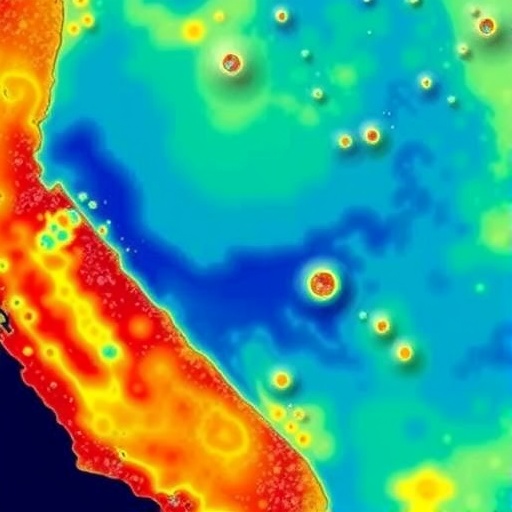
Recent research has shed light on the complexities surrounding marine ecosystems, specifically focusing on the vertical structure of chlorophyll-a during marine heatwaves in the California Current Ecosystem. This innovative study conducted by Li, J., Miller, A.J., Wang, Q., and their co-authors explores the multifaceted impacts of rising ocean temperatures on phytoplankton dynamics, offering critical insights into the ongoing effects of climate change on marine life.
Marine heatwaves have been recognized as significant ecological events that can profoundly alter the composition and distribution of marine organisms. These episodic phenomena lead to elevated sea surface temperatures, which can disrupt the delicate balance within marine ecosystems. In particular, chlorophyll-a, a key pigment in phytoplankton responsible for photosynthesis, serves as an essential indicator of primary productivity and, thus, is critical in the assessment of ocean health.
The research team employed advanced remote sensing technologies and field measurements to analyze the stratification of chlorophyll-a in response to heatwaves. Their observations suggest that during these episodes, the vertical distribution of chlorophyll-a experiences marked changes, with implications for nutrient availability and the broader food web. This provides further evidence of the cascading effects of climate change on marine biology, highlighting the urgent need for continuous monitoring and research in this vital area.
One of the striking findings of the study is the significant variation in chlorophyll-a concentrations observed at different depths. It was noted that during periods of extreme heat, the surface waters experienced heightened phytoplankton blooms, which are characterized by rapid growth and a subsequent increase in chlorophyll levels. However, this phenomenon is not without its consequences. The layering of heat within ocean waters can hinder nutrient upwelling, essential for sustaining these blooms, leading to potential disruptions in the ecological community.
The research also highlighted how temperature anomalies could affect the timing and intensity of these chlorophyll-a blooms. By analyzing extensive datasets, the authors were able to correlate marine heatwaves with changes in phytoplankton life cycles, particularly in terms of reproductive patterns and growth rates. As climate change continues to push ocean temperatures higher, understanding these patterns becomes crucial for predicting the future viability of marine ecosystems.
The implications of altered chlorophyll-a dynamics are extensive. Since chlorophyll-a concentrations directly influence the availability of food for various marine species, any shifts could result in significant changes throughout the food web. For instance, species that rely on phytoplankton as their primary food source may face challenges in finding adequate nourishment, leading to potential population declines.
Moreover, the study draws attention to the socio-economic consequences tied to fluctuations in marine biodiversity. Fisheries, which depend on stable marine environments for fish stocks, may find themselves at risk due to unpredictable shifts in species distributions and abundances driven by these heatwaves. Understanding the relationship between heatwaves, chlorophyll-a dynamics, and overall marine health is essential for developing more effective management strategies geared toward conserving marine resources.
In addition, the researchers advocate for the importance of incorporating biological data into climate models. By integrating the findings of this study into predictive frameworks, scientists can refine their understanding of marine ecosystem responses to climate change, thus enabling more accurate forecasts of future ocean health conditions.
This investigation into the vertical structure of chlorophyll-a during marine heatwaves underscores the intricate connections between warming oceans and the physiological responses of marine organisms. As climate change continues to escalate, ongoing research will be paramount in unraveling the complex web of interactions governing marine ecosystems.
The insights gained from this research serve as a critical wake-up call for policymakers and conservationists alike. By acknowledging the direct impacts of rising ocean temperatures on primary producers, it becomes possible to frame more informed and proactive strategies aimed at mitigating the effects of climate change on marine biodiversity. Enhanced policy efforts and conservation initiatives centered around these findings could greatly assist in safeguarding ocean health.
As we navigate the challenges posed by climate change, this groundbreaking research exemplifies the need for a multidisciplinary approach to marine science. By drawing from oceanography, biology, and environmental science, researchers can paint a more holistic picture of how our oceans are evolving.
Ultimately, the vertical structure of chlorophyll-a represents a vital component of the larger marine ecosystem puzzle. It illustrates the intertwined relationships among various marine organisms and the environments they inhabit. Continuing to explore these dynamics will be crucial in fostering resilience in marine ecosystems amid the uncertainty that climate change brings.
In summary, the study conducted by Li, Miller, Wang, and colleagues serves as a vital contribution to our understanding of the impacts of marine heatwaves on phytoplankton dynamics. As the battle against climate change rages on, such research highlights the pressing need to study and protect marine ecosystems, which play a crucial role in the Earth’s overall health. Ensuring that we remain informed about these scientific developments will be pivotal for future conservation efforts and for nurturing the delicate balance that sustains our oceans.
By acknowledging the complexities revealed by this research, we can better appreciate the urgency of addressing climate change and its far-reaching effects. The journey toward a stable and resilient marine ecosystem starts with the fundamental understanding of these intricate biological processes, and it is only through dedicated research that we can hope to safeguard our oceans for generations to come.
Li, J., Miller, A.J., Wang, Q. et al. Vertical structure of chlorophyll-a during marine heatwaves in the California Current Ecosystem.
Commun Earth Environ 6, 938 (2025). https://doi.org/10.1038/s43247-025-02835-8
Cite Scienmag News
Violet Maxwell. (November 20, 2025). Chlorophyll-a Distribution Shifts During California Marine Heatwaves. Scienmag. https://scienmag.com/chlorophyll-a-distribution-shifts-during-california-marine-heatwaves/
Violet Maxwell. "Chlorophyll-a Distribution Shifts During California Marine Heatwaves." Scienmag, 20 November 2025, https://scienmag.com/chlorophyll-a-distribution-shifts-during-california-marine-heatwaves/. Accessed 4 September 2026.
Violet Maxwell. "Chlorophyll-a Distribution Shifts During California Marine Heatwaves." Scienmag. November 20, 2025. https://scienmag.com/chlorophyll-a-distribution-shifts-during-california-marine-heatwaves/


