


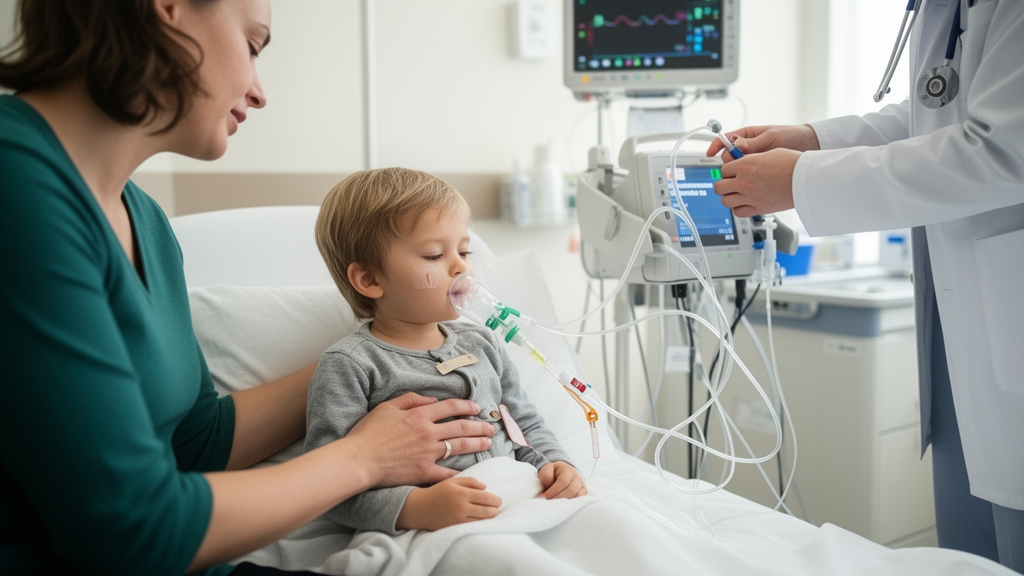
A 10-year-old boy with B-cell acute lymphoblastic leukemia experienced two episodes of lung injury: the first after induction chemotherapy and the second during blinatumomab treatment. Following the recurrence, clinicians stopped blinatumomab, treated the child with corticosteroids and respiratory support, and later restarted the immunotherapy through a graded dose-escalation schedule. The case report says the child completed the 28-day rechallenge without another episode of lung injury, although ultrasound abnormalities remained during follow-up. The authors classified the second event as probable blinatumomab-associated lung injury, while acknowledging that the evidence could not completely distinguish drug-induced interstitial lung disease from a pulmonary manifestation of cytokine release syndrome.
The report is notable because blinatumomab-associated lung injury is exceptionally rare and the evidence comes from a single pediatric case. A Naranjo adverse drug reaction score of 6 supported a probable association between blinatumomab and the second episode. The investigators described a successful rechallenge under low-dose corticosteroid maintenance and close monitoring, but their findings do not establish that the approach is safe or effective for other children. The case also illustrates the difficulty of diagnosing pulmonary toxicity during blinatumomab therapy, particularly when respiratory symptoms can occur during either cytokine release syndrome or drug-induced interstitial lung injury.
The patient was diagnosed with low-risk B-cell acute lymphoblastic leukemia and had an EP300::ZNF384 fusion. He was treated under the Chinese Children’s Cancer Group Acute Lymphoblastic Leukemia 2025 protocol and completed induction therapy, including the CAT regimen of cyclophosphamide, cytarabine and mercaptopurine. Bone marrow evaluation showed that he had achieved complete remission and that the EP300::ZNF384 fusion transcript was no longer detectable. Blinatumomab was subsequently scheduled as part of this pediatric patient’s treatment.
The first lung-injury episode began on day 11 after completion of the CAT regimen. The child developed progressively worsening dyspnea, hypoxemia and moist rales, but he had neither fever nor hypotension. His neutrophil count was normal, infection markers and microbiological tests were negative, and clinicians initially treated the episode as a probable infection with empirical anti-infective therapy. The symptoms did not improve with antibiotics. Further evaluation found normal cardiac function, no structural lung abnormality on chest computed tomography and no abnormalities on fiberoptic bronchoscopy. Metagenomic next-generation sequencing of bronchoalveolar lavage fluid detected no pathogens, while recent bone marrow assessment and chest CT made pulmonary tumor infiltration unlikely.
With infection, cardiogenic factors and structural lung abnormalities excluded, the clinicians attributed the first episode to drug-induced interstitial lung injury from the recent chemotherapy. They discontinued antibiotics and provided high-flow nasal cannula oxygen, nebulized budesonide and intravenous methylprednisolone. The patient improved gradually as his oxygen requirement decreased and the corticosteroid dose was tapered. A subsequent chest CT remained negative, and the lung injury did not recur during the recovery period. This initial episode therefore preceded the later blinatumomab-associated event rather than following blinatumomab administration.
Blinatumomab was started on April 7 at 5 μg/m² and increased to 15 μg/m² on the second day without immediate complications. On day three, the boy developed a low-grade fever of 37.5 °C together with perioral and bilateral hand myoclonus that became more pronounced during voluntary movement. Microbiological tests, inflammatory markers, electrolytes and cytokine profiling showed no abnormalities. The clinicians initially considered these manifestations to be pyrexia and tremor associated with blinatumomab, although cytokine release syndrome could not be excluded. Dexamethasone was administered at 0.3 mg/kg and levetiracetam at 20 mg/kg, while the blinatumomab dose remained 15 μg/m².
On the fourth treatment day, approximately 48 hours after the patient began receiving the full 15 μg/m² dose, he developed tachypnea at 36 breaths per minute, tachycardia at 134 beats per minute, coarse crackles, dyspnea and peripheral capillary oxygen saturation below 95% while breathing ambient air. C-reactive protein and procalcitonin measurements and serial blood cultures did not support an infectious cause. Cardiac enzyme levels and echocardiography were unremarkable. Lung ultrasound showed diffuse bilateral B-lines, consistent with an interstitial lung-injury pattern. Pulmonary function testing was not performed because the child did not cooperate sufficiently, and the team did not repeat chest CT because of concerns about radiation exposure.
The treating team immediately discontinued blinatumomab and started intravenous methylprednisolone at 4 mg/kg/day, divided into two doses, along with nebulized budesonide and supplemental oxygen. No antibiotics were used during this treatment. The patient showed significant clinical improvement within 72 hours, allowing the corticosteroid dose to be reduced to 3 mg/kg/day. After two additional days, his symptoms had resolved completely and oxygen saturation had returned to normal. The dose was then reduced to 2 mg/kg/day for maintenance. The close timing after full-dose blinatumomab, negative investigations for infection, cardiac disease and tumor infiltration, ultrasound pattern, Naranjo score and rapid improvement without antibiotics collectively supported the authors’ assessment of probable blinatumomab-associated lung injury.
After discussion with the family, the clinicians initiated a modified blinatumomab rechallenge while the child continued maintenance methylprednisolone at 2 mg/kg/day. The schedule began at 5 μg/m²/day for days one through three, increased to 10 μg/m²/day on days four and five and then reached the target dose of 15 μg/m²/day. The patient completed the full 28-day course without recurrent lung injury or other reported adverse events. Lung ultrasound two days after the rechallenge showed B-lines in seven of 12 zones, fewer than during the acute episode. The authors suggested that this residual pattern might represent delayed radiological recovery or continuing low-level immune stimulation, but the case provided no direct test of either explanation.
Separating drug-induced interstitial lung disease from cytokine release syndrome remains central to interpreting pulmonary events during blinatumomab treatment. The article describes cytokine release syndrome as usually beginning earlier with acute systemic inflammation, high fever, elevated cytokines and pulmonary edema on imaging. Drug-induced interstitial lung disease generally occurs later, is dominated by pulmonary manifestations and produces an interstitial pneumonia pattern. In this patient, the absence of systemic symptoms or increased cytokine levels and the presence of bilateral B-lines favored drug-induced interstitial lung injury, but the investigators said the two diagnoses could not be separated conclusively. The report lacked dynamic cytokine monitoring, an acute high-resolution CT examination and biopsy because of the child’s limited cooperation, radiation concerns and procedural risks. As a result, the case supports cautious interpretation of a successful rechallenge in one child rather than a general recommendation, and further pediatric reports with serial cytokine measurements and detailed imaging are needed to clarify the toxicity’s presentation and optimal management.
Subject of Research: Probable blinatumomab-associated lung injury and graded rechallenge in a child with B-cell acute lymphoblastic leukemia
Article Title: Case Report: Probable blinatumomab-associated lung injury in a pediatric patient with B-ALL
Article References: Feng, X., Yin, T., Han, J., & Zhou, F. (2026). Case Report: Probable blinatumomab-associated lung injury in a pediatric patient with B-ALL. Frontiers in Pharmacology, 17, Article 1973818. https://doi.org/10.3389/fphar.2026.1973818
Image Credits: AI Generated
DOI: 10.3389/fphar.2026.1973818
Keywords: blinatumomab, pediatric cancer, B-cell acute lymphoblastic leukemia, drug-induced lung injury, interstitial lung disease, cytokine release syndrome, immunotherapy, dose escalation, corticosteroids, case report, Case, Report
Cite Scienmag News
Nathaniel Bowman. (October 25, 2026). Child recovers after probable blinatumomab lung injury and dose-escalation rechallenge. Scienmag. https://scienmag.com/child-recovers-after-probable-blinatumomab-lung-injury-and-dose-escalation-rechallenge/
Nathaniel Bowman. "Child recovers after probable blinatumomab lung injury and dose-escalation rechallenge." Scienmag, 25 October 2026, https://scienmag.com/child-recovers-after-probable-blinatumomab-lung-injury-and-dose-escalation-rechallenge/. Accessed 25 October 2026.
Nathaniel Bowman. "Child recovers after probable blinatumomab lung injury and dose-escalation rechallenge." Scienmag. October 25, 2026. https://scienmag.com/child-recovers-after-probable-blinatumomab-lung-injury-and-dose-escalation-rechallenge/


