


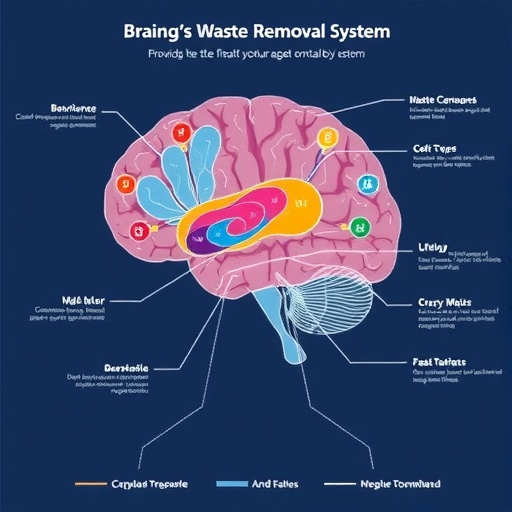
Scientists at Gladstone Institutes, led by Andrew Yang, PhD, have pioneered a groundbreaking technique to map the precise pathways through which the brain disposes of its waste. This innovative approach reveals intricate biological processes previously hidden, fundamentally transforming our understanding of how the brain maintains its cleanliness and health. Their findings, recently published in the journal Cell, shed light on a vital aspect of brain physiology, offering promising avenues for tackling neurodegenerative diseases such as Alzheimer’s.
The brain is an extraordinary yet highly isolated organ, protected by a series of barriers that tightly regulate the movement of substances in and out. This isolation poses a significant challenge for waste management within the brain. Unlike other organs that can directly interact with the bloodstream and lymphatic system, the brain must rely on specialized clearance networks to expel toxic proteins and metabolic byproducts generated during cellular activity. Should these clearance mechanisms falter, the accumulation of waste can initiate or exacerbate neurodegenerative processes, highlighting the critical importance of understanding these pathways.
Conventionally, researchers have explored brain clearance by injecting tracer dyes into the cerebrospinal fluid (CSF), a key medium involved in waste removal. However, this method disrupts the delicate equilibrium of the brain’s environment, analogous to flooding a house to identify drainage routes—while informative, it fails to distinguish which exits are physiologically relevant under normal conditions. This limitation has left a crucial question unanswered for decades: paths used by brain-derived waste proteins to exit remain elusive.
Addressing this knowledge gap, Yang’s team engineered neurons in mice to express a fluorescent protein called ZsGreen, a molecule that can be visualized as it migrates out of the brain. This strategy enabled them to follow the natural routes of neuronal waste without artificially perturbing the system. Remarkably, they discovered that waste proteins predominantly exit through anatomical structures adjacent to the brain, including the dura mater, skull, and nasal cavity, rather than the cervical lymph nodes previously implicated by tracer studies.
This novel insight fundamentally revises prior assumptions about brain drainage pathways. The researchers found less than expected ZsGreen accumulation in the neck’s lymph nodes, suggesting that traditional models that track CSF flow may have conflated fluid movement with true protein clearance. By directly monitoring the fate of brain-derived proteins themselves, the research delineates a more precise and nuanced map of how the brain’s waste finds its way out.
Further intricacy emerged when the team analyzed how different brain regions dispose of their waste. Proteins generated in the upper forebrain preferentially drained through dorsal exit sites, while proteins originating from deep brain areas exited via ventrally located routes. This spatial specificity gave rise to what Yang and colleagues call the “nearest exit” model: each brain territory appears to be assigned a dedicated drainage “ZIP code,” optimizing the targeted clearance of metabolic debris.
This biological postal system may have profound implications in aging and disease states. As Nalini Rao, PhD, a key member of the research team, suggests, the breakdown or scrambling of these exit ZIP codes could underlie the selective vulnerability observed in neurodegenerative disorders like Alzheimer’s disease. Misrouted waste might accumulate locally, promoting toxic protein aggregation and neuronal damage in distinct brain areas, thereby explaining the region-specific pathology commonly seen in these illnesses.
The kinetics of waste clearance also exhibited remarkable variability. Some brain borders cleared proteins swiftly, while others facilitated a slower, more prolonged interaction. This slower pace likely allows specialized immune cells residing at these borders to sample and “learn” from the neuronal proteins, helping the immune system recognize them as self and avoid inappropriate inflammatory responses within the central nervous system. This immunological education may be an essential, yet underappreciated, component of brain health.
Deploying their new tracing technique in pathological contexts, the scientists uncovered stark contrasts in waste clearance patterns. In mouse models of acute inflammation, mimicking infection or systemic immune activation, ZsGreen leaked aberrantly into the bloodstream, bypassing normal drainage pathways. Conversely, in Alzheimer’s disease model mice, protein clearance was markedly impaired: waste proteins accumulated within the brain parenchyma, failing to exit efficiently. These observations reinforce the notion that disruptions in waste drainage contribute directly to disease progression and open the door to targeted therapeutic interventions.
Going forward, the research team plans to extend their investigations to explore how brain waste clearance is modulated over the lifespan, whether sleep influences the dynamics of waste removal, and how tumors might exploit these clearance routes to evade immune detection. Their novel approach promises not only to deepen fundamental biological understanding but also to catalyze innovative strategies for combating neurological diseases by restoring or enhancing brain waste clearance.
This study from Gladstone Institutes represents a major leap in the neuroscientific field’s ability to interrogate and visualize physiological brain clearance architecture with unprecedented specificity. It bridges critical gaps in knowledge that have persisted for decades and highlights the sophisticated interplay between neuronal activity, immune surveillance, and fluid dynamics within the brain’s unique environment.
The work was made possible through multidisciplinary collaboration among Gladstone researchers and their partners across Germany and the United States, supported by a diverse array of funding sources including the National Institutes of Health and the Alzheimer’s Association. It sets a new standard for research on brain homeostasis and has profound implications for understanding the pathogenesis of neurodegenerative conditions that afflict millions worldwide.
Cite Scienmag News
Cassandra Pierce. (May 29, 2026). Charting the Brain’s Waste Removal System. Scienmag. https://scienmag.com/charting-the-brains-waste-removal-system/
Cassandra Pierce. "Charting the Brain’s Waste Removal System." Scienmag, 29 May 2026, https://scienmag.com/charting-the-brains-waste-removal-system/. Accessed 3 September 2026.
Cassandra Pierce. "Charting the Brain’s Waste Removal System." Scienmag. May 29, 2026. https://scienmag.com/charting-the-brains-waste-removal-system/


