


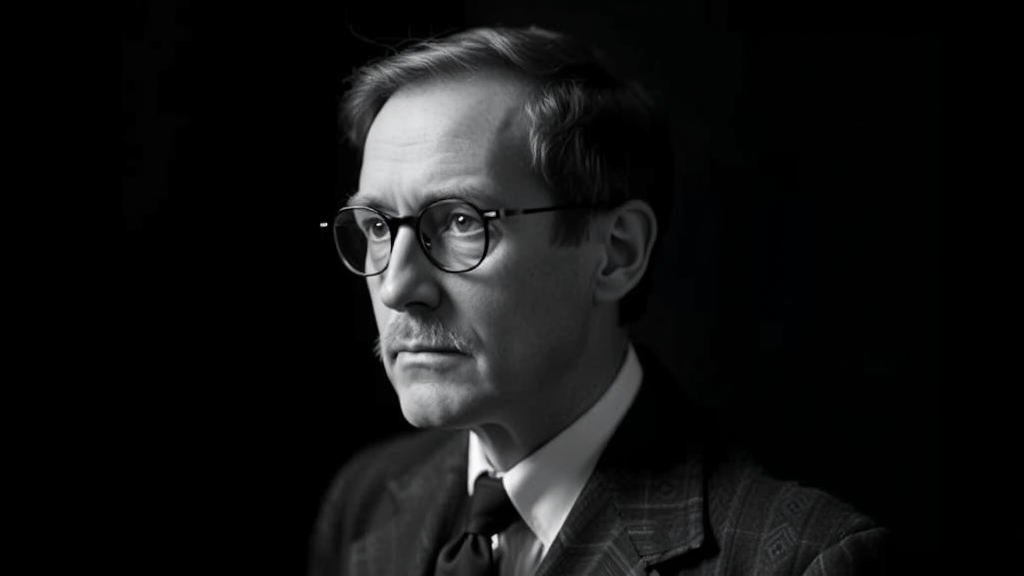
More than nine decades after his death, the legacy of Charles Karsner Mills is receiving renewed attention in the pages of the Journal of Neurology, where a new historical profile traces the arc of a career that helped define American neurology in its formative decades. Mills, who lived from 1845 to 1931, stands among the pioneers whose clinical acumen, teaching, and scholarship transformed neurology from a scattered collection of observations into a disciplined medical specialty. The new account, written by historian of neuroscience Lazaros C. Triarhou, situates Mills within the generation of physicians who wrestled with one of the great scientific questions of the nineteenth century: how the functions of the human brain could be localized to specific regions of its surface.
Mills was born in 1845 and came of age at a moment when the study of the nervous system was undergoing a profound conceptual revolution. The doctrine of cerebral localization, championed in Europe by figures such as Paul Broca and John Hughlings Jackson, was steadily overturning the older view of the brain as an undifferentiated organ. American medicine, however, lagged behind its European counterparts in embracing these ideas, and it fell to a small group of Philadelphia clinicians to translate localization theory into bedside practice. Mills emerged as one of the most forceful American advocates of this new way of thinking, arguing that careful correlation of symptoms with lesions could yield practical guidance for diagnosis and even for surgery.
His early scholarly output reflected this commitment. In 1879, barely into his thirties, Mills published notes on the localization of diseases of the brain, an early demonstration of his conviction that neurology had to be grounded in anatomical precision. He would expand on this theme throughout his career, culminating in his 1889 address on cerebral localization in its practical relations, delivered before the First Triennial Session of the Congress of American Physicians and Surgeons in Washington, DC. That expansive paper, running to a hundred printed pages, laid out the state of the art in localization and argued that the doctrine was not merely an academic curiosity but a working tool for the practicing physician.
Mills was also a clinician-surgeon in an era when operating on the brain was still a daring proposition. In 1891, together with W. W. Keen Jr., one of America’s pioneering surgeons, he reported a landmark case of Jacksonian epilepsy in which trephining was performed, a small tumor was removed, and epileptogenic cortex was excised. The case exemplified the translational power of localization theory: by mapping a patient’s seizures to a specific cortical region, the team could justify an operation that would have been unthinkable under earlier frameworks. Such collaborations between neurologists and surgeons helped establish the intellectual foundations on which modern neurosurgery would later be built.
Perhaps no area of Mills’s work has proven more durable than his contributions to aphasiology. In 1904 he published a substantial treatise in the Journal of the American Medical Association on the treatment of aphasia by training, a remarkably forward-looking document that anticipated modern rehabilitation approaches to language disorders. At a time when aphasia was largely regarded as a fixed deficit to be described and classified, Mills argued that systematic training could produce meaningful recovery in patients with language impairment. His emphasis on therapeutic intervention, rather than passive description, placed him decades ahead of the formal development of speech-language pathology and resonates strongly with contemporary principles of neuroplasticity and rehabilitation medicine.
Mills’s name also survives in the eponymous Mills’ syndrome, a rare clinical entity characterized by progressive ascending hemiplegia without sensory disturbance or dementia. The syndrome has enjoyed a genuine scientific afterlife: a 2019 study in the Journal of Neurology revisited Mills’ syndrome in the light of modern neuroimaging and genetics, examining whether the historical description corresponds to recognizable disease entities such as primary lateral sclerosis or hereditary spastic paraplegia variants. That a clinical picture first delineated in the nineteenth century could prompt a comprehensive re-evaluation in the twenty-first speaks to the descriptive precision that Mills and his contemporaries brought to the neurological examination.
Beyond his individual discoveries, Mills played a crucial institutional role in the professionalization of American neurology. He was a leading figure in the American Neurological Association, and his bibliography, published in the association’s semi-centennial anniversary volume of 1924, documented a scholarly output of extraordinary breadth spanning neuroanatomy, clinical neurology, psychiatry, and medical history. He was among the physicians who recognized that neurologic specialization in America depended not only on clinical skill but on technology, a thesis later explored by historian Douglas Lanska in a 1997 analysis of the role of technology in neurologic specialization. The adoption of instruments and laboratory methods, Lanska argued, helped carve neurology out of general medicine, and Mills was an active participant in that transformation.
Contemporaries remembered Mills as a commanding teacher and a meticulous clinician. Two obituary notices published in 1931, the year of his death, capture the esteem in which he was held. Smith Ely Jelliffe, writing in the Journal of Nervous and Mental Disease, and T. H. Weisenburg, writing in the Archives of Neurology and Psychiatry, both offered appreciations of a man who had spent more than half a century shaping the specialty. Weisenburg’s extended memorial, running to nine pages, surveyed the full range of Mills’s contributions, from cerebral localization and epilepsy surgery to aphasia therapy and the history of medicine. Later generations of scholars, including David Goldblatt and James Kennedy in a 1983 essay in Seminars in Neurology, returned to Mills under the evocative title The all-important matter, underscoring how central his work remained to understanding the development of American neurology.
The new profile by Triarhou appears in the Journal of Neurology as part of its long-running Pioneers in Neurology series, which commemorates the figures whose insights built the modern discipline. Placing Mills in this company is fitting. He practiced at the hinge point between the era of heroic gross localization and the era of laboratory neuroscience, and he understood better than most of his contemporaries that the two had to be joined. His insistence that localization be practical, that therapy be attempted even when prognosis seemed bleak, and that the specialty document its own history gave American neurology a template it still follows. As modern neurology grapples with new questions about brain mapping, rehabilitation, and the integration of technology into clinical practice, the career of Charles K. Mills offers a reminder that these concerns are not new but represent the continuing unfolding of an agenda set more than a century ago by physicians who worked with little more than a hammer, a reflex hammer, and an exacting eye at the bedside.
Subject of Research: Historical profile of neurologist Charles K. Mills (1845–1931) and his pioneering contributions to cerebral localization and American neurology.
Article Title: Charles K. Mills (1845–1931)
Article References: Triarhou, L. C. (2026). Charles K. Mills (1845–1931). Journal of Neurology, 273(10), Article 613. https://doi.org/10.1007/s00415-026-14114-3
Image Credits: AI Generated
DOI: 10.1007/s00415-026-14114-3
Keywords: Charles K. Mills, history of neurology, cerebral localization, aphasia, Mills' syndrome, Jacksonian epilepsy, American Neurological Association, Philadelphia neurology, pioneers in neurology, neurological history, Charles, Mills
Cite Scienmag News
Cassandra Pierce. (September 22, 2026). Charles K. Mills: The Philadelphia Neurologist Who Mapped the Brain Before Modern Medicine. Scienmag. https://scienmag.com/charles-k-mills-the-philadelphia-neurologist-who-mapped-the-brain-before-modern-medicine/
Cassandra Pierce. "Charles K. Mills: The Philadelphia Neurologist Who Mapped the Brain Before Modern Medicine." Scienmag, 22 September 2026, https://scienmag.com/charles-k-mills-the-philadelphia-neurologist-who-mapped-the-brain-before-modern-medicine/. Accessed 5 October 2026.
Cassandra Pierce. "Charles K. Mills: The Philadelphia Neurologist Who Mapped the Brain Before Modern Medicine." Scienmag. September 22, 2026. https://scienmag.com/charles-k-mills-the-philadelphia-neurologist-who-mapped-the-brain-before-modern-medicine/


