


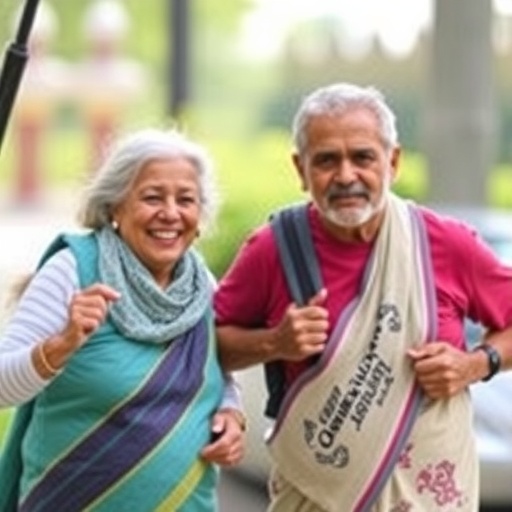
In an era where the global population is aging rapidly, understanding the complex dynamics of physical activity among older adults is more critical than ever. A recent qualitative systematic review published in BMC Geriatrics sheds light on the unique barriers and facilitators to physical activity uptake and adherence specifically among older South Asian communities. This landmark study not only delves deep into the socio-cultural and environmental factors that shape physical activity behaviors in this population but also offers insightful perspectives on how to tailor interventions for maximum impact.
Physical activity is a cornerstone for healthy aging, known to reduce the risk of chronic diseases, enhance mental well-being, and improve overall quality of life. However, older adults from South Asian backgrounds often exhibit lower levels of physical activity compared to other ethnic groups, a discrepancy that has significant implications for public health. Addressing this disparity requires a nuanced understanding of the multifaceted challenges and motivators that influence engagement in physical exercise within this demographic.
The research meticulously compiles qualitative data from multiple studies to unveil a spectrum of barriers that hinder physical activity participation among older South Asians. These include deeply ingrained cultural norms, such as prioritizing family duties over personal health, gender-specific expectations that limit women’s outdoor activities, and a prevalent fear of injury or exacerbating existing health conditions. Moreover, linguistic challenges and limited awareness of available exercise programs further exacerbate inactivity levels.
Interestingly, the review also highlights environmental constraints faced by this community. Many older South Asians reside in neighborhoods with inadequate access to safe and culturally appropriate recreational spaces, which discourages regular exercise. Urban planning and public health policies often overlook the importance of creating inclusive environments that accommodate the mobility and social preferences of elderly minority populations, thus perpetuating disparities.
Conversely, the study identifies several facilitators that can significantly boost physical activity initiation and sustainability among older South Asians. Social support emerges as a critical factor; encouragement from family members, peers, and community leaders can motivate individuals to overcome inertia. Structured group activities, especially those incorporating familiar cultural elements such as traditional dance forms, show promising potential to engage participants in a joyful and meaningful manner.
Another facilitator involves integrating physical activity into daily routines rather than perceiving it as an additional task. For instance, walking to local shops or places of worship not only promotes movement but also strengthens social bonds and cultural identity. Health education that emphasizes the benefits of even moderate levels of activity can empower older adults to take proactive steps toward improving their vitality.
The authors emphasize the vital role of culturally sensitive intervention design. Programs that respect and incorporate cultural values, religious beliefs, and language preferences are far more likely to resonate with the target group. Tailoring communication strategies and using familiar community settings to deliver physical activity initiatives can mitigate feelings of alienation and build sustained engagement.
Technologically driven solutions are also promising. The use of mobile health applications and virtual coaching tailored for older South Asians, delivered in native languages, can provide accessible platforms for monitoring progress and fostering motivation. Such innovations have the dual advantage of overcoming geographical barriers and providing personalized feedback, critical for maintaining long-term adherence.
The systematic review further calls attention to the importance of involving family members in physical activity promotion strategies. Given the collectivist nature of many South Asian cultures, family endorsement can significantly influence individual behaviors. Intergenerational approaches where multiple family members participate together could create a supportive ecosystem that nurtures healthy habits.
Evaluating the psychological dimensions, the study reveals that self-efficacy and perceived physical competence play a pivotal role. Older adults who believe in their ability to perform activities safely and effectively are more likely to engage regularly. Conversely, low confidence often results from previous negative health experiences or lack of exposure to exercise, underscoring the need for supportive introductory programs.
Economic factors cannot be overlooked either. The cost of gym memberships or specialized classes can be prohibitive for many older South Asians, particularly those with limited pensions or financial resources. Hence, community-driven, low-cost or free physical activity options facilitated by local organizations or civic bodies are important to consider in the broader strategy.
Policy implications arising from this review call for a multisectoral approach involving healthcare providers, urban planners, social services, and cultural organizations. By fostering collaboration among these stakeholders, it is possible to create inclusive infrastructures and health promotion frameworks that align with the lived realities of older South Asians.
Importantly, the reviewed evidence points out that interventions must move beyond one-size-fits-all solutions. The heterogeneity within the South Asian community, encompassing diverse languages, religions, and migration histories, demands personalized approaches that address specific needs and preferences.
This landmark systematic review thus marks a significant step forward in gerontological research by illuminating the intricate interplay of factors that influence physical activity behaviors among older South Asians. Its findings not only pave the way for culturally attuned public health interventions but also contribute to reducing health inequalities experienced by ethnic minority seniors worldwide.
As populations continue to age and diversify, the lessons drawn from this insightful synthesis offer a compelling roadmap for promoting active aging in culturally sensitive, sustainable ways. This is essential not only for enhancing individual well-being but also for alleviating the broader societal burdens associated with sedentary lifestyles and age-related diseases.
The authors express optimism that the mounting empirical evidence will inspire policymakers and practitioners to innovate and implement targeted strategies that foster inclusive physical activity environments. By doing so, communities will be better positioned to support the healthy, vibrant aging of all their members.
In conclusion, this review underscores the urgent need for a paradigm shift in how physical activity promotion is conceptualized for older South Asians. A comprehensive, culturally informed approach that bridges social, environmental, and psychological dimensions holds the promise of transforming health trajectories and enriching lives.
Ezeokoli, O., Tsocheva, I., Randhawa, G. et al. Barriers and facilitators to physical activity uptake and adherence among older South Asians: a qualitative systematic review.
BMC Geriatr (2026). https://doi.org/10.1186/s12877-026-07453-3
Cite Scienmag News
Ophelia Keating. (April 18, 2026). Challenges and Motivators for Physical Activity in Older South Asians. Scienmag. https://scienmag.com/challenges-and-motivators-for-physical-activity-in-older-south-asians/
Ophelia Keating. "Challenges and Motivators for Physical Activity in Older South Asians." Scienmag, 18 April 2026, https://scienmag.com/challenges-and-motivators-for-physical-activity-in-older-south-asians/. Accessed 4 September 2026.
Ophelia Keating. "Challenges and Motivators for Physical Activity in Older South Asians." Scienmag. April 18, 2026. https://scienmag.com/challenges-and-motivators-for-physical-activity-in-older-south-asians/


