


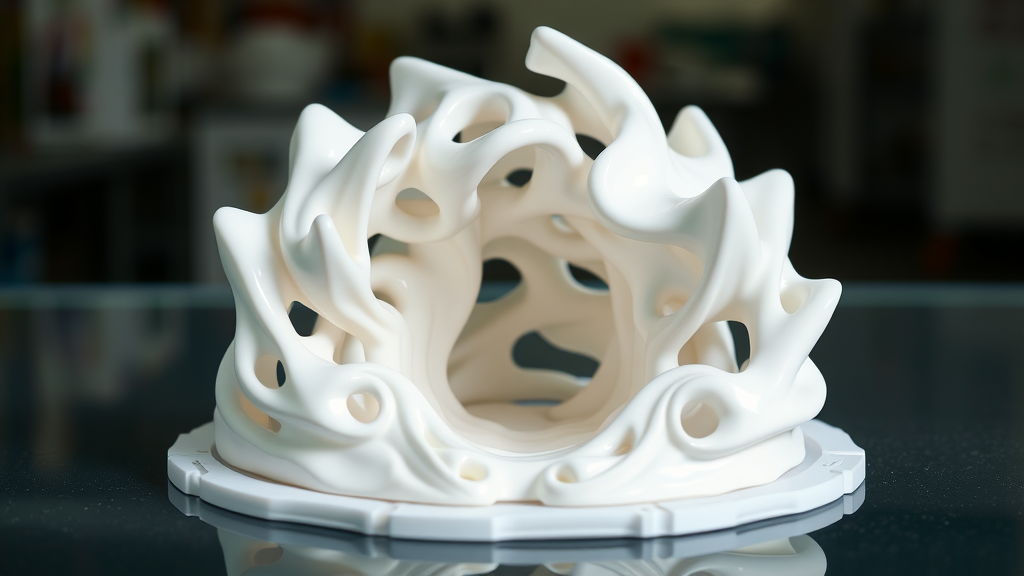
Direct ink writing, a nozzle-based extrusion technique that squeezes concentrated ceramic pastes into self-supporting three-dimensional structures, has matured from a laboratory curiosity into one of the most versatile platforms for manufacturing high-performance ceramic components. A comprehensive new review published in the journal Advanced Materials Joining traces the technology’s journey from its robocasting origins in the late 1990s to today’s data-driven, machine-learning-enhanced production lines, and argues that the method is now poised to transform how industries from aerospace to medicine fabricate parts that were once impossible to shape.
The appeal of ceramics is easy to understand. Materials such as alumina, zirconia, silicon nitride, and bioactive calcium phosphates combine exceptional hardness, thermal stability, and chemical resistance with, in some formulations, genuine bioactivity. They survive in jet engine hot sections, power electronics substrates, thermal protection systems, and patient-specific orthopedic implants. Yet conventional shaping routes, including pressing, injection molding, and tape casting, falter when designers demand tortuous internal channels, triply periodic minimal surfaces, hierarchical porosity, or geometries derived directly from medical scans. Every design iteration traditionally required new tooling, inflating both cost and timeline.
Among the competing additive manufacturing technologies, direct ink writing occupies a distinctive niche. Stereolithography and digital light processing deliver fine resolution but depend on photosensitive slurries with limited solids loading and suffer from light-scattering problems. Binder jetting separates shaping from sintering but struggles with powder bed management, weak green strength, and residual porosity. Laser-based methods impose punishing thermal loads and narrow processing windows that invite cracking. Direct ink writing, by contrast, works under ambient or near-ambient conditions, requires no photochemistry or powder bed, and welcomes multi-material integration, compositional gradients, and functional fillers such as conductive carbons, catalytic particles, piezoelectric phases, and magnetic components.
The technique’s history is a study in steady accumulation. Researchers at Sandia National Laboratories first extruded high-concentration ceramic slurries with partial organic binders in 1997, laying the foundation for modern robocasting. In the early 2000s, Jennifer Lewis’s group systematically studied high-solid-loading pastes, established the principles of filament stability and interlayer adhesion, and demonstrated layer-by-layer assembly of silica-based inks into three-dimensional grids. By 2006, programmable deposition systems were fabricating ceramic microstructures with sub-100-micrometer resolution. The 2010s brought alumina, zirconia, hydroxyapatite, and graphene-based composite inks, followed by multi-material printing, functionally graded structures, and fiber-reinforced ceramic matrix composites. Since 2021, the field has entered its data-driven era, with artificial intelligence optimizing processes, digital twins simulating entire workflows, and one-step debinding-sintering routes such as microwave heating compressing production cycles.
At the heart of the technology lies a deceptively simple rheological trick. A printable ceramic ink must flow smoothly under the high shear rates of roughly 100 to 1,000 per second inside the nozzle, then instantly rebuild its internal structure after deposition to resist gravity and surface tension. This shear-thinning, yield-stress behavior is commonly captured by the Herschel-Bulkley model, where a sufficiently high yield stress keeps deposited filaments from slumping while a shear-thinning exponent between 0.3 and 0.6 allows dramatic viscosity reduction during extrusion. Oscillatory rheometry adds further criteria: the storage modulus must exceed the loss modulus at low strain to signal solid-like behavior, and thixotropic recovery times shorter than one second are considered ideal for stacking tall, unsupported features.
Formulating such inks is a balancing act across four essential ingredients: ceramic particles, binders or thickeners, dispersants, and solvents. High solids loadings of 40 to 60 percent by volume are preferred because they minimize sintering shrinkage, but excessive loading compromises dispersion stability and green strength. Bimodal particle distributions, mixing coarse micrometer-scale grains with finer submicrometer particles, fill interstitial spaces and reduce viscosity at a given loading, and studies of bimodal glass bead mixtures show they consistently extrude at higher mass flow rates than monomodal inks. Binders such as polyvinyl alcohol, methylcellulose, and the thermoresponsive copolymer Pluronic F127 impart the viscoelasticity and yield stress needed for shape retention, while dispersants stabilize particles against agglomeration, with a zeta potential exceeding plus or minus 30 millivolts generally indicating robust electrostatic stabilization. Non-oxide ceramics such as silicon carbide and silicon nitride demand even stricter control, often requiring non-aqueous solvents to prevent surface hydrolysis.
Hardware and process control translate ink design into reproducible parts. Extrusion systems come in pneumatic, screw- or piston-driven, and direct-drive varieties, each trading cost against precision and response speed; direct-drive actuators respond in under 50 milliseconds and enable programmable retraction for clean start-stop transitions. Nozzle diameters range from 50 micrometers for micro-features to several millimeters for rapid prototyping, with tapered tips reducing shear stress on particles and preventing clogging. Layer height is typically set at roughly 60 percent of the nozzle diameter to ensure interlayer bonding without excessive squeezing. Dimensionless metrics guide the process: a Bond number below one predicts stable overhangs, while the yield-capillary ratio quantifies shape retention after deposition. Environmental chambers holding temperatures between 15 and 30 degrees Celsius and humidity between 40 and 60 percent stabilize solvent evaporation and prevent nozzle drying and differential shrinkage.
Modern systems increasingly close the loop with real-time sensing. Optical cameras track filament diameter and layer alignment to about 10 micrometers, laser profilometers map surface topology and detect warping, pressure sensors flag nozzle clogging through abrupt backpressure drops, and acoustic emission sensors catch microcracks and filament slippage before they become failures. Machine learning algorithms analyzing these sensor streams can adjust extrusion rate, print speed, or nozzle height within milliseconds; in one reported study, a convolutional neural network trained on filament images reduced print errors by 87 percent in a zirconia lattice structure. Embedded printing, in which inks are extruded into self-healing support baths, further offloads anti-sagging constraints and has been validated with preceramic polymers and titanium, titanium-aluminum-carbide, and alumina inks.
Post-processing remains the most defect-prone phase of the workflow. Green bodies containing 20 to 40 percent solvent must dry gently to avoid capillary-stress cracking, sometimes requiring days of controlled humidity or solvent exchange. Debinding, the thermal decomposition of organic binders between roughly 200 and 600 degrees Celsius, often consumes 10 to 50 hours and demands slow heating ramps through critical decomposition intervals identified by thermogravimetric analysis. Sintering then densifies the part, and the choice of route matters enormously: conventional furnace sintering is cheap but slow, spark plasma sintering has pushed printed silicon carbide to 98 percent theoretical density in minutes at 2,050 degrees Celsius, microwave sintering cuts cycle times by 50 to 70 percent, and ultrafast high-temperature sintering can merge debinding and densification into a single step lasting seconds to minutes. Well-optimized dense alumina and zirconia components now reach flexural strengths of 250 to 500 megapascals, approaching conventionally sintered engineering ceramics.
The application landscape is expanding accordingly. Printed silicon carbide and silicon nitride lattices serve as heat-exchanger cores, turbine filters, and lightweight aerospace panels. Hydroxyapatite and beta-tricalcium phosphate scaffolds with hierarchical porosity above 300 micrometers promote osteointegration, and drug-releasing binder systems add therapeutic function. Piezoelectric actuators, solid oxide fuel cell electrodes with engineered tortuosity that boost efficiency by 20 to 30 percent, microchannel heat sinks, and hierarchically porous catalytic frameworks for hydrogen production and wastewater treatment all showcase the method’s breadth. Significant challenges persist, including long-term ink stability at high solids loadings, the trade-off between sub-100-micrometer resolution and throughput, multi-material compatibility, and sintering shrinkage of 15 to 25 percent that distorts geometry. But with machine-learning-guided process optimization, digital twins reporting roughly 94 percent defect-prediction accuracy in early studies, one-step sintering, and functionally graded multi-material printing on the horizon, the review’s authors conclude that direct ink writing is well on its way to becoming a foundational platform for next-generation ceramic manufacturing across aerospace, energy, electronics, and biomedicine.
Subject of Research: Direct ink writing as an additive manufacturing technique for fabricating complex ceramic components from ink formulation through industrial applications
Article Title: Direct ink writing of ceramics: from fundamentals to industrial applications
Article References: Chen, Z., He, P., Ouyang, J., Duan, X., Jia, D., Colombo, P., & Zhou, Y. (2026). Direct ink writing of ceramics: from fundamentals to industrial applications. Advanced Materials Joining, 1(1), Article 6. https://doi.org/10.1007/s44500-026-00001-4
Image Credits: AI Generated
DOI: 10.1007/s44500-026-00001-4
Keywords: direct ink writing, ceramics, additive manufacturing, 3D printing, rheology, sintering, ceramic inks, robocasting, biomedical scaffolds, machine learning, ceramic matrix composites, thermal materials
Cite Scienmag News
Denise Maddox. (September 12, 2026). Ceramic 3D Printing Comes of Age as Direct Ink Writing Moves From Lab to Factory Floor. Scienmag. https://scienmag.com/ceramic-3d-printing-comes-of-age-as-direct-ink-writing-moves-from-lab-to-factory-floor/
Denise Maddox. "Ceramic 3D Printing Comes of Age as Direct Ink Writing Moves From Lab to Factory Floor." Scienmag, 12 September 2026, https://scienmag.com/ceramic-3d-printing-comes-of-age-as-direct-ink-writing-moves-from-lab-to-factory-floor/. Accessed 16 October 2026.
Denise Maddox. "Ceramic 3D Printing Comes of Age as Direct Ink Writing Moves From Lab to Factory Floor." Scienmag. September 12, 2026. https://scienmag.com/ceramic-3d-printing-comes-of-age-as-direct-ink-writing-moves-from-lab-to-factory-floor/


